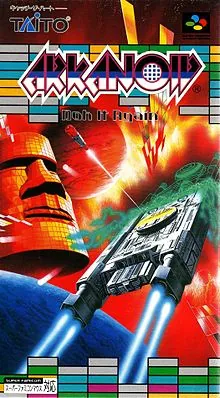
Arkanoid: Doh It Again
A ball, a paddle, a wall of bricks — you'd think there was nothing left to invent here. Arkanoid: Doh It Again is proof that refining an old principle to perfection is an art in itself. This portable version of the legendary Breakout descendant takes the simple idea of bouncing a ball and wraps it in a layer of power-ups, bosses, and escalating tension, until the trivial mechanic becomes a test of nerves and reflexes.
You know the basics: with the paddle at the bottom of the screen you bounce a ball to gradually demolish formations of bricks. But Arkanoid added what definitively revived the genre — falling bonuses. A laser that blasts bricks directly, a paddle extension, a slower ball, or the coveted multi-ball that suddenly floods the screen with chaos. Every power-up changes the pace and the tactics, and the decision of whether to risk grabbing a bonus lends surprising depth to an otherwise reflex-based game.
Taito's Arkanoid series stands on solid foundations: the original 1986 arcade machine was the one that resurrected the Breakout genre, gave it a story frame about a spaceship, elevated power-ups into the main draw, and put giant final bosses at the end — the titular enemy DOH. This Game Boy iteration faithfully carries that legacy to the small screen, including support for a special controller for smoother paddle control, which is utterly crucial in this game.
What makes Arkanoid so addictive is its relentless honesty. The game never cheats — every lost ball is your mistake, every cleared level your achievement. That direct link between concentration and result is exactly why players keep coming back to arcade classics of this type for decades. And on a handheld, where it's all about short, intense bursts, the format works even better than at home in front of the TV.
Doh It Again is not a revolution, nor does it want to be. It is the polished essence of one of the purest game principles there is, packaged in pocket form. It is the kind of game where you tell yourself „just one more level“ and wake up an hour later with aching thumbs.
Why play: Breakout refined to perfection — a reflex-driven, addictive arcade game for short sessions that will easily swallow an hour of your time.
Game 27 of 147 for Nintendo Game Boy
The same title elsewhere (1)
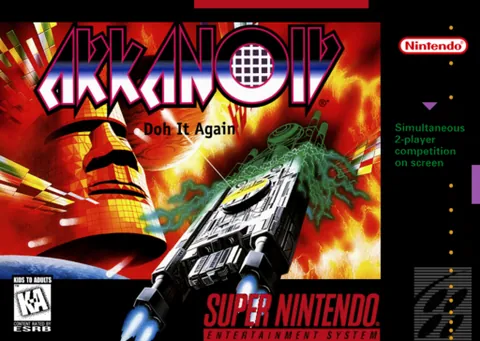
The 1990 Super Nintendo version benefits from full color and, above all, mouse support, which makes controlling the paddle far more precise and smooth than with a standard pad. The 1997 portable Game Boy version offers only shades of gray and D-pad control, making ball deflection a bit less delicate, but it lets you play anywhere. The brick-breaking core stays identical and equally addictive on both platforms, but anyone wanting the smoothest, most precise Arkanoid experience should reach for the SNES version with a mouse.