Pitfall II: The Lost Caverns
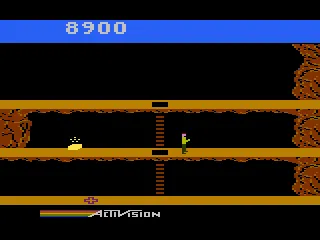
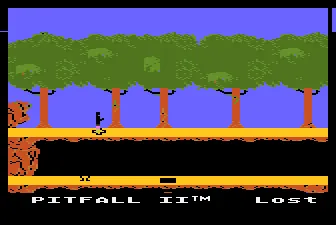
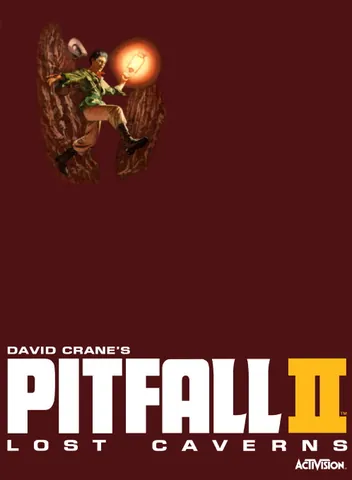
Pitfall II: The Lost Caverns expands the concept of the first game into a larger, more interconnected world of caves, underground rivers, and Mayan temples, through which Pitfall Harry makes his way to rescue his niece Rhonda and her cat. Unlike the previous game, there is no longer a time limit or permanent death — after falling into a chasm or touching an enemy, the player is simply carried back a short distance by a balloon, allowing for much calmer, more deliberate exploration of the branching underground world full of hidden passages. Besides jumping and climbing, the player must also collect small treasures and avoid gas fumes, bats, and other hazards that recur in altered forms throughout the various cave complexes.
On the Atari 5200, the game offers smooth vertical and horizontal scrolling, a relatively rare technical feat at the time, and the player moves between caves, underground lakes, and ancient temples by jumping, swimming, and riding wooden rafts carried by the current. A striking part of the experience is a continuous music loop that plays throughout the entire game, an unusual approach for consoles of the era, giving the game an unmistakable atmosphere of unhurried adventure, in contrast to the terse sound effects typical of most titles of the time.
Pitfall II is often cited as one of David Crane's most significant works and was particularly prized among players for its technical sophistication and its more generous approach to the game world compared to its predecessor. The game's influence is visible in later platform-adventures, which began placing greater emphasis on exploration, atmosphere, and steady progress rather than pure reflex action and punishment for every mistake. Even today the game impresses with the sophistication of its world and the music that made it exceptional for its time, and it remains a title worth trying beyond mere nostalgia.
Why play it: For its more sophisticated world, exceptional music, and smoother progression compared to the first game, which make it worth trying beyond mere nostalgia.
Game 26 of 41 for Atari 5200
The same title elsewhere (3)
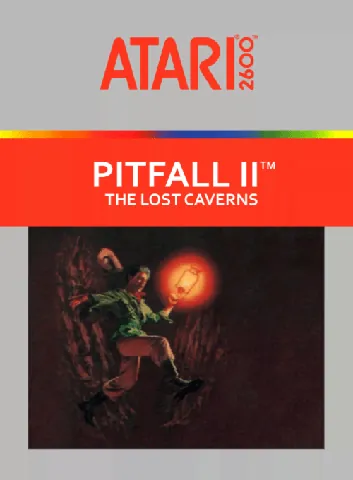
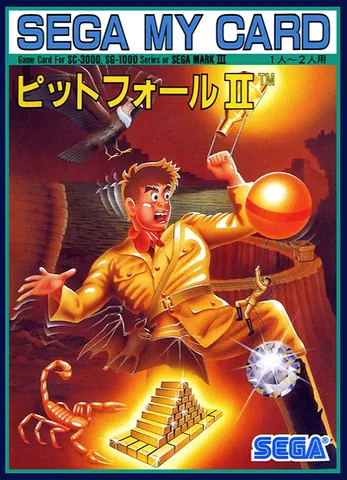
The Atari 2600 version owes its reputation to a special DPC chip built right into the cartridge, which let the console play multi-channel music far beyond what standard hardware could manage at the time, and also introduced the unusual idea of a game with no real death — Harry simply gets sent back after a fall. The 1985 SEGA SG-1000 port had no such special cartridge hardware to lean on, so it had to make do with the console's ordinary sound chip, leaving the music noticeably less rich. For the technical breakthrough and that distinctive sound, the Atari 2600 version is usually the one cited.