Pitfall II: Lost Caverns
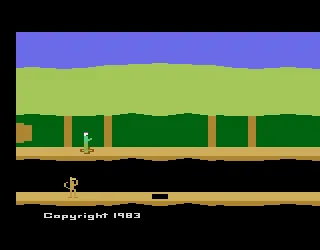
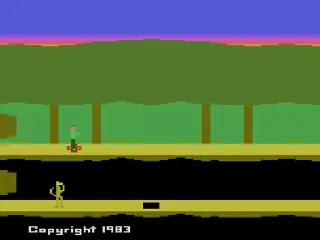
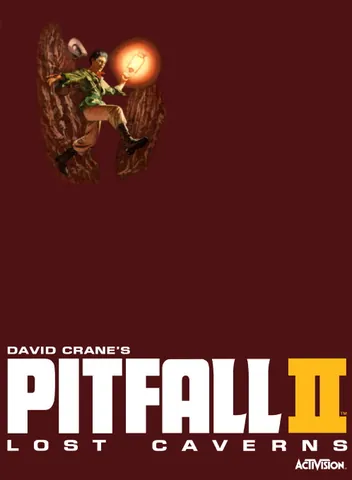
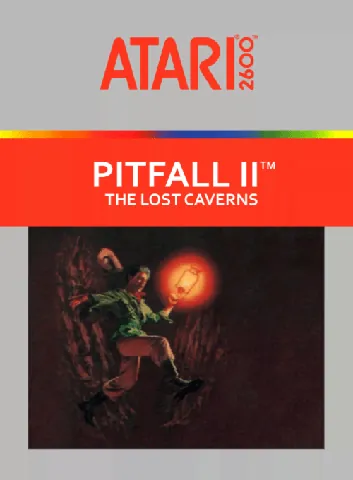
If the first Pitfall! was a technical marvel, its sequel raised the bar into the realm of science fiction. Pitfall II: Lost Caverns added something to the cartridge that sounded incredible at the time, its own hardware chip that allowed the Atari 2600 to play multi-channel music and hold a far more extensive world.
This time the adventurer Harry ventures deep into a cave labyrinth to rescue his niece, a pet, and of course treasure. The game abandons the linear structure of the first installment and offers a vast interconnected map full of corridors, ladders, waterfalls, and enemies. Instead of a limited number of lives came a clever checkpoint system, where Harry returns after death to the last cross he reached, which made the depths of the caves a thrilling challenge without the frustration of restarts.
Technically the sequel was extraordinary. The additional chip directly in the cartridge allowed what the console's basic hardware could not manage on its own, smooth multi-channel music that played throughout the entire time of play. This was essentially unheard of on the Atari 2600 and showed how far developers were willing to go to overcome the limits of the machine.
On the older console it was one of the most ambitious titles ever, a game that, in its scope and sound, resembled more powerful platforms. The later release for the Atari 7800 then benefited from better hardware and showed Harry's adventure in an even nicer form.
Pitfall II remains an example of how creativity and technical courage managed to work around the limitations of the hardware. It is a game that was not content with merely following up on a successful predecessor, but decided to surpass it in every respect.
Why play: A technically pioneering sequel with an extensive world and unforgettable music, one of the most ambitious titles on the Atari 2600.
Game 2 of 69 for Atari 2600
The same title elsewhere (3)
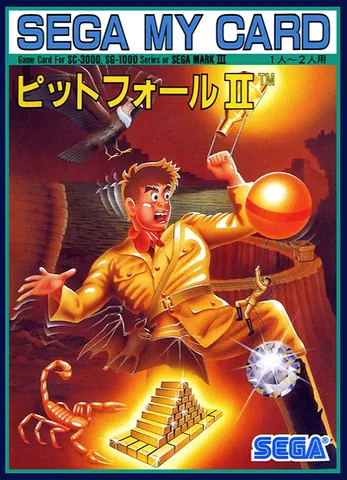
The Atari 2600 version owes its reputation to a special DPC chip built right into the cartridge, which let the console play multi-channel music far beyond what standard hardware could manage at the time, and also introduced the unusual idea of a game with no real death — Harry simply gets sent back after a fall. The 1985 SEGA SG-1000 port had no such special cartridge hardware to lean on, so it had to make do with the console's ordinary sound chip, leaving the music noticeably less rich. For the technical breakthrough and that distinctive sound, the Atari 2600 version is usually the one cited.