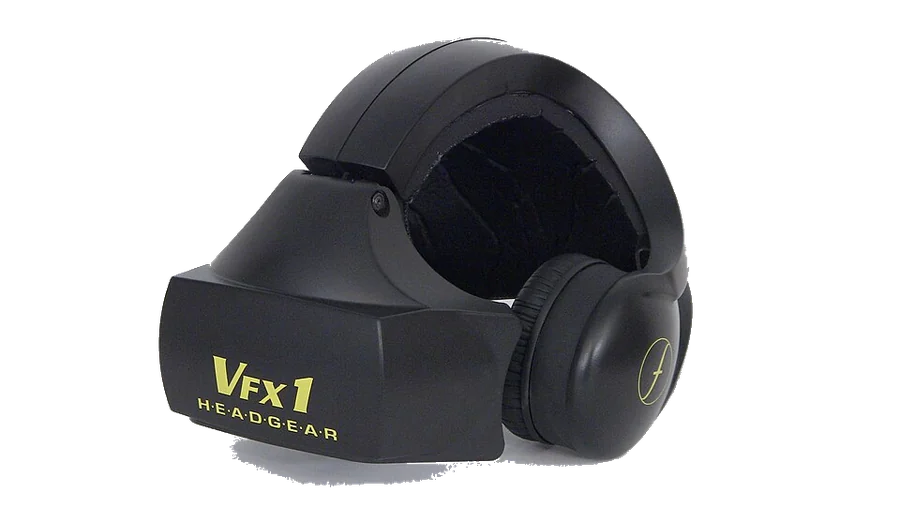
 Forte Technologies · 1995
Virtual reality
Forte VFX1
History & context
The year 1995 belonged, in the world of home computers, to multimedia CD-ROMs, accelerated 3D graphics cards, and the first big 3D action games like Doom and Descent. In the middle of that fever, the company Forte Technologies decided to offer something previously known only to visitors of scientific laboratories and military simulators: virtual reality that a person could buy in a store and bolt onto their own PC. The result was the VFX1 headset, the first truly affordable VR device for home computers and, at the same time, one of the strangest artifacts of the entire DOS and early Windows 95 era.
For a price of roughly 700 to 1000 dollars, an interested buyer got a set that at first glance looked like a motorcycle helmet crossed with a walkie-talkie. Inside were two small LCD panel displays, one for each eye, a controller for the hand, and a decent pair of headphones. On paper it sounded like a future that had arrived twenty years early. In practice, it was a device that a person had to literally earn — technically, physically, and through sheer patience.
The VFX1 was not sold as a toy for everyone. It targeted enthusiasts who followed computer game magazines and knew that in the nineties the words virtual reality mostly appeared in movies and at exhibitions. Whoever bought the headset became a tester of a technology that had not yet solved its basic problems — and that is exactly what makes the VFX1 such a fascinating chapter of history today.
Technology: graphics and sound
The heart of the headset was a pair of LCD displays, one for each eye, with a resolution of around 263×230 pixels per eye. A number that means nothing to today's reader, but in practice it meant an image full of visible pixels, softened contours, and text that was right on the edge of legibility. The displays sat close in front of the eyes, and the image was projected through simple optics meant to create the impression of a wider field of view. The stereoscopic 3D effect arose from each eye receiving a slightly different frame of the same scene, which games that supported it could use to create a genuine sense of depth.
The headset also featured head tracking — a set of sensors recorded rotation, so in supported games the player could look around simply by turning their neck, while the mouse or keyboard remained in charge of character movement. In 1995 this was a unique experience, albeit with considerable lag and imprecision that a player used to modern VR headsets today would find hard to imagine. Sound was handled by built-in headphones, which closed the whole package into one compact, if heavy, unit worn on the head.
Connectivity and peripherals
The VFX1 did not connect to the computer through any ordinary port — it required its own ISA expansion card, which the user had to install inside the PC. This card supplied both the video signal for the two displays and the processing of data from the head-tracking sensors. Installation was therefore not a matter of a few minutes, but an intervention into the computer's innards that only a more experienced user was familiar with.
The headset also came with a handheld controller called the Cyberpuck, shaped to be held comfortably in one hand. It worked as a combination of a joystick and a button pad — turning the wrist controlled movement or aiming, while the thumb operated the buttons. In games like Descent, where the player moved along all three axes at once, the combination of the headset's head tracking and the Cyberpuck made a kind of sense that a mouse and keyboard could not offer. The whole set thus replaced ordinary input peripherals with its own control ecosystem.
Supported games and modes
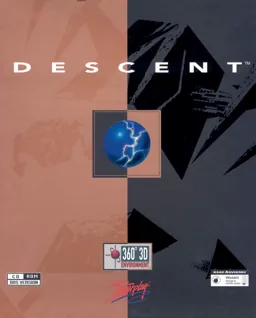
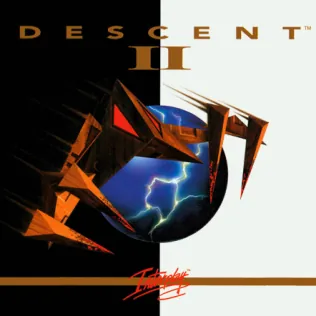
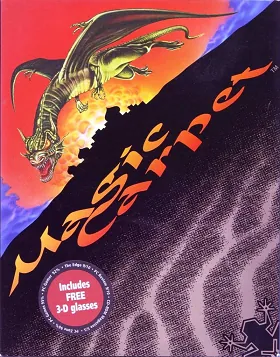
The VFX1 was not a universal set of goggles that worked with everything running on a PC. Support had to be built into the game itself, either natively or through a special patch or driver. Among the titles able to offer a stereoscopic mode and make use of head tracking were Descent, Doom, Magic Carpet, and System Shock — precisely the games that already, by their very nature, relied on movement through three-dimensional space. A player could thus experience flying through a space station in Descent while looking around by actually turning their head, an experience that no other home platform offered in the mid-nineties.
At the same time, this was also the limit of the whole concept: without support from a given game, the VFX1 turned into an ordinary, if unusually uncomfortable, monitor bolted to one's face. The list of compatible titles remained fairly narrow.
Reasons for its failure
Despite its technological primacy, the VFX1 never became a mass hit. The headset was heavy and, after wearing it for a longer period, uncomfortable, especially for users with glasses or an unusual head shape. The low display resolution meant that details and text were blurry, which also limited the enjoyment of games that otherwise offered support. The combination of laggy head tracking with low resolution additionally caused nausea in some players, similar to what users of the first generations of modern VR goggles would later describe.
On top of that came the high price and the need to open up the computer to install a special card. The VFX1 thus remained an interesting experiment that pointed the way forward but never turned into a mass phenomenon.
Today's scene
Today the VFX1 is above all a collector's rarity. A complete, functional set with the ISA card, Cyberpuck, and original box appears only rarely on the collector's market, and it tends to be sought after more as a museum exhibit of computer technology history than as a device for actual play. Running it on a modern computer is further complicated by the need for an ISA slot, which today's motherboards have long since stopped including, so getting it working today requires old hardware builds or emulation at the level of an entire PC.
Even so, the VFX1 holds a firm place in the history of gaming hardware. It was the first attempt to bring virtual reality straight from laboratories and military simulators into the living room of an ordinary player, long before the term VR headset became part of mainstream vocabulary. Looking back, it can be seen as the forerunner of an idea that headsets like the Oculus Rift would fulfill two decades later — just with technology that simply was not yet ready for its time. That is precisely why the VFX1 remains a favorite topic for retro documentary videos and collector discussions, where it serves as a reminder that the road to today's virtual reality was long and full of dead ends.
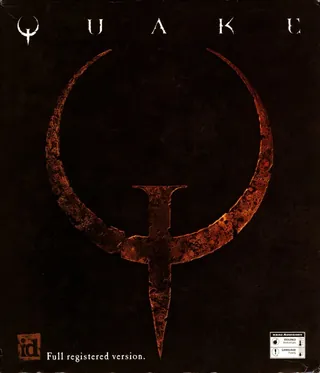
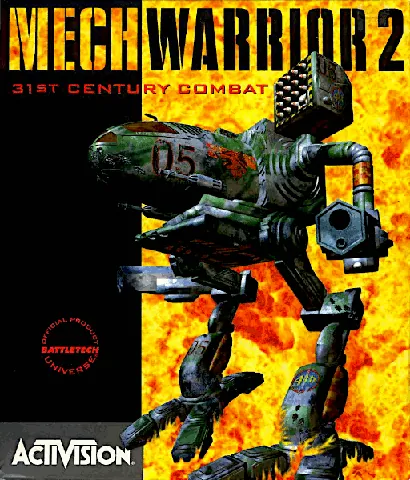
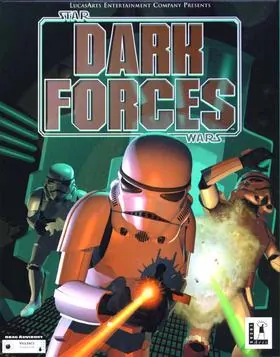
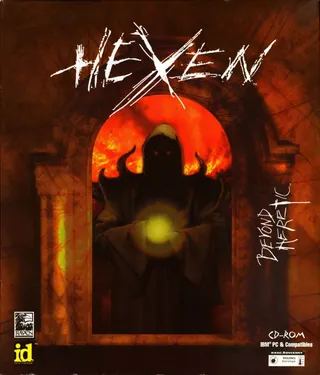
Games on this platform (12)





No game in this genre.