 SEGA · 1983
Game consoles
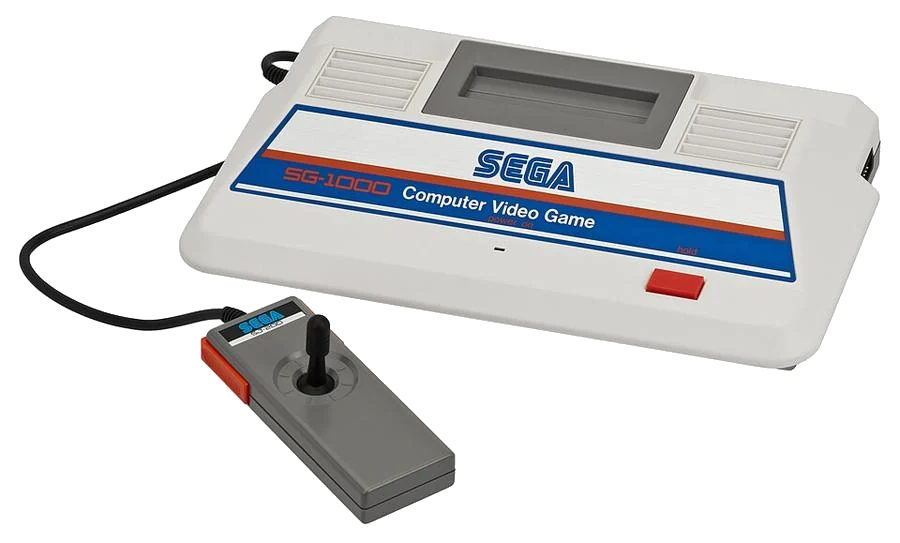
SEGA SG-1000
History & context
SEGA SG-1000 is a console few people know today, and yet without it there would be no Master System and no Mega Drive. It was Sega's very first home console — a company that until then had lived off arcade cabinets and building game cabinets for Japanese arcades. It launched in 1983, and fate handed it perhaps the most thankless start imaginable: it arrived on the market on the very same day as the Nintendo Famicom. Two consoles, one date, and utterly different continuations of the story.
In Japan, the SG-1000 didn't do badly at all. Interest in home gaming was surging at the time, Sega carried the reputation of an arcade brand, and it brought over titles people already knew from arcades onto the console. But the Famicom was technically further ahead, had stronger publisher support, and within a year or two the gap turned into a chasm. In the West, the SG-1000 was essentially never sold — it reached Europe and America only marginally, and in some countries not at all.
For today's retro gamer, it's a platform more for discovery than nostalgia. It offers a raw, early form of eight-bit gaming: short arcade pieces, harsh difficulty, and coarse-grained graphics without frills. And above all, it shows where Sega's whole eight-bit lineage grew from, one that a few years later culminated in the Master System.
Technology: graphics and sound
At its core is the eight-bit Zilog Z80 processor clocked at roughly 3.58 MHz — the same family known to owners of the ZX Spectrum, MSX, or Master System. Graphics are handled by the Texas Instruments TMS9918 video chip (or its TMS9918A variant), a completely standard solution for its time. It manages a resolution of 256×192 pixels, a palette of 16 colors, and roughly three dozen sprites, though with a hard limit on the number of sprites per line — the source of the characteristic character flicker typical of this generation.
The choice of the TMS9918 is the key to understanding the whole platform. The same chip also powered MSX and ColecoVision, so games on these three systems looked very similar and porting between platforms was fairly easy. Quite a few titles therefore exist in nearly identical versions across several systems at once. Sound comes from the SN76489 (PSG) with three tone channels and one noise channel — no synthesis, no samples, just typical eight-bit bleeps that nevertheless work surprisingly well in arcade conversions.
Memory was minimal, so games are inherently short and loop-based: one screen, one idea, rising difficulty.
Connectivity and peripherals
The console connected to the TV the classic way, via an RF modulator; later versions and variants gained better outputs as well. It had a Pause button on the body, since the controller didn't yet handle pausing back then. The first model had the controller wired directly into the unit, which was a practical weakness — a damaged joystick meant a problem with the entire console.
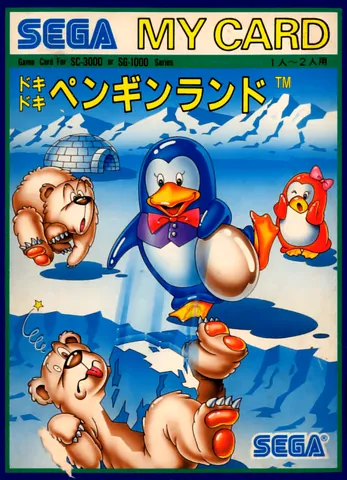
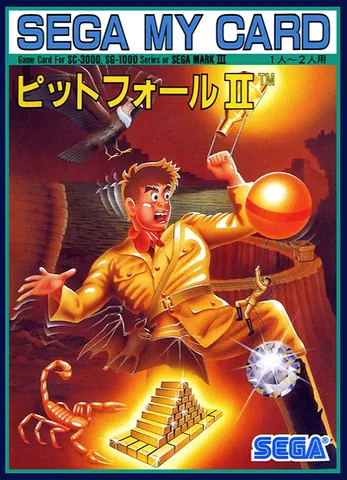
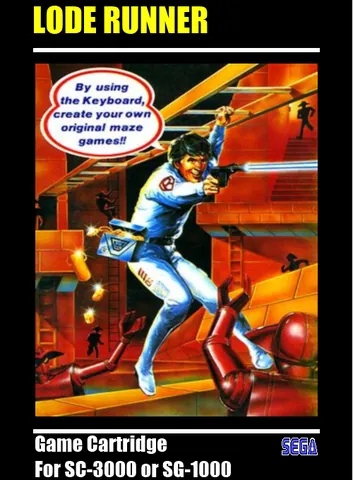
More interesting is the accessory lineup that made the SG-1000 more than just a toy. There was a keyboard, which, once connected, turned the console into a simple home computer capable of running BASIC — Sega, after all, simultaneously offered a computer variant called the SC-3000, built on the same hardware. Also available were Sega My Card cartridges, a thin card-based medium cheaper than classic cartridges, which plugged into the console via an adapter called the Card Catcher. Sega later carried this dual media format over to the Master System as well.
Models and revisions
The original SG-1000 from 1983 was a boxy white-and-black unit with a hardwired joystick. It was followed by the SG-1000 II revision, which simplified and cleaned up the design and, crucially, introduced detachable controllers — a genuinely significant usability improvement in practice. Software-wise it stayed fully compatible, so both generations of players shared the same library.
The development line didn't stop there, though. The SG-1000 II was followed by the Sega Mark III, which significantly upgraded the hardware, and that in turn became the Master System for Western markets. That's exactly why the SG-1000 is, technically speaking, the direct ancestor of the Master System: it shares its processor, its philosophy, and part of its media ecosystem with it, just with a considerably weaker graphics chip.
Clones and variants
A small but interesting family of related devices grew up around the SG-1000. The most important is the already-mentioned SC-3000, a fully-fledged home computer with a keyboard built on the same foundation — it sold even in countries where the console itself barely existed, and in some regions built up a decent user base. There were also licensed variants and devices from other manufacturers which, thanks to the shared TMS9918 chip, could run cartridges from multiple systems at once.
For a Czech gamer, this platform is a period curiosity: at a time when people here mainly played on the ZX Spectrum and its clone, the Didaktik, the SG-1000 practically never reached our households. It shows up here only in retrospect, through emulation and interest in Sega's history.
The scene today
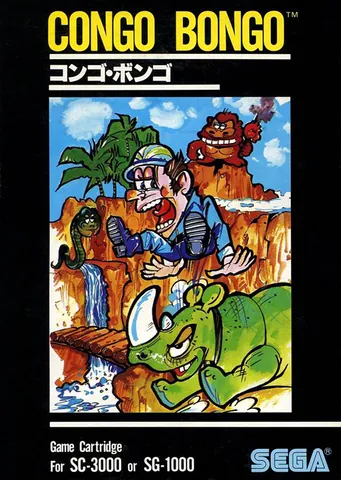
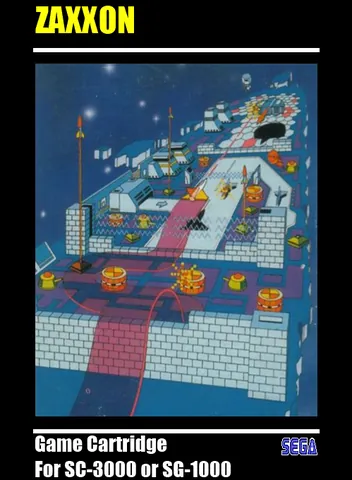
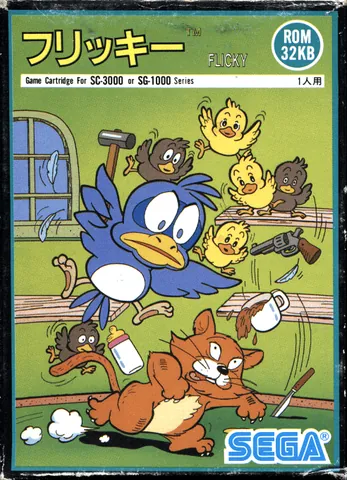
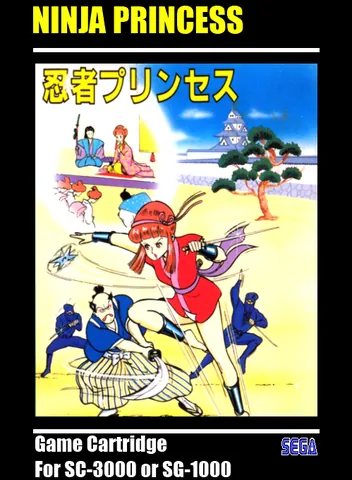
Today the SG-1000 is chiefly historically interesting — as the point where Sega entered the home console business. Its library consists of arcade conversions and simple action games, among which you'll find names like Congo Bongo, Flicky, Zaxxon, Monaco GP, or Star Jacker. The collection isn't large and varies quite a bit in quality, but that also makes it easy to get through the whole thing.
Emulation is completely trouble-free. The most widespread route is the Genesis Plus GX core, which handles the Master System, Game Gear, and the SG-1000 alongside the Mega Drive — so the entire Sega eight-bit lineage runs under one roof. In RetroArch and in ready-made distributions like Batocera, the platform has its own system folder and runs even on the cheapest Chinese handhelds, whose performance it doesn't stress at all. The legal route to the games runs through official compilations and re-releases into which Sega periodically folds part of its old catalog, or through original cartridges themselves — though collecting those isn't a cheap affair, precisely because of the limited distribution outside Japan.
Anyone who wants a picture of what the very beginnings of console Sega looked like has ideal material here: a few evenings, dozens of short games, and a pretty clear view of just how fast the eight-bit era moved forward.
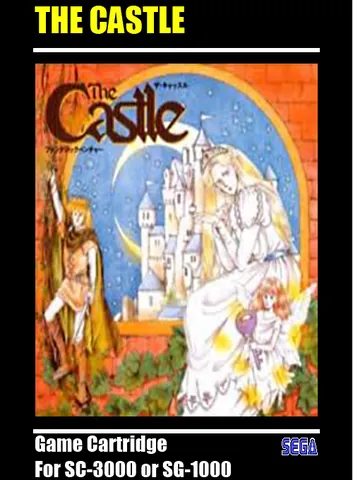
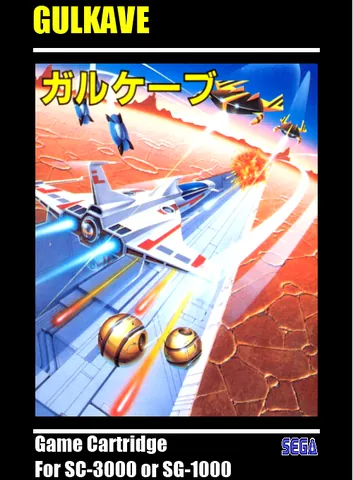
Games on this platform (13)
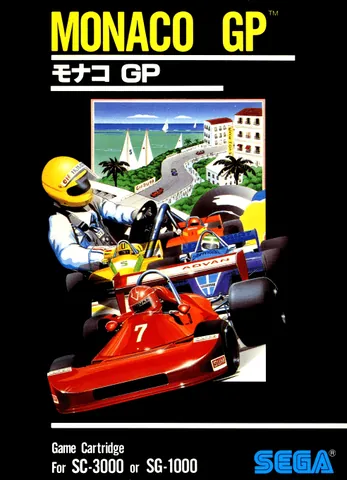
Monaco GP
A home version of an early Sega racing arcade game; no laps, just an endless dash forward.
No game in this genre.