 Nintendo · 1980
Handhelds
Nintendo Game & Watch
History & context
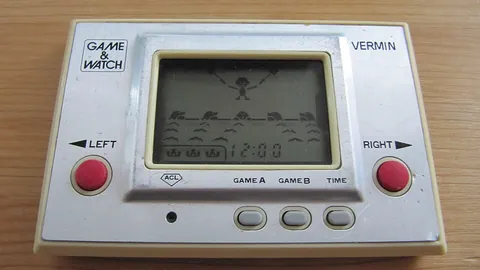
When we hold a powerful hybrid console in our hands today, or launch hundreds of games at once on a phone, it is easy to forget that the whole story of portable gaming began with a single calculator-like board with a clock. Nintendo Game & Watch (1980–1991) is exactly the place where it happened. It was devised by Gunpei Yokoi — according to the famous story, the idea came to him on a train while watching a bored businessman kill time by fiddling with a calculator. Yokoi combined a cheap LCD display, of the kind then used in calculators and digital watches, with a simple game and a clock function. This created pocket entertainment you could carry with you at any time — years before the arrival of the Game Boy.
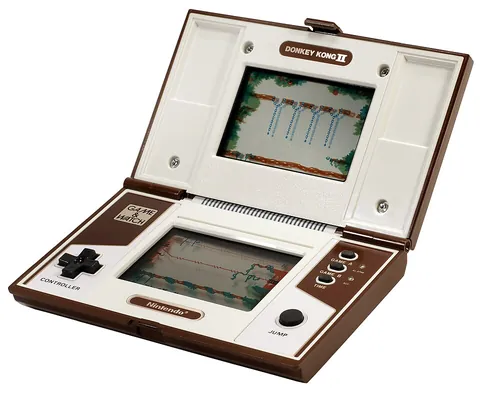
The magic lay in its simplicity. Each unit was single-purpose and contained just one hard-wired game. Yet the result was so addictive that Nintendo sold over 43 million units. These humble devices financially saved the company and earned the money that later made the development of the NES possible. Their legacy, however, is even greater than the revenue: it was on the Donkey Kong version here that Yokoi first used the cross-shaped controller (D-pad) — an element that then became a standard on literally every game controller in the world.
Technology: graphics and sound
Game & Watch used no framebuffer or true moving graphics. The display was made up of fixed LCD segments — pre-drawn shapes of characters, objects and obstacles that only lit up and switched off. Animation therefore came about in the same way as with the indicators on digital watches: the game gradually turned the prepared shapes on and off in fixed positions, so movement was actually a switching between several drawn states. This has its charm — everything is sharp and perfectly legible — as well as its limits, because nothing that the manufacturer had not etched into the segments in advance could ever appear on the display.
The image had no color; it was a monochrome LCD, where the impression of the environment and background was completed by a printed mask and colored backdrops directly on the panel. Sound was handled by a simple piezoelectric buzzer with a few tones — beeping on a jump, a catch or a loss. No melodies, no channels in the sense we know from gaming chips; the purpose was instant audio feedback, not music. The whole thing ran on a simple microcontroller and got by on button cell batteries for long months of operation.
Connectivity and peripherals
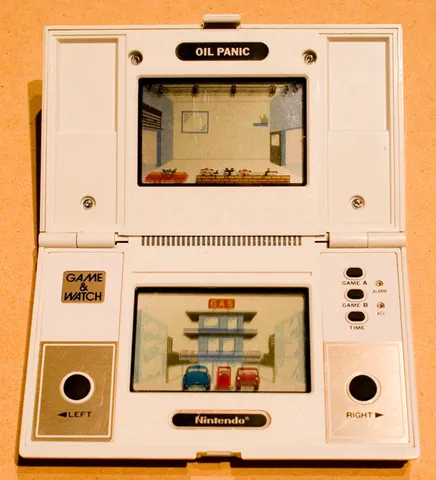
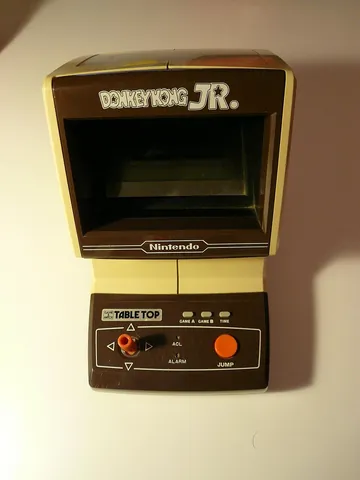
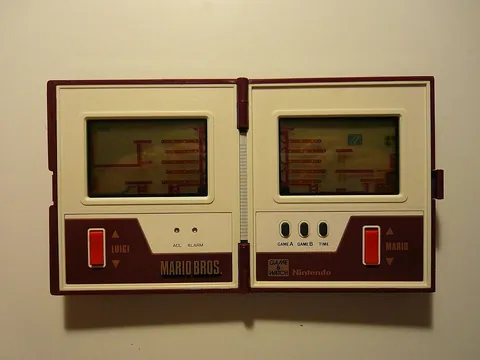
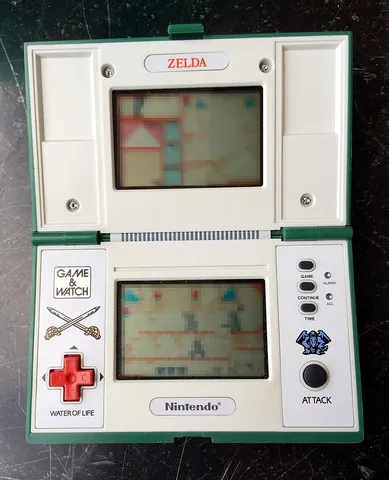
Here we have to be honest: Game & Watch was not a modular system with accessories. There was no link cable, no interchangeable modules and no memory cards — the game was fixed and self-contained. Nevertheless, several ingenious hardware ideas appeared across the range. The Multi Screen series versions (for example Oil Panic or Donkey Kong) had two displays in a fold-out case resembling a compact case — an arrangement that evidently inspired the Nintendo DS decades later. There was also the Table Top and Panorama series with a more colorful optical design and the Crystal Screen edition with a transparent panel. Most models also served as an alarm clock and a clock, which was a welcome added value at the time. No TV output, no modem — it was purely a standalone pocket thing.
Models and revisions
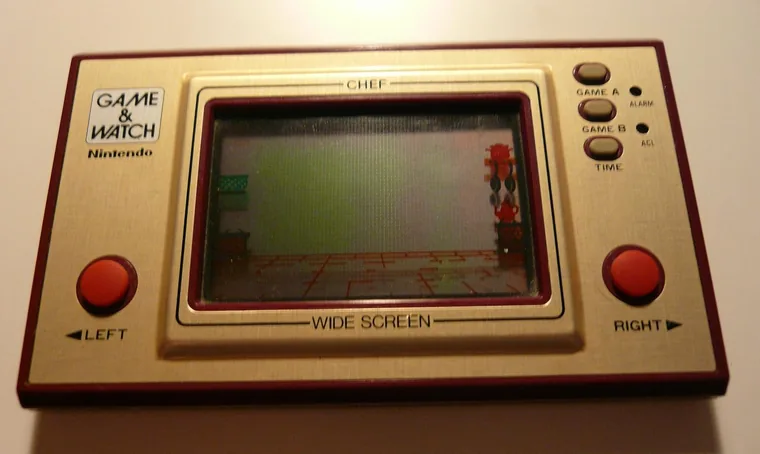
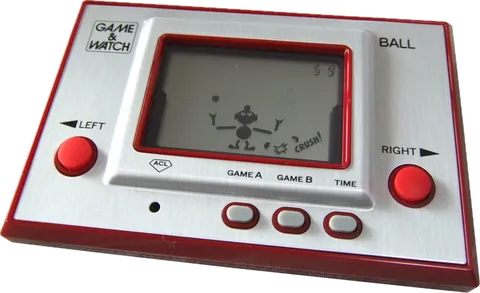
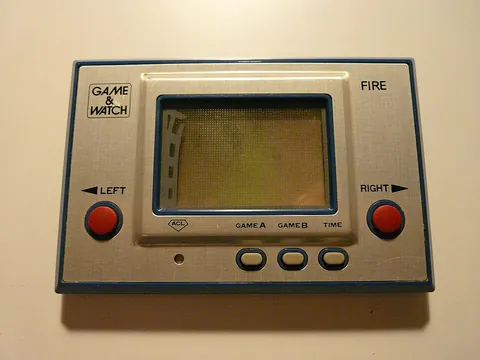
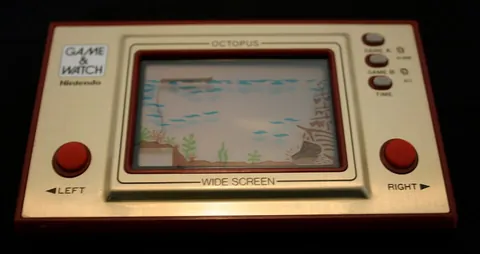
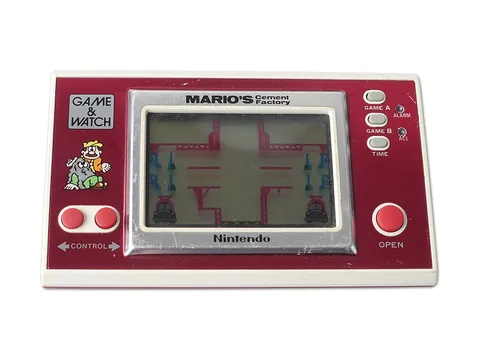
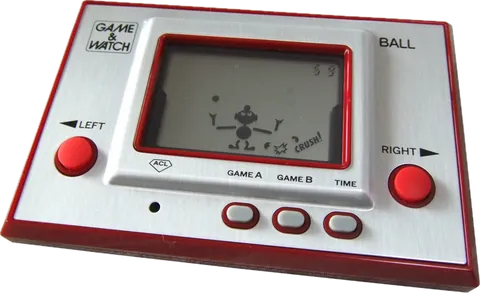
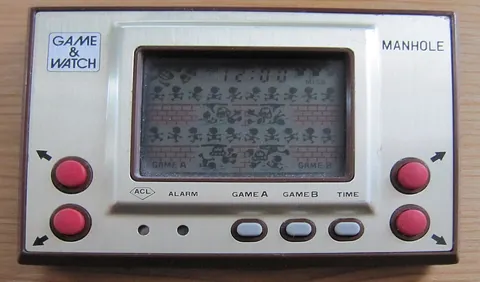
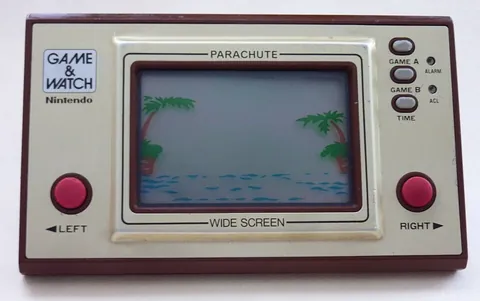
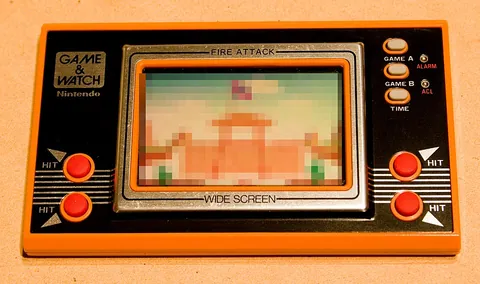
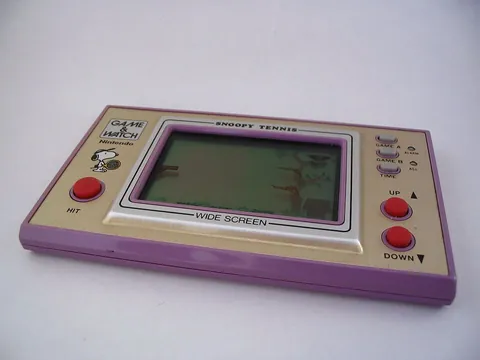
Game & Watch was not released as a single device, but as a whole family of series that differed in the construction of the case and in the controls. The main ones include Silver and Gold (the earliest simple titles such as Ball, Fire or Octopus), then Wide Screen with a larger display area, the aforementioned Multi Screen with two displays, Table Top, Panorama, Super Color, Micro Vs. System and Crystal Screen. A crucial milestone was the Donkey Kong version from the Multi Screen series, because it was on it that the cross-shaped D-pad debuted. As collector's items, the individual series are today valued very differently according to rarity and condition.
Clones and variants
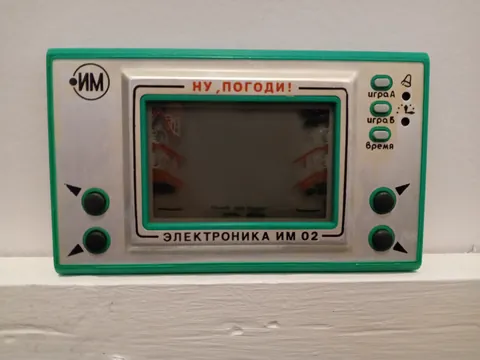
The success of Game & Watch logically attracted crowds of imitators. All over the world, the Eastern Bloc not excepted, dozens of LCD games of the same principle arose from various manufacturers. The best-known domestic trace belongs to the Soviet Union: the local Elektronika series (for example the famous "Nu, pogodi!" with a wolf catching eggs) was essentially a not-particularly-licensed variation on the Game & Watch concept, and in Czechoslovakia and other Comecon countries it was an extraordinarily widespread and affordable pocket game. A whole generation remembers these "electronic games with eggs". It is, however, fair to add that these were related products of the same type, not direct copies of specific titles — which is why we class them as variants rather than official clones.
Today's scene
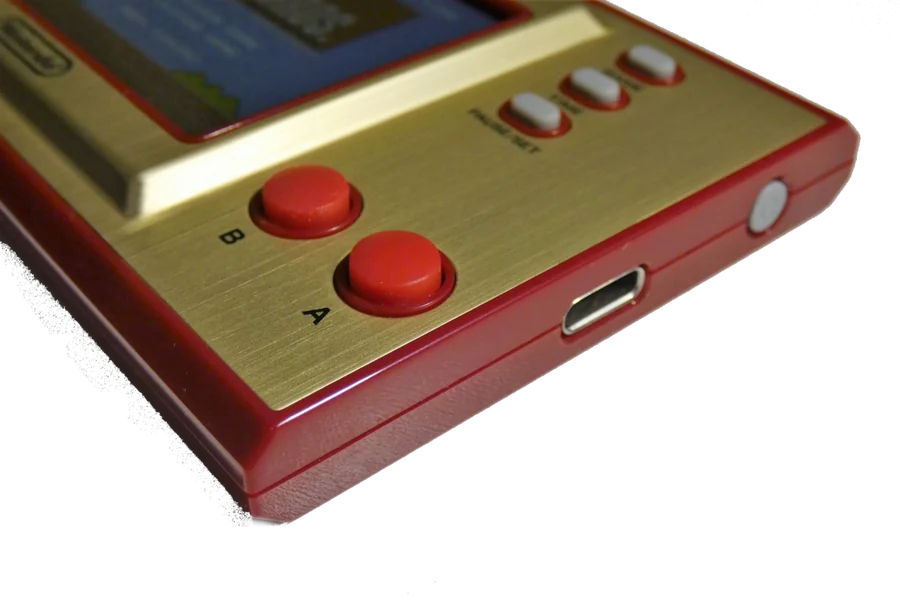
For today's retro gamer, Game & Watch is more of a historical curiosity and nostalgia than a source of deep gaming — they are simple reflex games for a few minutes. Emulation is possible, typically via MAME with accompanying artwork files (which fill in the printed background and the shape of the display), or via dedicated cores in RetroArch. The most pleasant way to get to know them today, though, is the Game & Watch Gallery compilation on the Game Boy, which offers both faithful original versions and modernized remakes with characters from the Mario cast. In 2020, moreover, Nintendo released the collector's devices Game & Watch: Super Mario Bros. for the anniversary and later The Legend of Zelda, thereby reminding a whole new generation of that little yellow marvel. Trying them out is worth it at least once — for you are holding in your hand the very roots of all portable gaming.
Games on this platform (17)
No game in this genre.