International Karate +
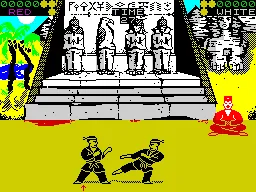
International Karate + followed up on the successful International Karate and brought to the ZX Spectrum one of the most sophisticated combat systems of its era. The novelty was a clash of up to three fighters at once – two players could face not only each other but also a third, computer-controlled opponent, which set the game apart from most karate duels of the time built on one-on-one combat. The repertoire of punches, kicks and defensive stances was rich, and their timing determined the outcome of the match far more than how fast keys were pressed, so the game rewarded patience and reading the opponent's rhythm.
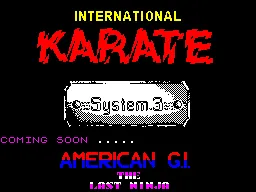
On the Spectrum, author Archer Maclean managed to squeeze out smooth fighter animations and clean backgrounds with period-iconic settings such as a Japanese garden or ancient ruins, which alternated after each round. The musical accompaniment, which greeted the player already on the title screen, was among the most memorable tunes of the eight-bit era and is one reason the game is remembered even by a generation that never finished it. The controls remained precise and instantly responsive, which was more the exception than the rule for fighting games on the Spectrum.
IK+ received an exceptionally positive reception on release and is still counted today among the best fighting games of the entire eight-bit era, compared even to later console fighters. Its emphasis on reading the opponent's movement rather than memorising combos influenced later, more sophisticated titles of the genre. Even decades later it remains playable and enjoyable, thanks above all to its well-balanced three-player multiplayer, which has little competition on eight-bit platforms. The game was released simultaneously on other eight-bit and sixteen-bit platforms, with the Spectrum version among the most technically well-regarded, and it is still cited today as a reference example of what a well-programmed eight-bit machine can do.
Why play: For players who appreciate reading the opponent's movement rather than memorising combos, and a well-balanced three-player multiplayer that has little competition on eight-bit platforms.
Game 53 of 100 for ZX Spectrum
The same title elsewhere (2)
The Commodore 64 version of IK+ is rightly seen as one of the technical high points of the 8-bit era — it managed to animate three fighters on screen at once smoothly, which impressed even seasoned players, aided by a punchy SID-chip soundtrack. The Atari ST, a 16-bit machine, offered sharper graphics, more colors and even smoother motion without slowdown, making the fights feel cleaner and faster. The core fighting system and the timing of hits and kicks stayed the same on both platforms — the difference is mainly visual quality and fluidity. Anyone wanting the game at its period best should pick the Atari ST; anyone valuing the historic 8-bit breakthrough should go for the Commodore 64.