Left 4 Dead
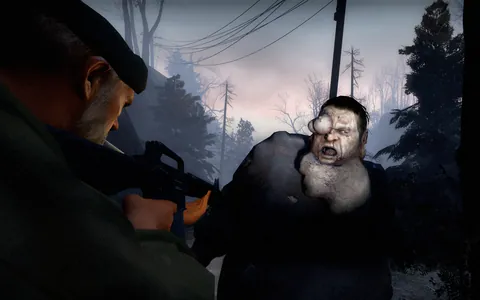
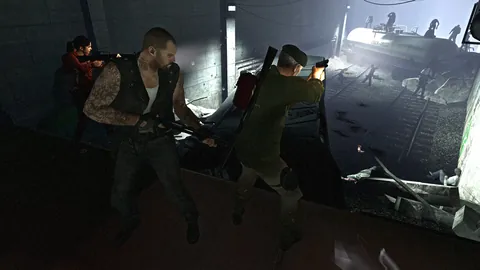
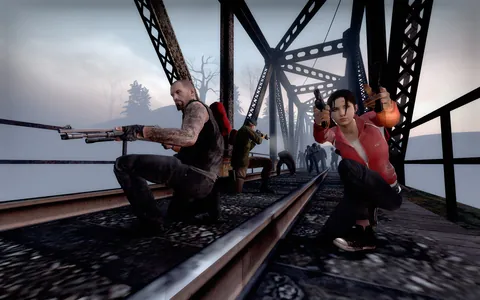
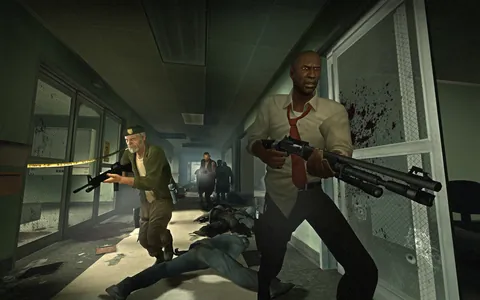
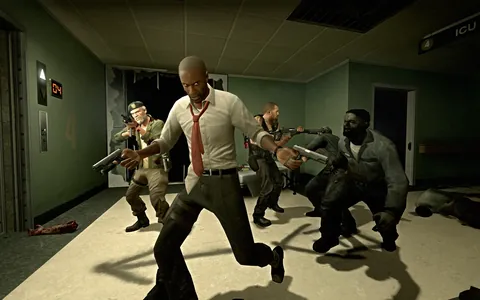

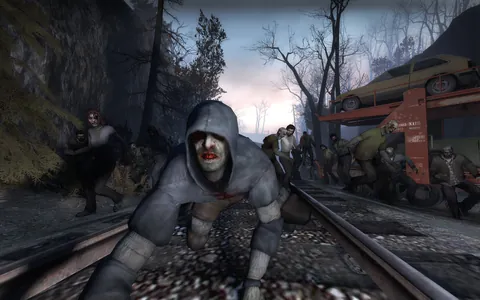
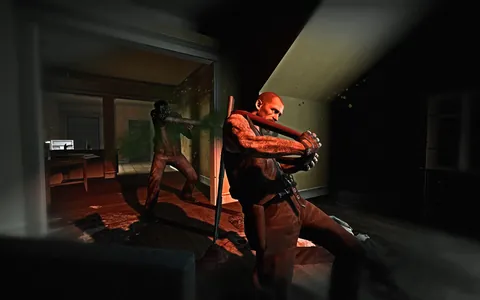
Left 4 Dead placed four survivors in the middle of a zombie virus apocalypse and built the entire game around the cooperation of four players fleeing through endless hordes of the infected toward safe-house checkpoints. Valve created a system called the AI Director, which dynamically adjusted the number of enemies, item spawns, and music intensity based on the players' performance and stress level, ensuring that no two playthroughs were ever the same and tension remained constant. The Director didn't just work with the quantity of zombies but also with rhythm – after an exhausting wave, it could deliberately impose a silence that unnerved players more than the attack itself.
Special infected such as the Hunter, Smoker, Boomer, or Tank required different tactics and team coordination, making the game one of the finest examples of cooperative multiplayer design of its time. Most of them immobilized the player, and without a teammate's help there was no escaping their grip, so the game punished anyone who strayed from the group. Four elaborate campaigns with distinct settings, from a hospital to a rural farm, offered varied pacing and atmosphere, and their finales always put the team in a besieged position, where the goal was to hold out until rescue arrived. The Versus mode let players control the special infected themselves against a rival team of survivors, adding an asymmetric competitive layer with its own tactics for deploying attacks from height and from ambush.
Sound design with tense music reacting to approaching danger was among the best on Xbox 360, with each special infected having its own audio motif that let an experienced team recognize the threat before they even saw it. Critics praised the innovative AI Director and the perfectly tuned cooperative gameplay. Left 4 Dead became one of the most influential titles in the survival horror genre and laid the foundation for the entire cooperative zombie shooter subgenre it inspired for years to come.
Game 23 of 259 for Xbox 360