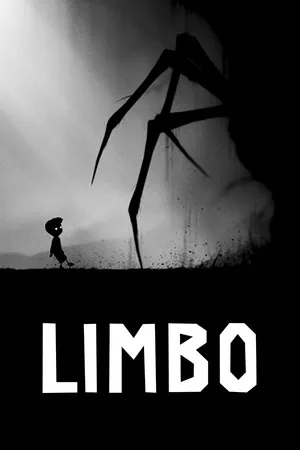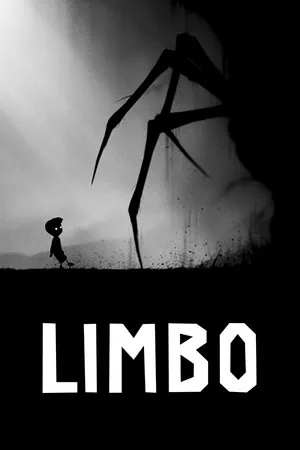
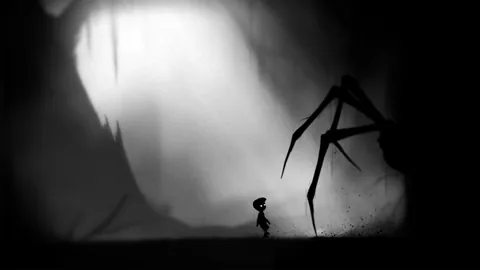
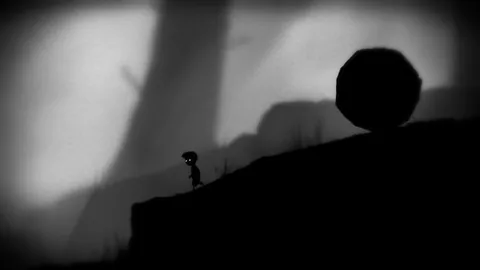
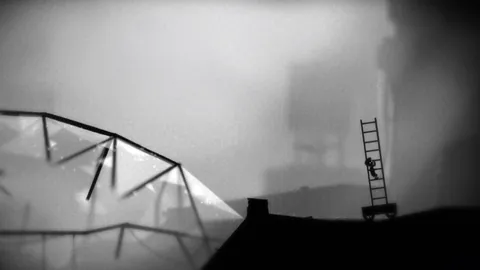
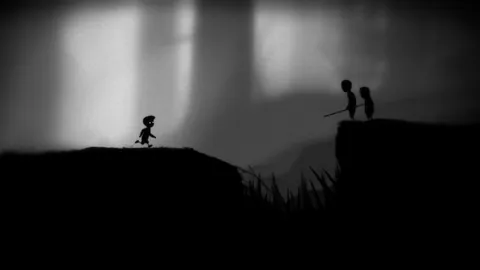
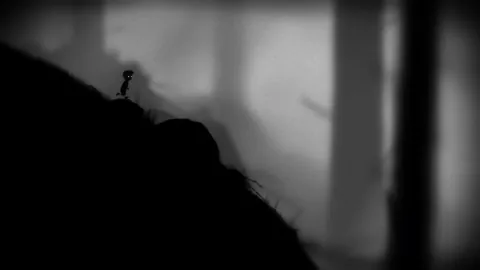


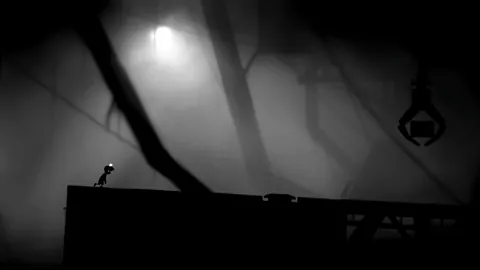
Limbo by Danish studio Playdead is one of the most iconic indie titles on the Xbox 360, thanks to its distinctive black-and-white visual style and darkly melancholic atmosphere. The player controls a nameless boy making his way through a dangerous, dreamlike forest full of deadly traps, a gigantic spider, and other unsettling threats while searching for his lost sister. The controls remain deliberately simple — just movement, jumping, and a single button for grabbing and pulling objects — so that all attention is focused on reading the environment and solving spatial puzzles built on physics, momentum, gravity, and precise timing.
The game is built around physics-based puzzles in which the player's death is an almost inevitable and accepted part of the learning process — checkpoints are placed just before each trap, so failure doesn't punish with lengthy repetition but instead leads straight into another attempt. The character's silhouette against a blurred background, subtle film grain, and minimalist sound design create an atmosphere of anxiety without a single line of dialogue or textual explanation. Music in the conventional sense is virtually absent, its place taken by ambient noises, crackling, and silence, which often communicates danger better than the image itself. The second half of the game gradually leaves the forest behind and moves into a decaying industrial environment of gears, elevators, and gravity switches, changing the character of the puzzles along the way.
The absence of any explicit story leaves interpretation entirely up to the player, sparking extensive discussion about the true meaning of the boy's journey through limbo. Its short but intense playtime, combined with the complete artistic cohesion of its visuals and sound, made Limbo a defining template for what an art game could be. Critics praised it almost unanimously, and Limbo became the most commercially and critically successful title on Xbox Live Arcade, inspiring an entire wave of atmospheric, minimalist platformers in the years that followed, including its own spiritual successor, Inside. Even today the game doesn't feel dated, because its style never relied on technical spectacle.
Game 30 of 259 for Xbox 360