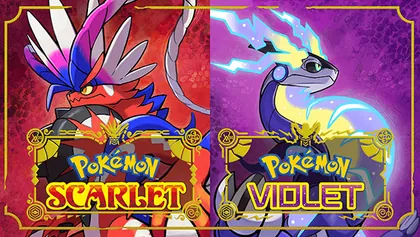
Pokémon Scarlet and Violet
Pokémon Scarlet and Violet gave the series its first truly seamless open world without loading screens between locations, set in the Paldea region inspired by Spain and Portugal. The player, as a student at Naranja or Uva Academy, can freely roam the landscape in any direction from the opening hours and follow three parallel storylines at once – the traditional challenge of eight gyms, a fight against the criminal organization Team Star made up of bullied school outsiders, and tracking down a legendary Pokémon, whether the fiery Koraidon or the electric Miraidon, which also serves as a riding companion enabling gliding, swimming, and wall-climbing. Because the game doesn't scale difficulty according to progress, one of its strongest moments comes when the player accidentally heads into an area they're nowhere near ready for.
This open approach was a crucial step for the series following the partially open experiment of Legends: Arceus, although the release was accompanied by significant technical criticism due to frame-rate drops, graphical glitches, and engine instability, sparking one of the sharpest discussions about the quality of a mainline entry in the series' history. The contrast between the ambition of the design and the state in which the game launched is arguably the project's biggest weakness, even though later updates eased many of the issues.
Still, the game offered popular novelties like the cooperative Tera Raid Battles, using the crystalline typing system of Terastallization, which temporarily changes a Pokémon's type and resistances, fundamentally transforming competitive play as well – suddenly you couldn't guess an opponent's weaknesses just by looking at them. It's also possible to explore the entire world together with three friends. Two expansions, The Teal Mask and The Indigo Disk, expanded the story with additional regions and legendary Pokémon while also offering the toughest battles in the game. Despite the technical issues, Scarlet and Violet became the commercially most successful games in the series ever, and their story about searching for one's own treasure ranks among the best-written the series has ever had.
Game 13 of 188 for Nintendo Switch
From the same series Pokémon →
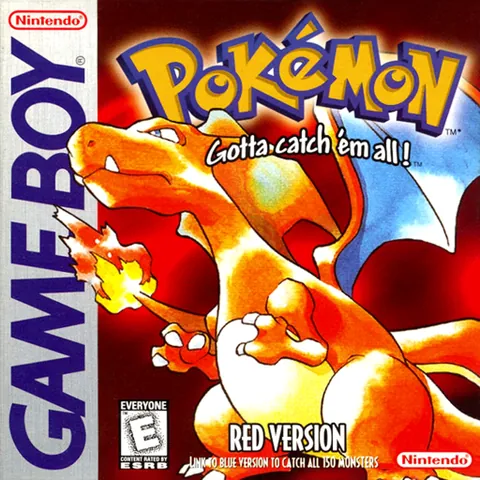 Pokémon Red / Blue / Yellow GBC · GB
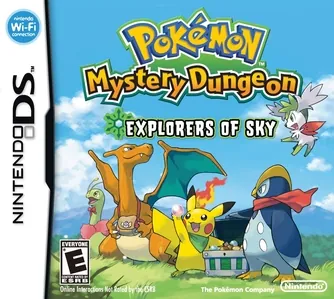 Pokémon Mystery Dungeon: Explorers of Time / Darkness / Sky DS
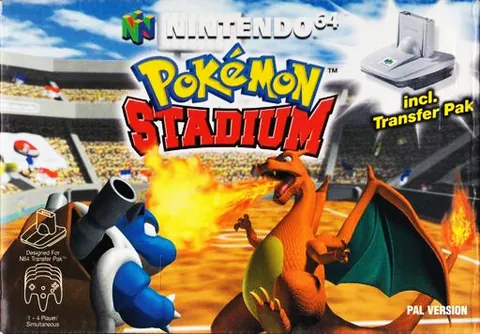 Pokémon Stadium 1 & 2 N64 GB Pokémon Red / Blue GB · 1996
 Pokémon Trading Card Game GB · GBC · 1998 (JP) / 2000 GBC Pokémon Gold / Silver / Crystal GBC · 1999 (JP) / 2000
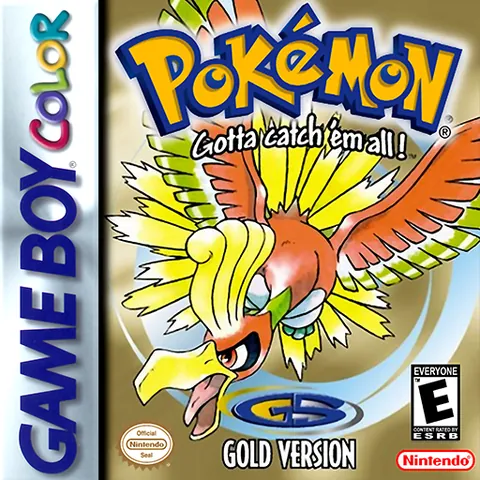 Pokémon Gold / Silver GBC · 1999
 Pokémon Pinball GBC · 1999
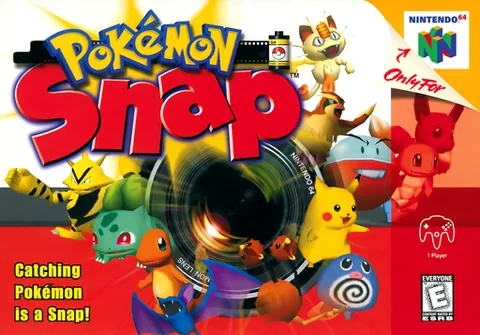 Pokémon Snap N64 · 1999
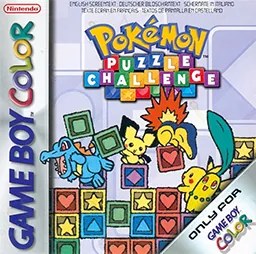 Pokémon Puzzle Challenge GBC · 2000
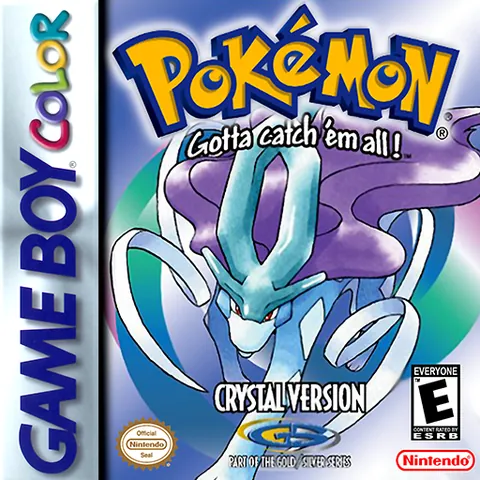 Pokémon Crystal GBC · 2000 GBA Pokémon Ruby / Sapphire / Emerald GBA · 2002/2004