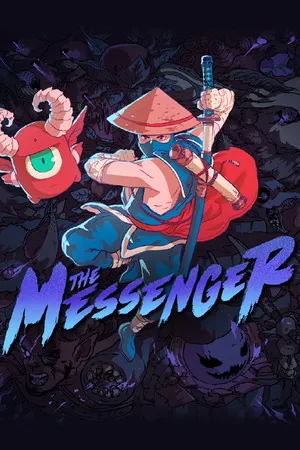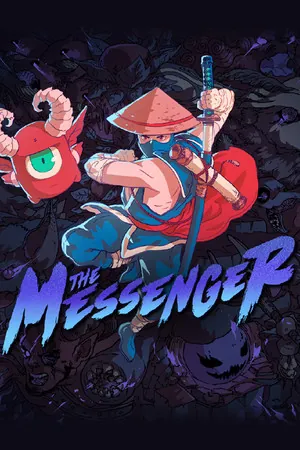
The Messenger
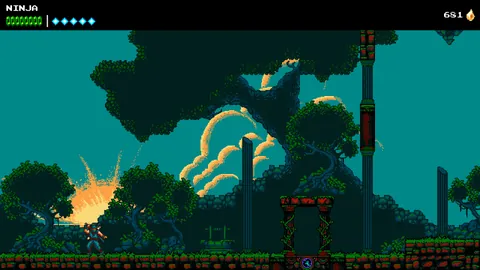
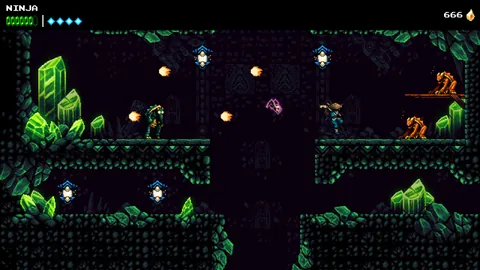
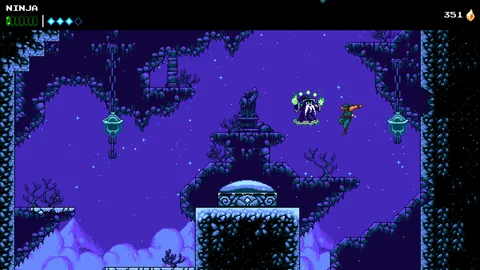
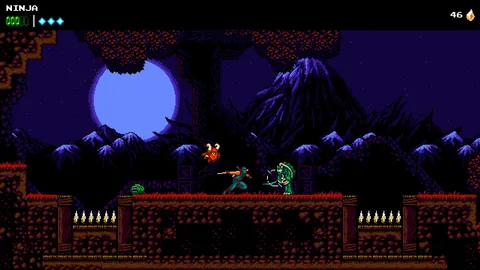
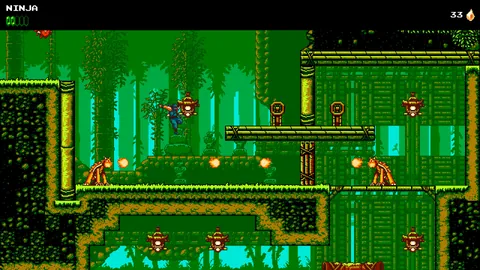
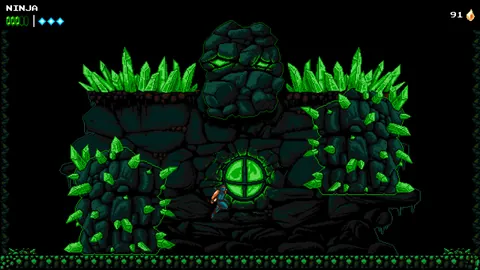
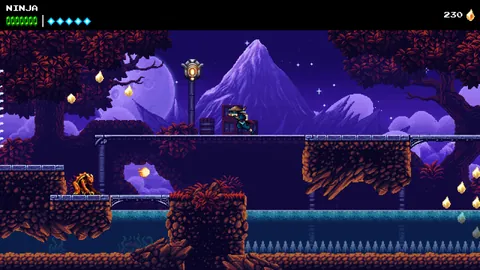
The Messenger starts out as a straightforward tribute to eight-bit ninja platformers in the style of Ninja Gaiden, but after a few hours it pulls off a twist that made it one of the most talked-about independent titles of its time. The player first moves through linear levels, slashing with a sword, climbing walls, and using the magical cloudstep, a second jump in mid-air that resets every time the blade strikes an enemy, a lantern, or a projectile. This single mechanic turns progression into a swift chain of jumps, where a skilled player practically never touches the ground, and it's the main reason the game controls so well.
Halfway through, however, the structure opens up, and the linear platformer becomes an interconnected world in the spirit of metroidvania, where the player returns to earlier levels to find paths that were previously impassable. At the same time, the game switches between an eight-bit and a sixteen-bit visual layer, and this change is not merely cosmetic, since the terrain looks different in each era and some passages exist only in one of them. The switching happens seamlessly in real time and is one of the most imaginative ideas the genre has received in recent years.
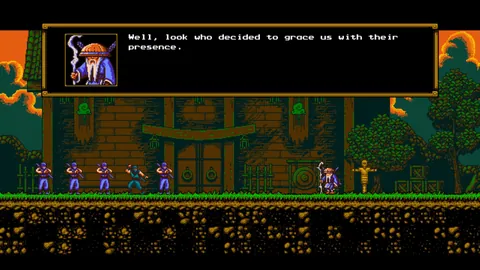
On Switch the game runs without issues, the controls are responsive, and the short stretches between checkpoints suit it well in portable mode. The writing is strongly comedic, largely thanks to a talkative merchant who comments on the player's progress, though it occasionally slips into longer monologues. The music employs chiptune sound in two versions matching both graphical eras, switching along with the visuals, a detail that shows just how much care went into the game. Critics especially praised the boldness of changing its own genre mid-playthrough, and the game earned a strong reputation among players who grew up on NES platformers. Today it remains one of the best-playing titles of its kind, able to both entertain and surprise.
Game 87 of 188 for Nintendo Switch