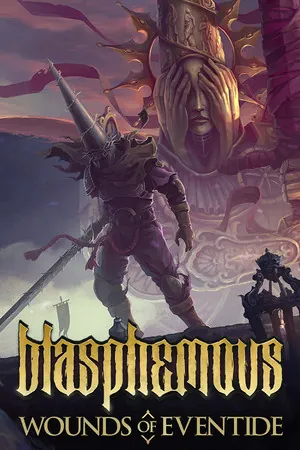
Blasphemous
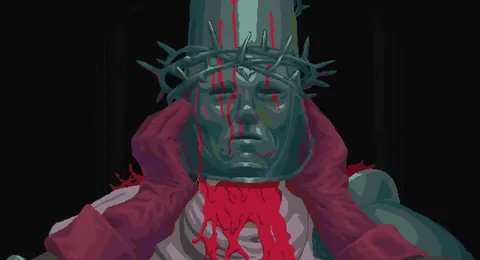
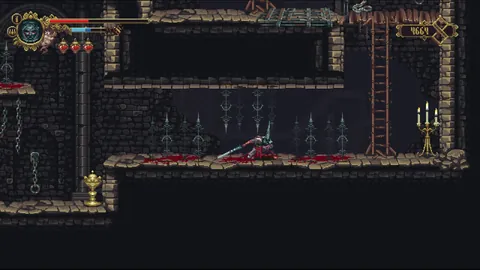
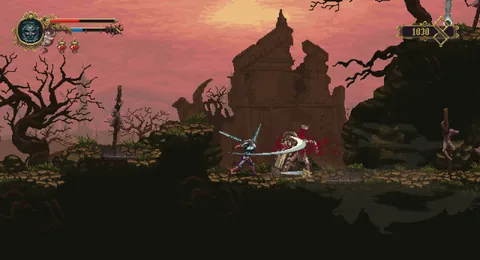
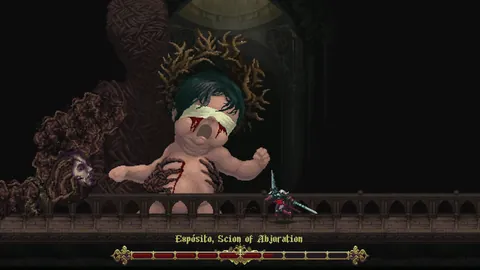
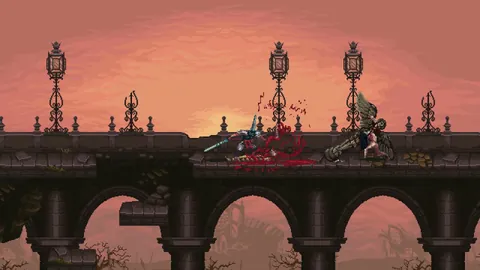
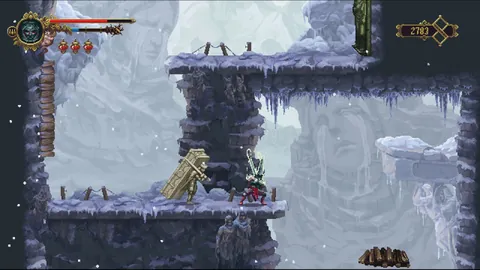
Blasphemous is a dark pixel-art metroidvania that builds its world on baroque religiosity, penitent processions, and the painful iconography of southern Spain. The player takes on the role of the silent Penitent One, wearing a helmet of thorns, who travels through a land struck by a miracle that turns suffering into a grotesque form of holiness. This aesthetic is the main reason the game stands out: the environment is full of statues, altars, bell towers, and deformed bodies, with every enemy and boss looking like a scene torn from a religious painting that has spiraled out of control.
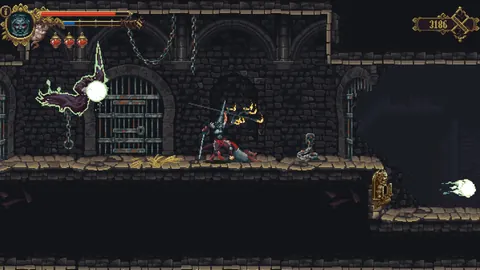
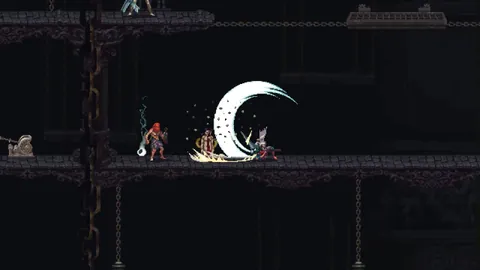
The gameplay combines exploration of an interconnected world with a combat system derived from soulslike games. The character attacks with a sword, can guard and deflect with a precisely timed parry, and gains new moves and abilities that gradually open up previously inaccessible areas. Upgrades come through rosary beads, hearts, and prayers, passive and active items that leave the player fairly free to decide whether to invest in endurance, damage, or spells. Death leaves behind a guilt stain that reduces maximum mana reserves until the player retrieves it, a variation on the familiar lost-souls mechanic. Boss fights are among the most demanding parts and require learning attack patterns.
On Switch the game runs well, and portable mode suits it, since the stretches between prayer pews, which serve as checkpoints, aren't overly long. The detailed pixel-art graphics, with large, hand-animated bosses, remain legible even on a smaller screen, and the audio, featuring flamenco guitar and choral motifs, rounds out the oppressive atmosphere. Critics especially praised the unmistakable visual style and the boldness of building an entire game around a single cultural context, with reservations aimed more at platforming precision. The developers kept improving the game long after release, adding free new content, so today it feels considerably more balanced than at launch.
Game 89 of 188 for Nintendo Switch