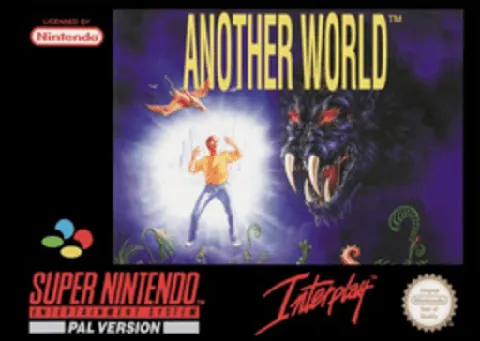
Another World
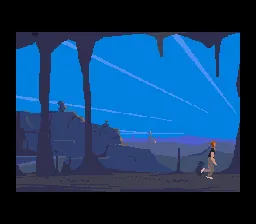
Lightning strikes a particle accelerator and the young scientist Lester finds himself on an alien planet where he knows neither the language, nor the enemies, nor the rules. Another World is one of the boldest and most distinctive titles of its time, and the Super Nintendo version brought this cinematic vision to Nintendo's consoles.
The game was created practically single-handedly by the French author Éric Chahi at the turn of the eighties and nineties. He used vector polygon graphics, which made the characters and environments look fluid and cinematic at a time when most games relied on pixel sprites. The result was a unique visual style and storytelling without a single word, relying purely on image, animation, and atmosphere.
The gameplay is a mix of platforming, action, and logic puzzles, where death lurks literally around every corner. The game does not hold your hand, shows no lives or tutorials; instead it lets you discover the world by trial and error. Observation, timing, and improvisation are key, whether you are fleeing a predator, using a laser weapon, or figuring out how to get further. An important role is also played by the silent ally you meet in captivity.
Another World, released in North America under the title Out of This World, became a cult title and fundamentally influenced the concept of an atmospheric, visually narrated gaming experience. It inspired later creators of independent games, and its influence is evident in works that emphasize mood and direction rather than the number of enemies. The game was ported to a countless number of platforms and even received modern remakes.
On the SNES it is a demanding but unforgettable experience for players seeking something more than reflexive action. It is an interactive film from a time when it was still being discovered just what games could do.
Why play: A quiet, cinematic, and still unique experience that proves a game could be art as early as the beginning of the nineties.
Game 61 of 154 for Super Nintendo
The same title elsewhere (4)
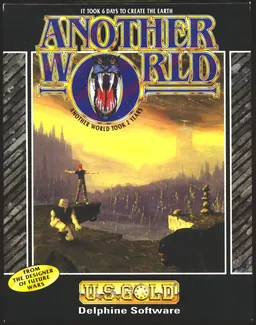
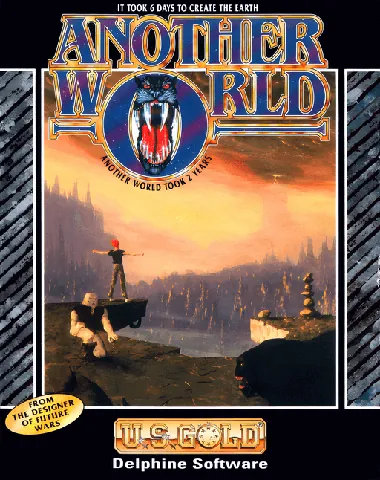
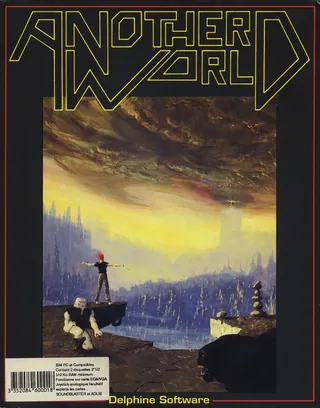
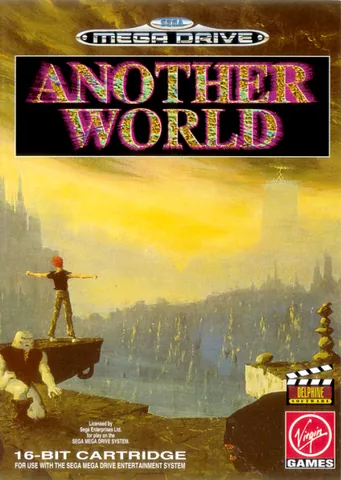
Éric Chahi's 1991 original was built for the Amiga and Atari ST, and its vector-based, polygon graphics came remarkably close to film animation for its time. Because it wasn't built from classic pixel sprites, the game translated to other platforms with surprising fidelity. The Amiga and Atari ST versions did have floppy-disk loading pauses between scenes, which the cartridge-based Mega Drive and Super Nintendo ports removed. The sound differed, though: the Amiga used sampled music, while the Mega Drive relied on its FM chip for a rawer tone. The SNES port is generally seen as one of the best-balanced versions.