Vietcong
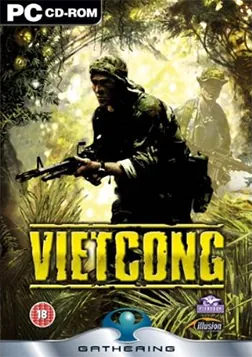
Vietcong from 2003 took players into the jungles of Vietnam in the role of a commander of a small unit of American soldiers. Unlike many war shooters of the time, the game emphasized tactics, movement through dense vegetation with limited visibility, and cooperation with subordinates, who could be given orders to advance, take cover or open fire. The environment of dense jungles, villages and underground tunnels created a claustrophobic, tense atmosphere where the enemy was often heard before being seen, and where careless movement across open terrain easily led to a swift end to the mission. The player could give their squadmates basic instructions for advancing and firing, which turned individual skirmishes into small tactical operations rather than chaotic firefights.
The game's sound design was among its greatest strengths — period rock music playing from military transistor radios reinforced the sense of time and place, while jungle sounds, distant gunfire and crackling radios built tension even during quieter passages. Missions led players through rice paddies, abandoned villages and a network of tunnels used by the enemy, and the game did not shy away from depicting civilian casualties and the moral ambiguity of the whole conflict. The graphics were of a high standard for their time, especially in terms of the density of the vegetation and lighting, which made the jungle feel dense and disorienting, much as it probably was in reality. The game from Czech studio Pterodon was among the first to seriously and thoroughly address the conflict in Vietnam, including its morally ambiguous aspects.
Thanks to its atmosphere and tactical approach, Vietcong earned devoted fans even abroad and is still remembered as one of the most authentic war experiences of its time, despite being a game with pronounced violence corresponding to the conflict it depicts.
Game 80 of 583 for PC / moderní (64bit a GPU)