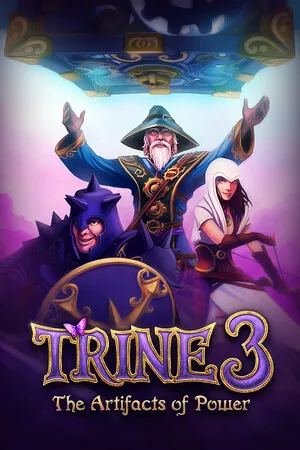
Trine 3: The Artifacts of Power
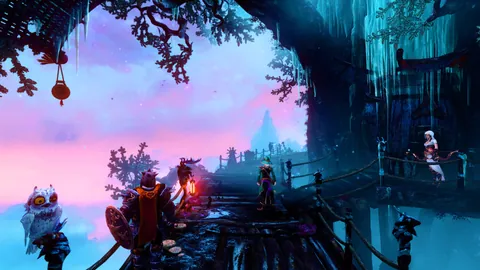
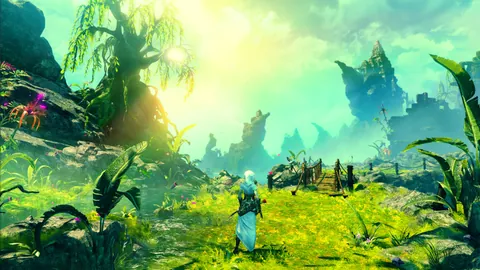
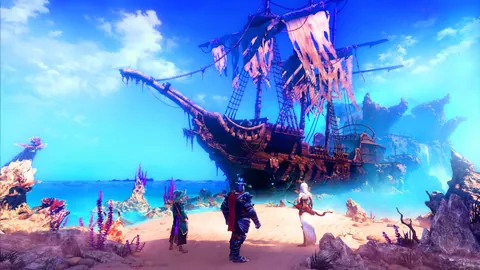
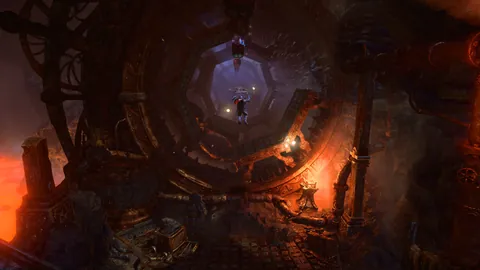
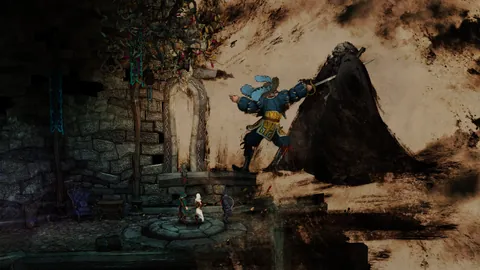
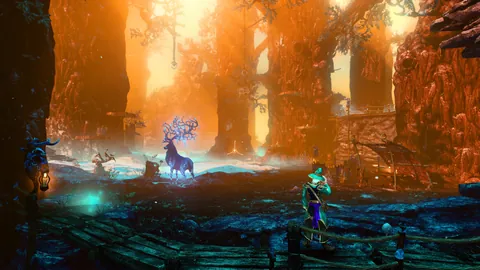
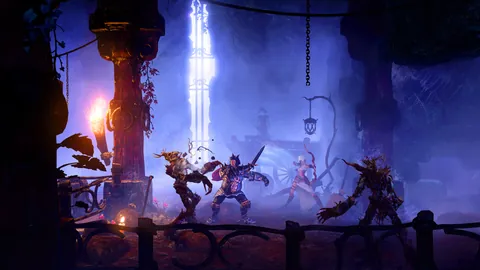
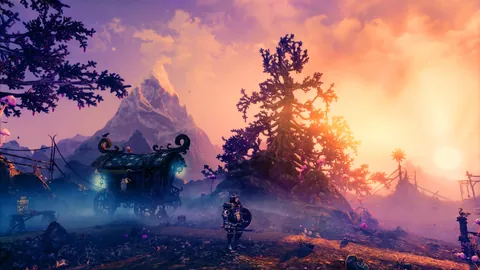
Trine 3: The Artifacts of Power from 2015 by Finnish studio Frozenbyte marked a major technological leap for the series – a shift from the traditional 2.5D platformer into a fully three-dimensional environment, through which the sorceress Amadeus, the knight Pontius, and the thief Zoya could for the first time move in all directions, not just sideways along a single axis. The series' signature magical physics puzzles, in which Amadeus conjures objects and levitates them, Pontius breaks obstacles with sword and shield, and Zoya shoots with rope and arrows, thus gained new spatial depth, but this also required a reworking of the camera controls and level design, with which the game noticeably struggled in places.
Visually, the game remained faithful to the fairy-tale-like, picturesque, and colorful aesthetic of previous entries, and on PC it offered impressive lighting, soft shading, and fantasy environments full of forests, caves, ancient ruins, and floating islands. The music once again crafted the series' magical, fairy-tale atmosphere and, together with a narrator's voice, guided the player through the story of the artifacts of power that the three heroes must reunite. Cooperative play for up to three players was retained just as in previous entries, with each character contributing different abilities toward solving puzzles and overcoming traps.
Contemporary reactions were notably more divided than for previous entries – players and critics praised the visual side and the boldness of experimenting with the shift to 3D, but criticized the noticeably shorter campaign length, the not fully polished camera handling in more open spaces, and technical shortcomings in level design, which led Frozenbyte to return to the proven 2.5D approach for the series' next entry. Still, the game retained a pleasant, relaxed atmosphere even on PC, making it a nice choice for playing together with friends or family.
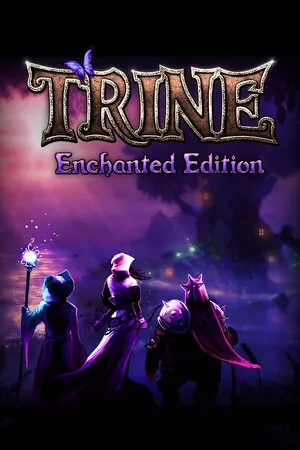
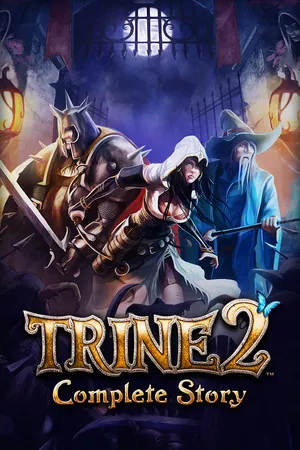
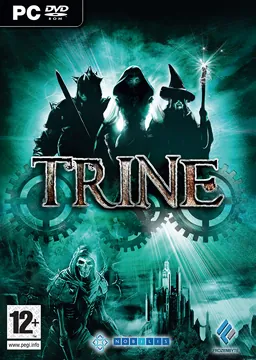
Trine 3 thus remains an interesting, if imperfect, detour in the series' history, interesting more for fans who want to see how the studio experimented with the dimensionality of its magical world than as a recommendation for newcomers, who would do better to fall in love with the series through its more two-dimensional entries.
Why play it: More for loyal fans of the series curious about a bold, not entirely successful experiment with the world's dimensionality than for newcomers, who should start with Trine's more two-dimensional entries.
Game 281 of 583 for PC / moderní (64bit a GPU)