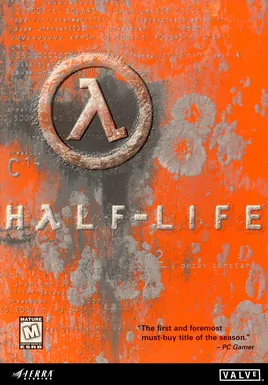
Half-Life
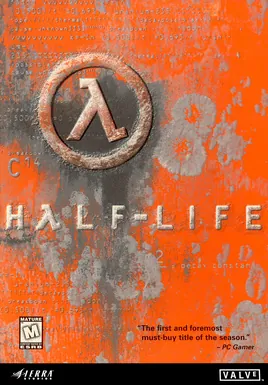
Half-Life from 1998 by Valve fundamentally transformed the first-person shooter genre by never breaking the narrative with a cutscene or forcing the player to leave the protagonist's body. Physicist Gordon Freeman finds himself in the middle of a catastrophe at the underground research complex Black Mesa after an experiment with an unknown sample tears open a rift to another dimension, and he must fight his way out through alien creatures as well as soldiers sent to cover up the incident at any cost, including eliminating witnesses. The entire story unfolds seamlessly, from Gordon's own eyes, without a single loss of control.
The gameplay blended firefights with environmental puzzles, platforming sections, and scripted sequences that at the time felt completely natural and unforced, unlike many later games that used similar tricks far more clumsily. The enemy AI, especially that of the special-forces soldiers, was among the most advanced of its era and forced players to think tactically instead of simply charging in head-on. On Windows 9x machines the game ran on a modified GoldSrc engine derived from Quake, which delivered solid performance even on mid-range setups, and it also became the foundation for the phenomenal Counter-Strike modification.
Half-Life earned near-unanimous acclaim from critics and players alike and is still ranked among the most influential computer games of all time. The atmosphere was further amplified by dense, industrial music and sound design that could build tension even in moments when seemingly nothing was happening on screen. Its emphasis on uninterrupted storytelling influenced countless later titles and became a standard the shooter genre has kept returning to ever since. Even decades later, the game offers a surprisingly cohesive and gripping experience that has not aged the way one might expect from a title nearly thirty years old.
Game 94 of 229 for PC / Pentium a Windows 9x