Half-Life: Alyx

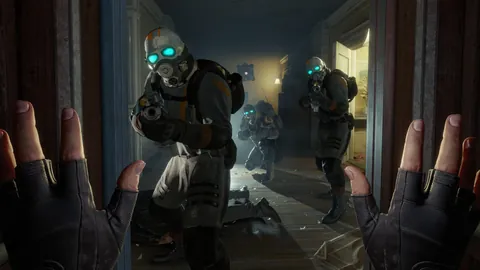


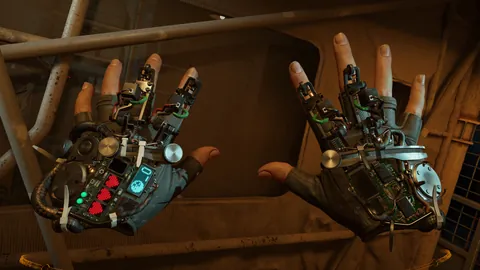

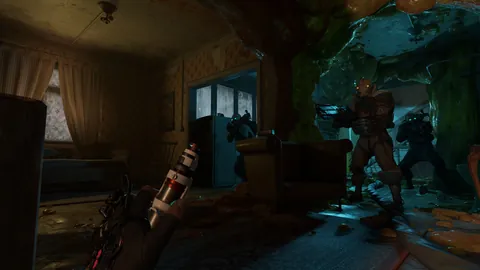
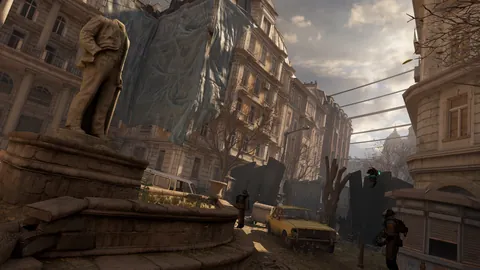
Half-Life: Alyx marks Valve's return to one of gaming's most significant franchises, this time completely rewritten for virtual reality. The player takes on the role of Alyx Vance a few years before the events of Half-Life 2, in an occupied City 17 full of Combine patrols and mutated headcrabs. The entire game was designed from the ground up with VR interaction in mind: weapons are reloaded by hand, objects are picked up and thrown, puzzles are solved by manipulating the environment, and gameplay as a result feels far more physical than in classic shooters. The gravity glove, which lets you pull objects and ammunition toward you from a distance, plays an important role and became one of the most frequently mentioned elements of the controls.
Technically, it's one of the most visually accomplished VR games ever made, with detailed environments, convincing lighting, and carefully directed scenes that use the first-person perspective to build tension. The sound design and music continue the atmosphere of the original series, and the claustrophobic tunnels and quiet moments interrupted by sudden headcrab attacks feel considerably more intense in VR than on a flat screen. The game requires a powerful PC and a headset such as the Valve Index, HTC Vive, or Oculus Rift, and even years later it remains one of the most graphically demanding VR titles on the market.
Upon release, Half-Life: Alyx received extremely positive reception and is often described as the game that finally showed VR could deliver a full-fledged, long, and narratively rich experience rather than just a technology demo. Many developers now cite it as a reference point for movement, object interaction, and level design in virtual reality. Even years later it remains one of the most frequently recommended titles for anyone putting on a VR headset for the first time, and its influence can be seen in later games that adopted a similar approach to handling objects and weapons. The game also features an optional locomotion mode that lets players choose between teleportation and smooth walking based on their own sensitivity to VR motion sickness, which contributed to its broader accessibility.
Why play: For anyone putting on a VR headset for the first time and wanting to experience a full-fledged, narratively rich title that still serves today as a reference point for movement and object interaction in virtual reality.
Game 1 of 29 for PC VR (Rift, Vive, Index)