Ecco the Dolphin
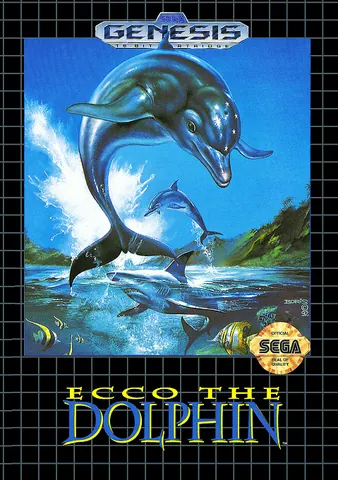
Imagine an action game where you have no weapons, you do not defeat enemies with gunfire, and your greatest foe is your dwindling breath. Ecco the Dolphin was never an ordinary game, and that is exactly where its still-undiminished charm lies. The player takes on the role of the dolphin Ecco and sets off across the oceans to save his family, swallowed up by a mysterious storm. What begins as a melancholy adventure full of silence and blue depths gradually turns into one of the most peculiar and demanding journeys a home console has ever offered.
In terms of gameplay it is a blend of exploration, puzzles, and dexterity passages. Ecco moves in the three dimensions of the water space, running into currents, narrow tunnels, and shoals of fish, and must constantly watch two key values: his air supply and health. Echolocation serves for orientation, communication with other creatures, and revealing paths ahead. The game is famous for its difficulty and for how little it holds the player's hand, which makes every bit of progress a small victory.
Behind the game stands the studio Novotrade from Hungary and the visionary Ed Annunziata, who wove into the story motifs evoking dolphin intelligence, ancient civilizations, and cosmic forces. Spencer Nilsen's music completes the hypnotic, dreamlike atmosphere that is as typical of Ecco as its early-nineties graphics. The result was a title that stood apart from the trends of the time oriented toward speed and action.
Culturally, Ecco the Dolphin went down as one of SEGA's boldest brands. The game earned a sequel, saw conversions to other platforms including later digital re-releases, and became the subject of countless discussions, parodies, and cult admiration. For many players it remains a symbol that even on a sixteen-bit console a work with an almost meditative, near-arthouse mood could come into being.
Today Ecco the Dolphin is a reminder of an era when creators allowed themselves to experiment and take risks. It is not a game for everyone, and its uncompromising design can be a torment, but that is exactly why it earned itself immortality.
Why play: For the unique, hypnotic atmosphere of an underwater world and an experience fundamentally unlike anything else on the Mega Drive.
Game 78 of 151 for SEGA Mega Drive
The same title elsewhere (2)
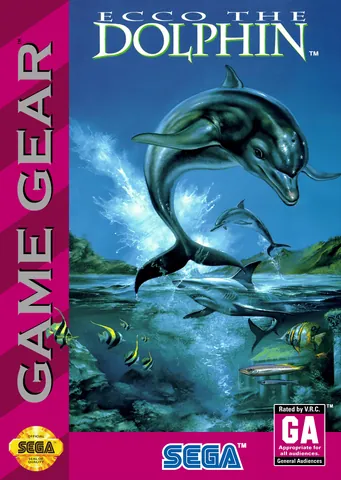
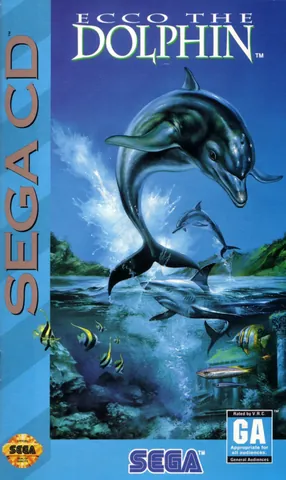
The 1992 SEGA Mega Drive original ran on a cartridge with FM-chip music and delivered a distinctive, meditative feel of swimming through the ocean. The 1993 SEGA Mega-CD version used the CD format to bring a reworked soundtrack with richer, more atmospheric sound and improved background graphics. The Mega-CD edition also includes extra content that couldn't fit onto the original cartridge due to its limited capacity. Because of this, the CD version is usually seen as the visually and sonically richer one, while the Mega Drive original remains the faster, more straightforward choice that needs no extra CD drive.