Asteroids (mobile)
Asteroids arrived on Java phones as another in the series of classic Atari arcade titles that found their way to mobile players at the start of the millennium. The principle stayed true to the 1979 original - the player controls a small spaceship in the center of the screen, rotates it, accelerates with thrust, and shoots at gradually breaking-apart asteroids, while having to dodge debris and occasional enemy saucers. The ship's inertia physics, where movement doesn't stop immediately after releasing the button, gave the game its characteristic feeling of fragile control, which translated surprisingly well onto the phone's limited keypad, even though mastering precise rotation and braking demanded some patience from the player.
The visual side remained deliberately spare, in the vector spirit of the original, which let the game run smoothly even on the weaker hardware of the devices of the time. The sound effects stuck to simple beeps and a basic music loop, but the main weight of the atmosphere was carried by the mechanic itself - danger from all sides - the screen quickly filled with debris and the player had to constantly reassess where to shoot and where to dodge. The scoring system motivated repeated play and the chase for a personal best, which fit well with the short gaming sessions typical of mobile gaming at the time, when a player could squeeze in one round between other activities while still trying to push their personal best further.
For many players this was their first encounter with an arcade classic they had previously known only from stories or from arcade machines. The port to Java showed that old, seemingly simple game principles have timeless value and work even without a graphical overhaul. Today, Asteroids on mobile is remembered as one of many proofs that the limits of phones back then could be fertile ground for pure, gameplay-focused games, where a feel for movement mattered more than the power of a graphics card.
Why play it: For those who knew Asteroids only from stories or from arcade machines - the port to Java shows that old, seemingly simple principles have timeless value even without a graphical overhaul.
Game 62 of 69 for Java a Symbian (telefony před smartphony)
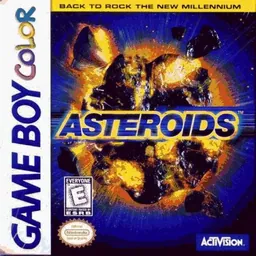
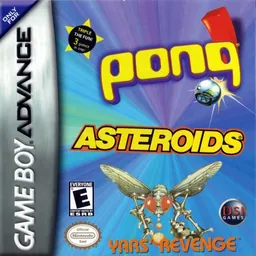
The same title elsewhere (2)
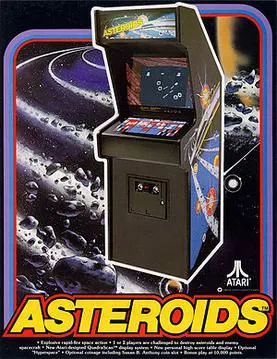
The Atari arcade original ran on a genuine vector monitor that drew thin, crisp lines for the ship and rocks directly with the electron beam, so the image stayed clean regardless of resolution. The Atari 2600 has no vector display — its picture is built from the blocky raster shapes typical of the TIA chip, so ships and rocks look coarser and less elegant. The console can also only show a limited number of objects at once, so asteroid density and pacing had to be toned down compared to the arcade. Sound is simple on both sides, but the synthesized explosions and the rising engine pulse from the arcade board carry more atmosphere. For the true vector cleanliness, the arcade version is where to go.