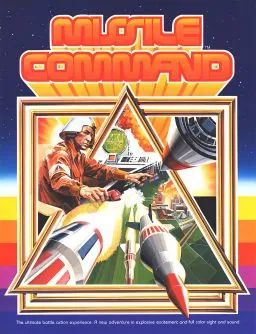
Missile Command (mobile)
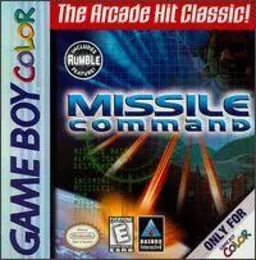
Missile Command ranks among the arcade legends that Atari had ported to mobile phones in the Java and Symbian era, alongside other titles from its catalog. The player defends six cities from a rain of ballistic missiles by launching anti-missile rockets from several bases, timing their explosions precisely to intercept enemy projectiles before they hit the ground. On the phone's limited keypad, the controls were simplified to moving a targeting cross and a fire button, yet the game retained the tension of deciding which missile to sacrifice and which city to let fall, because the anti-missile bases run out of ammunition faster than the player would like.
As the game progressed, missiles grew in number and speed, the screen thickened with explosions, and the player was forced to work under ever greater pressure, which made the short rounds an intense experience ideal for playing between other activities. The graphics stayed economical and clear, with clearly distinguished colors for cities, missiles, and explosions, thanks to which the game worked even on the small monochrome or low-resolution displays of the phones of the time. The sound accompaniment was limited to basic explosions and warning tones, but that was enough to maintain the pace and urgency players already knew from the arcade machine. The absence of music paradoxically heightened the tension even more, since the only sound cue remaining was the wail of incoming missiles.
Porting Missile Command to mobile showed how well game principles built on simple decision-making under time pressure work even without graphical flair. The game retained its reputation as a merciless and tense experience, where final defeat is ultimately inevitable, just a matter of time - and it was precisely this melancholic note that made it an unusually atmospheric title among otherwise lighter mobile arcade games. Even with its simple graphics, it managed to evoke genuine stress about an approaching apocalypse.
Why play it: For players with a weakness for tense decision-making under time pressure and an unusually melancholic atmosphere of inevitable defeat - even with simple graphics it can evoke genuine stress about an approaching apocalypse.
Game 63 of 69 for Java a Symbian (telefony před smartphony)
The same title elsewhere (1)
The 1980 arcade original was controlled with a precise trackball that let players sweep and fine-aim across the whole screen in an instant — which is why it's still regarded as the smoothest and best-looking version. The Atari 2600 port had to replace the trackball with a joystick, making aiming noticeably slower and coarser, and the graphics lost color and detail due to the console's weaker hardware. The Atari 5200, on the other hand, offered an analog controller whose range came much closer to the trackball, so its controls felt far closer to the arcade original than the 2600's did, and many players rank it among the best home ports ever, even though its colors and smoothness still fall short of the arcade.