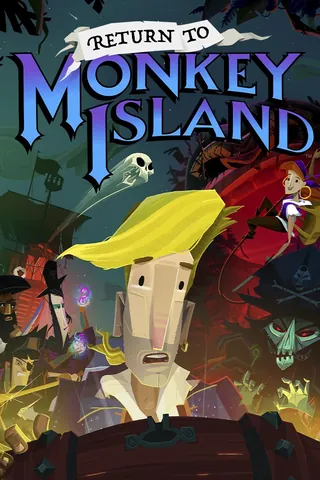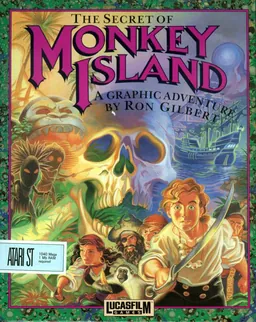
The Secret of Monkey Island
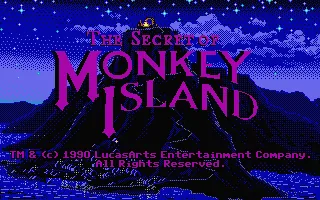
The Secret of Monkey Island is a classic point-and-click adventure from Lucasfilm Games, whose Atari ST port brought platform fans the humorous pirate adventure of Guybrush Threepwood, who wants to become a real pirate and along the way faces the mysterious ghost Captain LeChuck and falls in love with Governor Elaine Marley. The game became legendary for its insult sword-fighting, where the player battles with witty one-liners requiring the right comeback instead of swords, and generally for its emphasis on clever humor and logical, though never lethal, puzzles - thanks to the SCUMM system, the game made it impossible to kill the character or get the game stuck in an unsolvable state, which was a major design shift at the time.
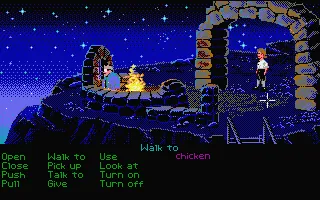
On the Atari ST the game ran in a scaled-down form compared to more powerful platforms, with a more limited color palette and music, yet it retained the distinctive graphics of Caribbean islands, harbors, and sailing ships as well as the distinctive style of readable, wittily written text dialogue full of wordplay and references to pirate clichés. The controls were adapted for the mouse combined with command verbs typical of LucasArts adventures of the time, so the player never had to guess the correct text phrasing of a command. The story also divided the game into several chapters with different locations, from the town of Mêlée Island through a pirate fortress to the mysterious Monkey Island itself, giving the game an adventurous pace and variety of settings.
Secret of Monkey Island is now widely regarded as one of the most influential adventures in history, one that for many years defined the genre standard of friendly, non-frustrating design without death or dead ends. Although the ST version technically lagged behind the Amiga or PC, it allowed Atari ST players to experience one of the key titles of the golden age of point-and-click adventures, and it remains sought after today by genre fans and collectors alike as evidence of LucasArts' peak craftsmanship.
Why play it: For one of the most influential adventures in history, which defined a friendly, non-frustrating genre standard without death or dead ends - worth experiencing even in this weaker ST version.
Game 40 of 72 for Atari ST
The same title elsewhere (4)
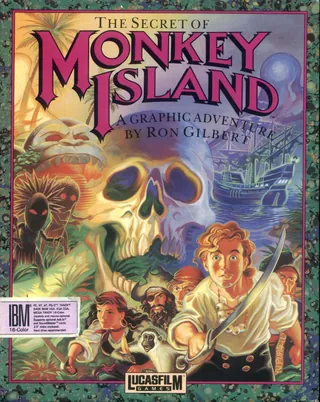
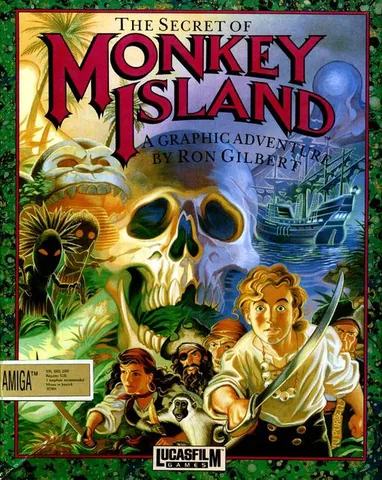
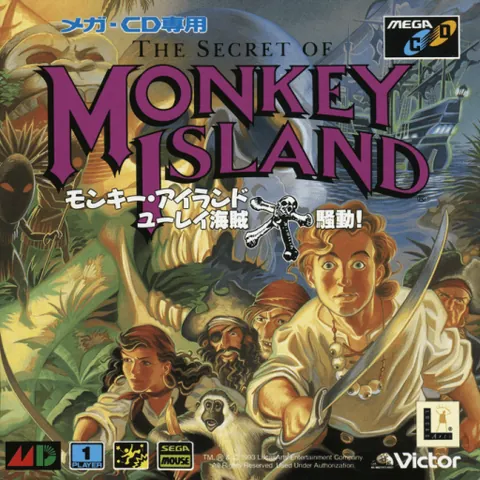
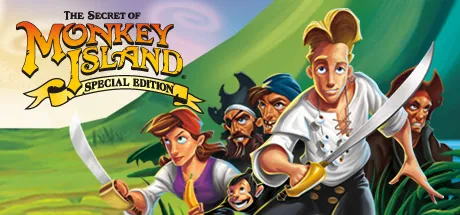
On the Amiga the game shone thanks to a rich colour palette and four-channel tracker music, giving it an atmosphere many fans still consider the best-balanced of all versions. The PC/DOS release depended heavily on the player's hardware: originally simple 16-colour EGA graphics with sound through the PC speaker or an AdLib card, while a later VGA release brought richer colours closer to the Amiga. The SEGA Mega-CD version used the CD medium to add a full orchestral soundtrack in CD-quality audio, which many players regard as the best musical rendition of any version — but mouse control had to give way to a gamepad, making the adventure noticeably less precise and slower to play.