Elite
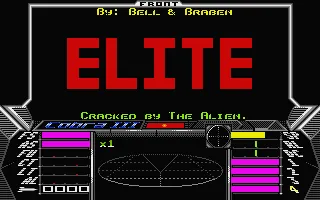
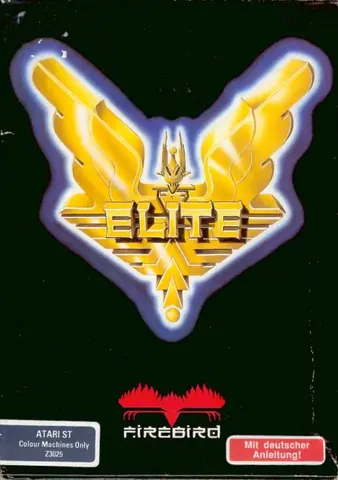
Elite is among the titles that in the mid-1980s literally redefined what a home computer could do. The player takes on the role of a space pilot with a handful of money and a basic Cobra Mk III ship, setting out into a vast galaxy full of stations, planets, and star systems, where they must earn a living through trading, mining, smuggling, or hunting pirates. On the Atari ST the game benefited from a faster processor and better graphics hardware, so the wireframe 3D ship models moved more smoothly than on older eight-bit machines, and the combat and docking sequences felt more convincing.
At the core of the game is an open trading and combat system: commodity prices differ from station to station, illegal goods risk punishment from patrols, and every ship upgrade - laser, shields, scanner, or hyperspace drive - has to be paid for dearly out of earnings. The player's progress is measured not in points but in ranks, from Harmless to the legendary Elite, which gave the game an almost endless incentive to keep playing. The galaxy, with its thousands of procedurally generated systems, was created from mathematical algorithms, so a world that would otherwise require orders of magnitude more storage fit onto a single floppy disk of the time. Trading and combat are supplemented by side missions from military factions and the ability to upgrade the ship with more advanced equipment, letting the player gradually shift their playstyle from cautious trading to aggressive piracy.
Contemporary reviews praised above all the sense of freedom and the scale of the game, which had no equal on computers of the time, and thanks to its more powerful hardware, the Atari ST version was among the visually most convincing. Elite became a model for the entire genre of space trading simulations, and its influence is evident in later series such as Wing Commander, Freelancer, or Elite Dangerous, whose creators have repeatedly cited the original as an inspiration. Even today the game feels surprisingly legible - the spare vector graphics have a distinctive retro charm, and the open structure without artificial barriers remains a fresh experience for anyone interested in the roots of the genre.
Why play it: For anyone interested in the roots of the space trading simulation genre - the spare vector graphics have their own retro charm, and the open structure still feels surprisingly fresh today.
Game 45 of 72 for Atari ST
The same title elsewhere (3)
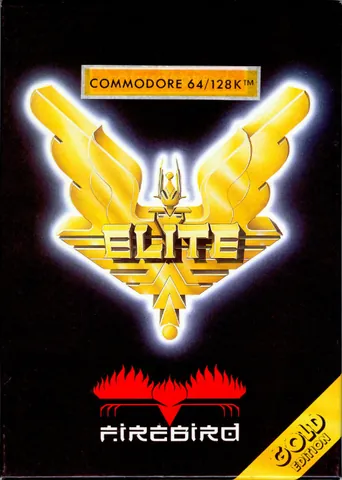
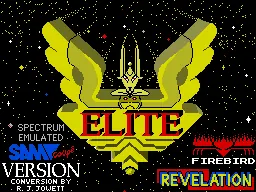
This space legend originated on the BBC Micro with purely wireframe 3D ship graphics, and the home 8-bit ports handled that legacy differently. The Commodore 64 version gave ships filled, colored surfaces instead of plain outlines, making combat and docking look clearer and visually richer. The ZX Spectrum version stayed closer to the original wireframe style due to its more limited speed and memory, though the trading and combat systems are identical on both machines. Anyone wanting nicer, clearer 3D should pick the C64; fans of the stark wireframe look will prefer the Spectrum.