Commando
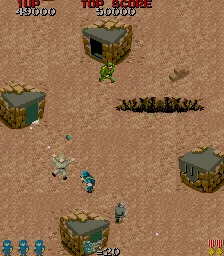
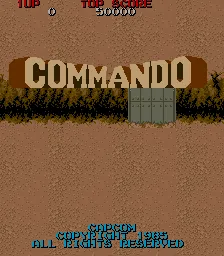
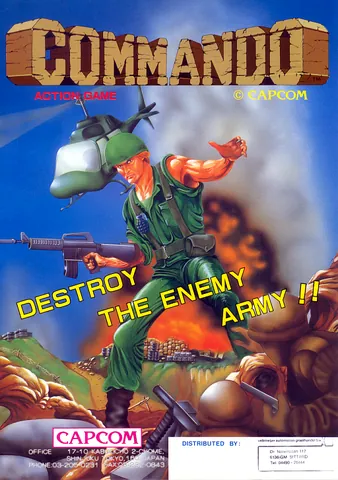
Commando by Capcom, from 1985, is one of the founding titles of the run-and-gun genre, in which a single soldier makes his way alone through an enemy camp full of infantry, tanks, and bunkers. The player controls the character from a top-down view, shoots in all eight directions, and picks up grenades to destroy fortifications, while the screen scrolls smoothly upward across jungles, rivers, and military bases full of soldiers.
Simple but merciless controls — movement and fire, no cover or jumping — established a template that was later expanded by titles like Ikari Warriors, Guerrilla War, and Metal Slug. The growing hordes of enemies and the constant need to dodge and attack at once created a pace arcade halls hadn't seen before, and thanks to its directness and easy readability, the game became one of Capcom's most commercially successful titles of the eighties worldwide, including strong success in North America under the name Commando.
Commando came out on dozens of home platforms, from the Commodore 64 and ZX Spectrum to the NES and MSX, and its influence is visible throughout the whole generation of vertically scrolling action shooters that followed, whether direct imitators or games that further developed its formula and added their own weapons, bosses, or two-player co-op. Even decades later it remains a prime example of how minimalist mechanics can create maximum tension, and why the run-and-gun genre became one of the pillars of the arcade era.
Why play it: Commando is one of the founders of the run-and-gun genre, and its pace can still be felt today in many newer action games.
Game 96 of 258 for Arcade
The same title elsewhere (3)
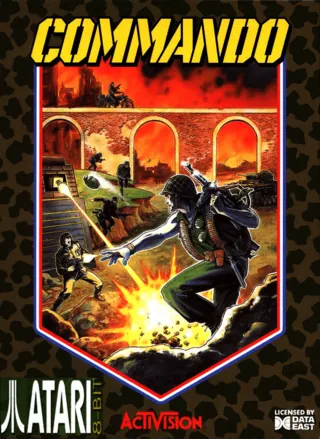
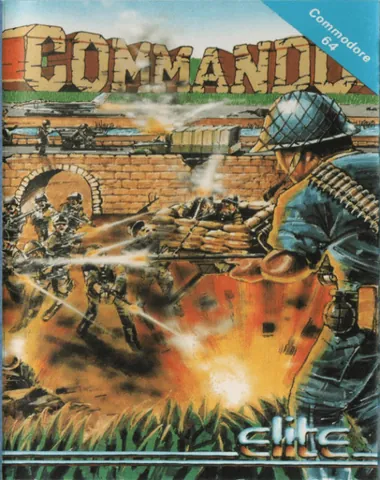
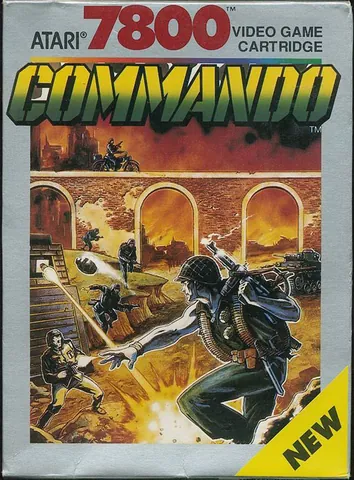
The arcade original benefited from the power of dedicated coin-op hardware — smooth vertical scrolling, plenty of enemies on screen at once, and crisp colours. The home 8-bit ports had to cut corners: on the Commodore 64 the SID chip at least gave decent music and sound, though the number of enemies and scrolling smoothness still fell short of the arcade. The Atari 800 offered a similar compromise with somewhat simpler graphics. The later Atari 7800 port could draw on the Maria graphics chip, which handled more moving sprites without flicker, making the action feel denser and closer to the arcade experience than the earlier 8-bit versions.