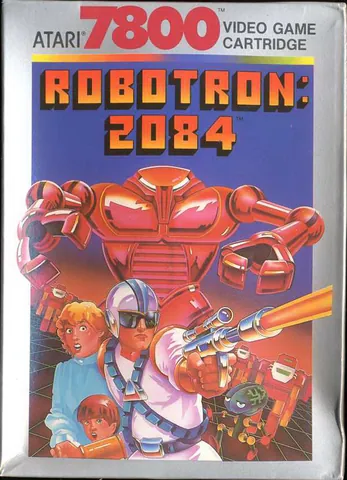
Robotron: 2084
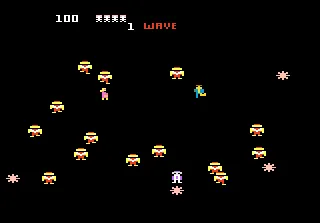
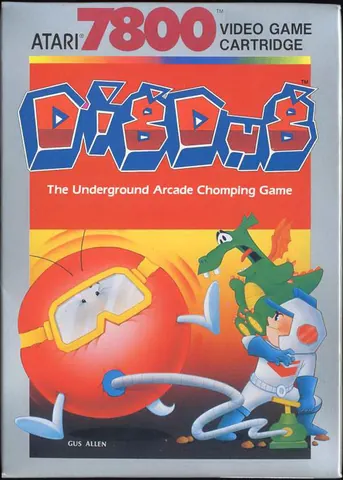
Surrounded on all sides, the last human family flees and you have only a fraction of a second to decide: shoot, or rescue. Robotron: 2084 is pure, unadulterated panic transferred into game form - and on the Atari 7800, console owners could enjoy this adrenaline bath at home too.
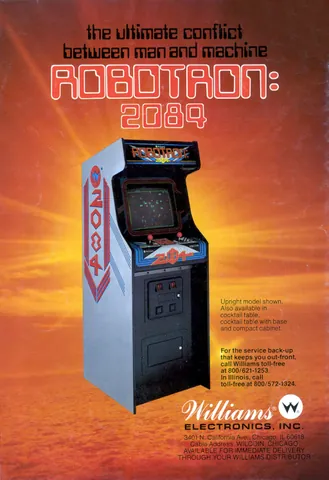
The arcade original was created by Eugene Jarvis and Larry DeMar for Williams Electronics in 1982. With its setting in the year 2084 and a story about a robot uprising against humanity, the game foreshadowed themes that would proliferate in sci-fi for decades. But the key thing is the mechanic: a pair of joysticks, one for movement and the other for aiming and shooting independently of the direction of walking. This concept of two sticks essentially defined the entire twin-stick shooter genre.
Each screen is a single arena crammed with dozens of enemies converging on you from all sides. Alongside mere survival, the game rewards rescuing the last humans - mothers, fathers, and children who wander the battlefield mindlessly. This creates constant tension between self-preservation and greed for points, because collecting the last survivor means throwing yourself right into the thickest fray.
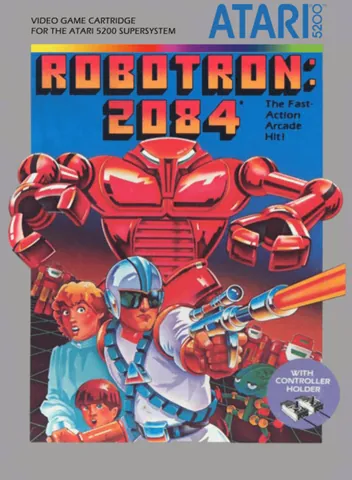
The home version for the Atari 7800 was among the titles that showcased the console's ability to handle a large number of objects on screen at once - exactly what Robotron needed for its relentless onslaught. For a game of this type, fidelity of response and the density of action were absolutely crucial, and the 7800 did well in this regard.
Robotron: 2084 is today revered as one of the most influential arcade machines in history and a template for countless later twin-stick shooters. Its uncompromising difficulty and pure playability made it a lasting classic that players still refer to today.
Why play: Pure, merciless action that invented dual-joystick control and to this day belongs among the most intense experiences arcades ever offered.
Game 5 of 37 for Atari 7800
The same title elsewhere (3)
The arcade original was built around two separate joysticks — one for movement, one for firing in any direction independent of walking — which gave the game its uniquely fluid chaos. The Atari 7800 tried to replicate that by letting players plug two joysticks into both of the console's ports at once, an unusually faithful solution for a home conversion of its era. The 8-bit machine shows fewer enemies on screen at a time, and both graphics and sound are noticeably simpler than on the arcade board's dedicated hardware. For the pure adrenaline of twin-stick control, the arcade cabinet remains the reference, but the Atari 7800 version counts among the era's remarkably honest home ports.