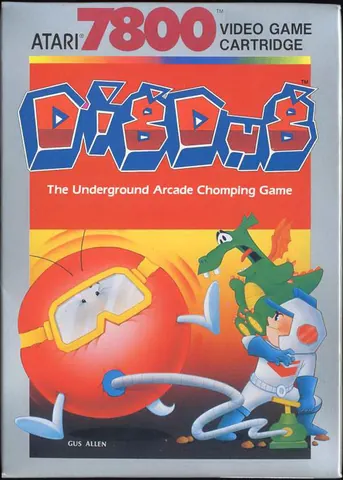
Dig Dug
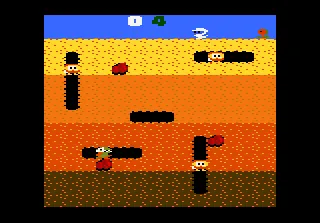
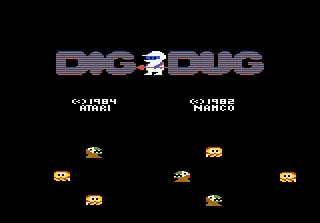
You burrow through the dirt, pump air into underground monsters until they burst, or drop boulders on them - Dig Dug has that peculiar cruelly playful logic that turned it into an arcade hit at the start of the 1980s and later into an ornament of home consoles, including the Atari 7800.
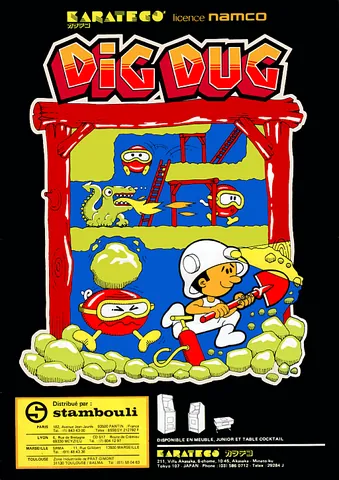
Dig Dug was created by Japan's Namco and launched into arcades in 1982. The player controls miner Taizo Hori, who digs through layers of soil and eliminates two kinds of enemies: round orange Pookas and fiery dragons called Fygars. The main weapon is a pump - you inflate an enemy until it bursts. Alternatively, you can dig under a boulder so that it falls on your opponents' heads, which brings more points and a strategic dimension.
The game's charm lies precisely in this choice between direct combat and a cleverly set trap. The tunnels you dig change the shape of the level and open or close the enemies' paths. Fygar can also breathe fire, so approaching it requires caution and judgment. From a simple concept a surprisingly tactical maze game thus arises.
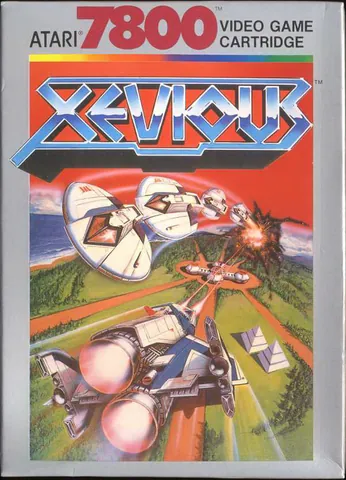
The Atari 7800 version was one of the titles that accompanied the console's early years and benefited from its ability to reproduce arcade graphics more faithfully than older hardware could. The colorful environment and smooth movement made home Dig Dug a pleasant way to enjoy the game without visiting an arcade.
Dig Dug ranked among the most popular Namco cabinets of the golden age alongside Pac-Man and became a lasting classic. The character Taizo Hori later appeared in other games by the brand, and Dig Dug itself saw many ports and sequels across the decades.
Why play: A clever maze game where every dug tunnel changes the rules of play and where you decide between bold pumping and a cunning trap made of a falling boulder.
Game 6 of 37 for Atari 7800
The same title elsewhere (3)
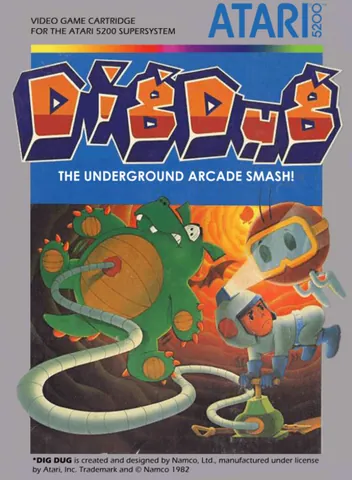
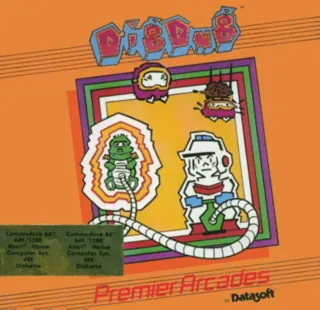
The arcade cabinet relied on bold, saturated colors and smooth animation for Dig Dug and his enemies, something home conversions struggled to match. The Atari 2600, limited by its hardware, had to settle for simplified graphics, a narrower color palette and blockier animation, so the pace and feel of tunneling come across noticeably stiffer than in the arcades. The Atari 5200 had more capable chips than the 2600, and its version offered richer colors and smoother movement, closer to the arcade original. Anyone after the truest experience should pick the arcade version, while the Atari 5200 stands as the sturdier home alternative compared to the older 2600.