 Coleco · 1982
Game consoles
ColecoVision
History & context
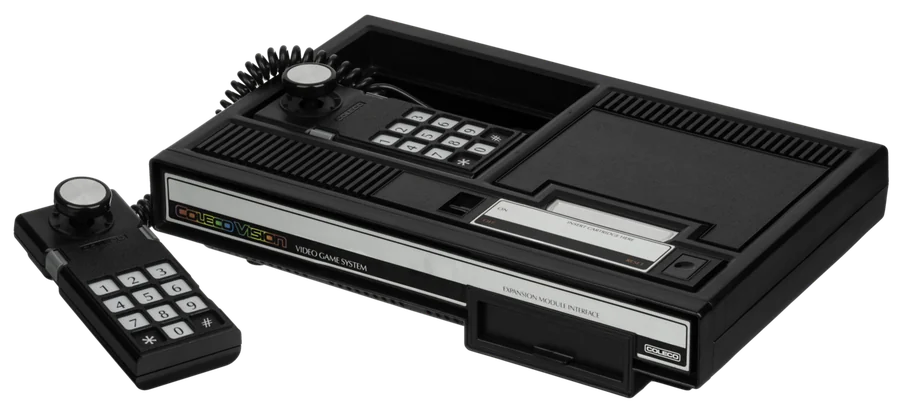
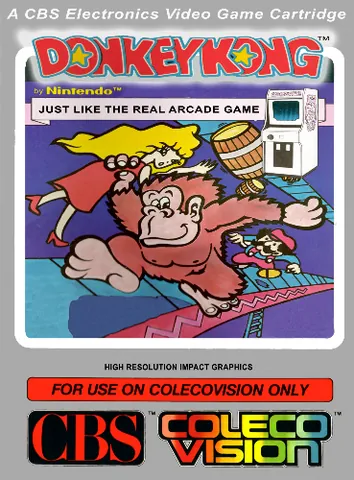
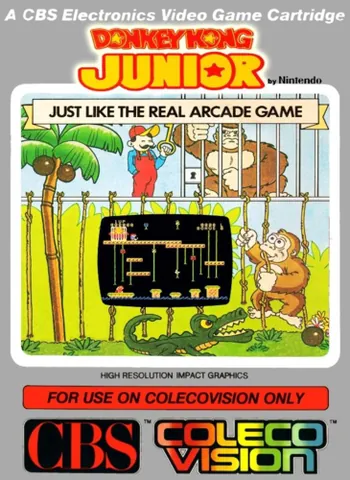
When Coleco launched the ColecoVision in August 1982, the console felt like an apparition from the future. While the Atari 2600 was already beginning to show its age and its games looked like clusters of blocky smudges, the ColecoVision brought arcade hits home in a quality no home machine had managed before. The bundled port of Donkey Kong was a perfect killer app: for the first time you could play the popular arcade game at home and the picture actually resembled what you knew from the arcade. The console is therefore sometimes nicknamed the „Dreamcast of its era" — a technically outstanding machine that outpaced the competition, yet was doomed to an early end.
That end was the great North American video game crash of 1983. The ColecoVision initially sold superbly, but the collapse of the entire industry swept it away along with the others. Coleco moreover bet on the unsuccessful Adam home computer, which drained the company financially and effectively brought it down. The console thus had only a short life — production ended in 1985 — but it managed to assemble a surprisingly high-quality library of arcade ports, which still earns it respect among collectors today.
Technology: graphics and sound
At the heart of the ColecoVision is an eight-bit Zilog Z80A processor clocked at around 3.58 MHz. The picture is handled by the Texas Instruments TMS9928A video chip (a variant of the TMS9918 series), which manages a resolution of 256×192 pixels and a palette of 15 colors plus transparency. Key was the support for 32 hardware sprites — it was precisely thanks to them that moving objects such as Donkey Kong, barrels or Mario could glide smoothly across the screen without the processor having to laboriously redraw the background. This was a huge leap over the Atari 2600, which had only a few primitive sprites at its disposal and had to painstakingly assemble the picture „on the fly" line by line.
Sound is provided by the Texas Instruments SN76489 chip, which offers three tone channels and one noise channel. By 1982 standards this was decent equipment, allowing simple melodies and sound effects at the same time. The same video chip and sound circuit were used by other platforms of the period, which we will come back to — and it is precisely this kinship that makes the ColecoVision a technically very interesting piece of history.
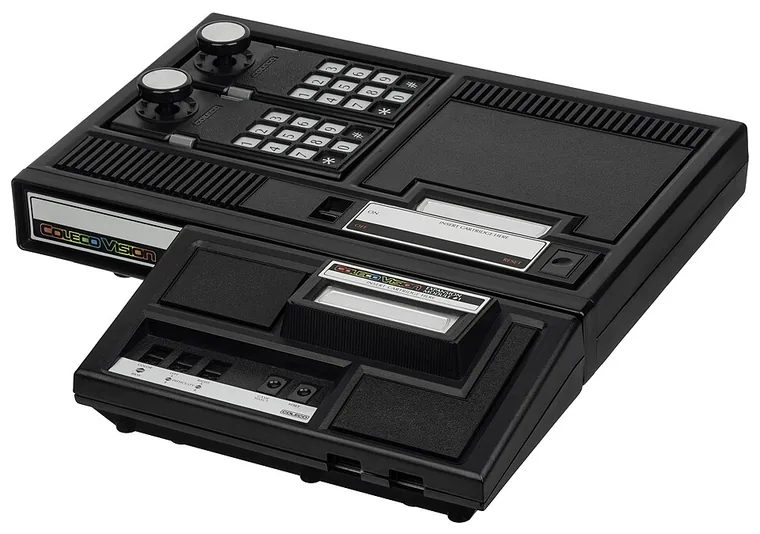
The ColecoVision connected to the television via an RF modulator (antenna input), which was the standard at the time. The controller was a unique design of its kind: it combined a classic joystick with a numeric keypad and two side buttons. The keypad served for entering difficulty levels, menu choices or special actions in games — many titles used the included plastic overlays, which the player placed onto the keypad according to the specific game.
Coleco also offered a varied range of expansions. The most famous was the Expansion Module #1, an adapter that allowed you to play Atari 2600 games directly on the ColecoVision — a bold move over which Atari even filed suit. The Expansion Module #2 added a steering wheel and pedal for the racing game Turbo. There was also the Roller Controller (trackball) and the Super Action Controller with additional buttons. The pinnacle of the ecosystem was to be the Adam computer module, which turned the console into a full-fledged home computer with a keyboard, tape drive and printer.
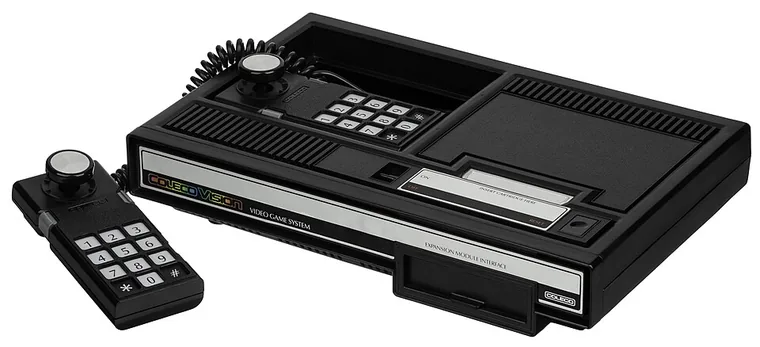
The ColecoVision essentially existed in a single main hardware form, so hardware revisions were sparse and, for the ordinary player, unimportant. Far more important were the aforementioned expansions, which transformed the console. The most striking transformation was precisely the Coleco Adam — a computer built on the same foundation, available both as a standalone machine and as an add-on to an existing console. The Adam, however, was notorious for its faultiness and for problems with data erasure caused by a magnetic field at startup, which further damaged Coleco's reputation.
Clones and variants
Thanks to the kinship of the chips, the ColecoVision is close to other platforms of its time. The same (or very similar) TMS9918/9928 video chip and SN76489 sound circuit can be found in the Japanese Sega SG-1000 and in the MSX computer standard, so games ported between these systems relatively easily — something the homebrew scene still takes advantage of today. Among the official variants, the European distribution through the CBS company under the CBS ColecoVision brand is worth mentioning.
There was also a later clone, the Telegames Personal Arcade (also sold as the Dina), which combined compatibility with both the ColecoVision and the Sega SG-1000. In the Czechoslovak or Eastern European context the ColecoVision was practically nonexistent — the region was flooded instead by NES famiclones (known here as the Pegasus) and ZX Spectrum clones of the Didaktik type, whereas Coleco left no significant trace here.
Today's scene
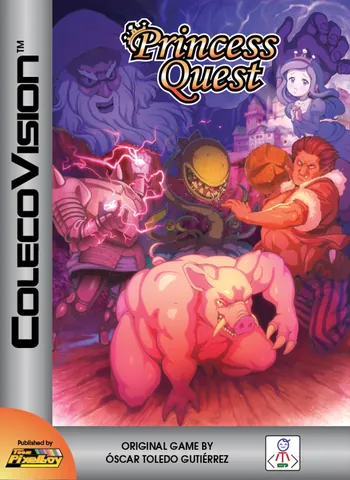
Emulating the ColecoVision is trivial today and can be handled by practically any modern hardware — from PCs through the Raspberry Pi to pocket handhelds. Among the emulators, BlueMSX, openMSX or the multi-emulator MAME are popular; on RetroArch there is the Gearcoleco core. The main draw remains the faithful period arcade ports and a surprisingly active homebrew community, which still releases new games for this nearly half-century-old machine on physical cartridges as well as for download. For retro gamers the ColecoVision thus represents a short but very pleasant excursion into the beginnings of home consoles.
Games on this platform (16)
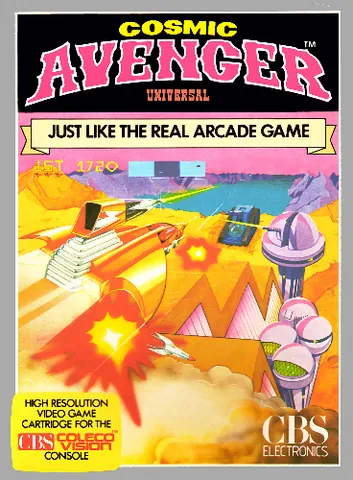
Cosmic Avenger
A pure classic horizontal shooter with no unnecessary frills, just reflexes and pace.
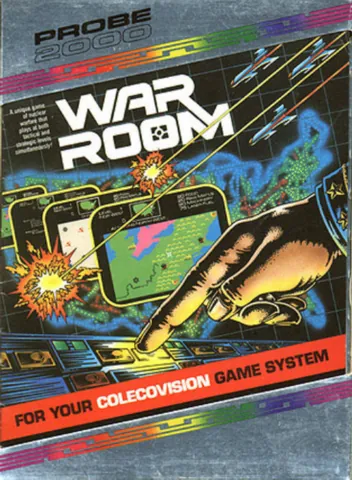
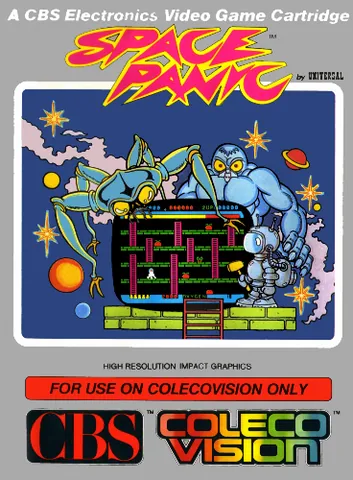
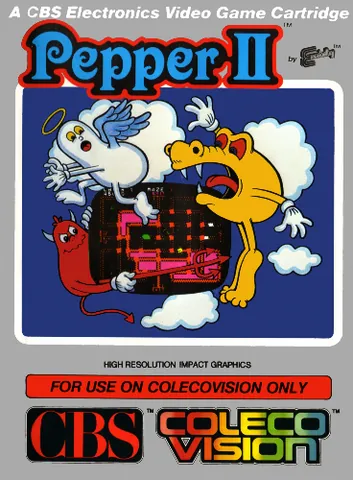
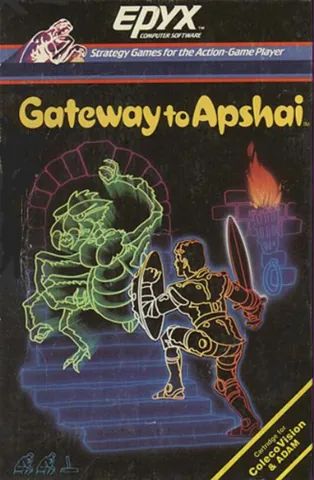
No game in this genre.