 GCE / Milton Bradley · 1982
Game consoles
GCE Vectrex
History & context
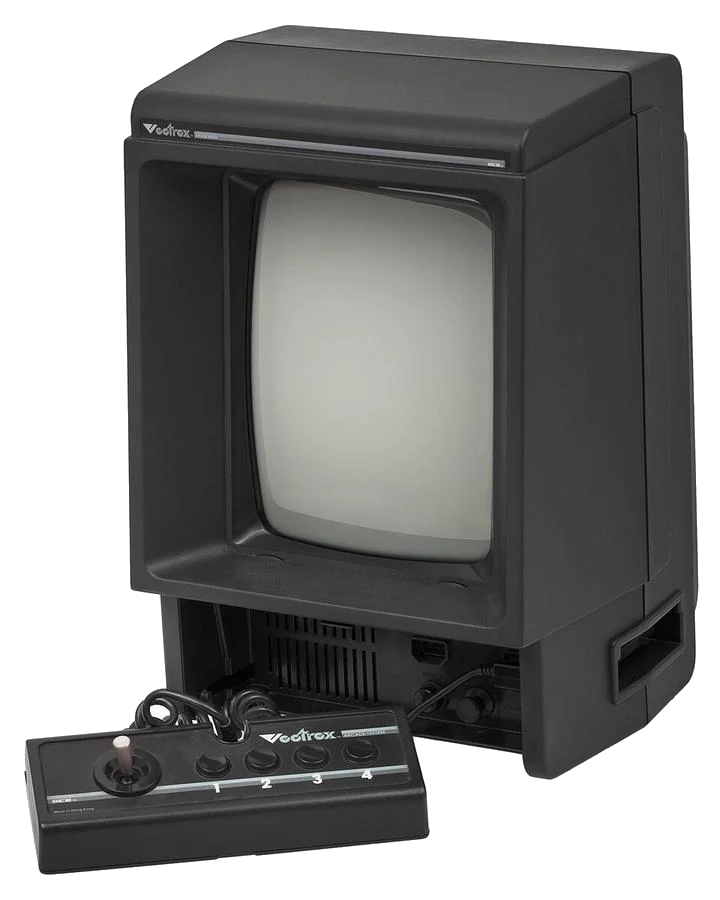
There's only one home console you never had to plug into anything else. The Vectrex from General Consumer Electronics arrived on the market at the end of 1982 as a tall plastic cabinet with its own built-in screen, a built-in speaker, and a controller tucked into a recess at the front. You set it on a table, plugged it into an outlet, and played. No arguing with family over the TV, no fiddling with the antenna channel — exactly the kind of self-sufficiency that handheld consoles wouldn't offer again for another decade.
The reason for this unusual construction was technical. Vectrex didn't draw its picture from dots like every other console of its time, but vectorially: the beam inside the monochrome screen traveled directly along the shapes it was meant to draw, leaving behind sharp, bright white lines. It was exactly what people knew from arcades with machines like Asteroids or Battlezone — and something a regular television simply couldn't display. Color was solved in an admirably old-fashioned way: each game came with an overlay of transparent colored plastic that you fastened over the screen. Instantly space took on a blue tint, fuel gauges glowed red, and backgrounds gained artwork the hardware could never have managed on its own.
The timing, though, was brutal. Vectrex arrived literally on the doorstep of the video game crash of 1983, when the North American consumer electronics market collapsed under a wave of low-quality titles and price wars. Although the machine earned excellent reviews, GCE never recovered from the crash, and production ended after about a year and a half. What remained was a library of roughly thirty official games — and the most unusual console of the 1980s.
Tech: graphics and sound
Inside runs an eight-bit Motorola MC6809 processor, considerably more capable computationally than the 6502 in rival machines, backed by just a handful of kilobytes of RAM. The system software was stored in ROM right inside the console and gave programmers ready-made routines for drawing lines and working with text and music.
The display side is what really matters, though. In place of the usual graphics chip sits a vector generator: converters that turn numbers into voltages, and integrators driving the deflection coils. The game therefore fills no frame buffer at all — instead it feeds the hardware a list of line segments and brightness levels that have to be drawn before the image has time to fade. The more lines a scene contains, the dimmer and more flicker-prone the image gets, a permanent trade-off developers had to live with. The reward was perfectly smooth rotation and fluid scaling of objects that raster consoles of the era couldn't even fake.
Sound is handled by the General Instrument AY-3-8912, a three-channel sound chip with a noise generator — the same chip family later found in the ZX Spectrum 128 and Amstrad CPC home computers. Compared to the Atari 2600's two crude channels, this was an audible leap: Vectrex could handle simple melodies and spoken effects, and games used it inventively.
Connectivity and peripherals
The controller is a fixed part of the experience: an analog joystick with a self-centering stick and four buttons in a row, housed behind a flip-down cover on the front of the cabinet. The console has two ports, so two people could play on the same screen. Analog control was a total rarity in homes in 1982, and it suited piloting or aiming games noticeably well.
GCE offered two peripherals for the Vectrex that are sought-after today. The Light Pen — a light pen used to draw directly on the screen — and above all the 3D Imager, a goggle attachment with a spinning disc that alternately blocked each eye to create an impression of spatial depth while also letting colored segments of the disc show through. It was one of the very first attempts at a stereoscopic game in the living room; given the console's demise, only a handful of titles were released for the Imager, which today makes it one of the most expensive pieces of collectible retro gear.
Models and revisions
The construction stayed essentially unchanged; mainly the badge on the front changed. The original machine carried the GCE logo; after the company was acquired it was sold as the Milton Bradley Vectrex, and it reached Europe in that form. In Japan, Bandai distributed it under the name Kousokusen.
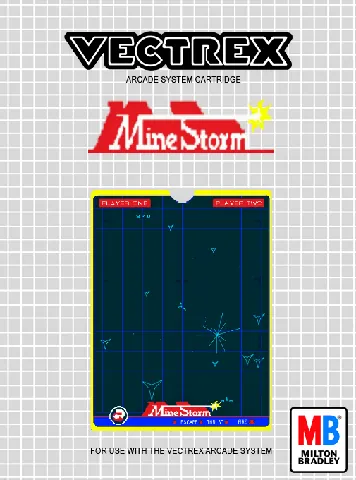
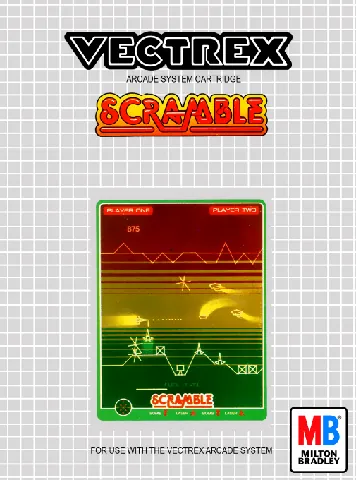
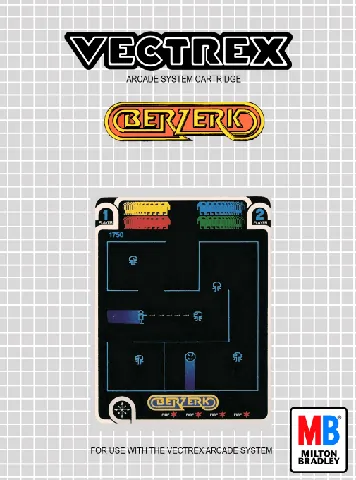
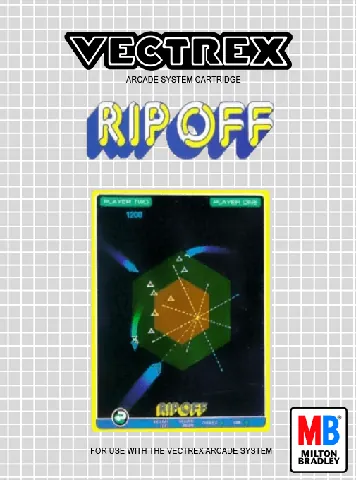
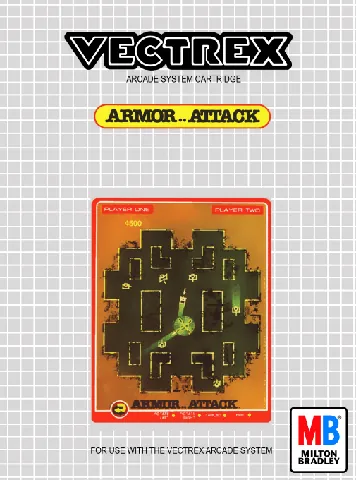
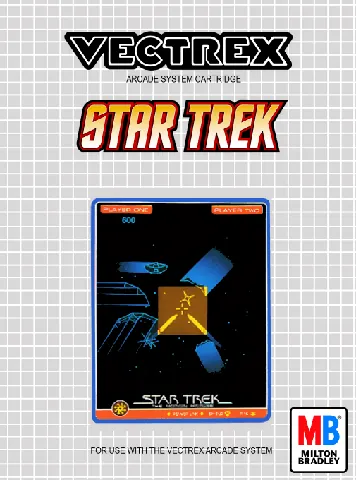
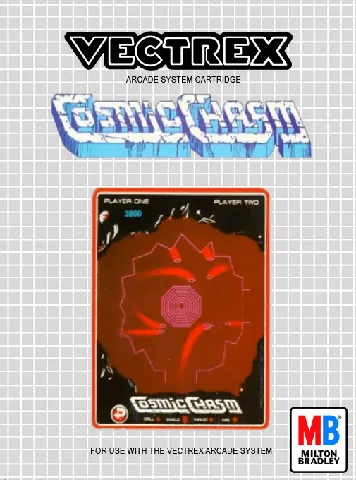
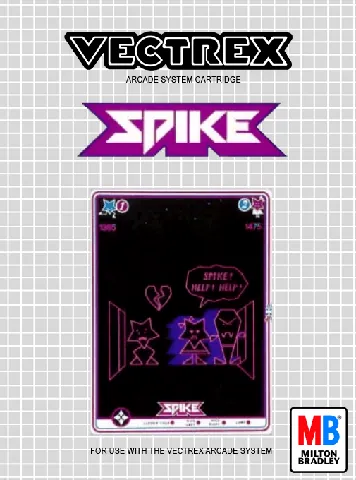
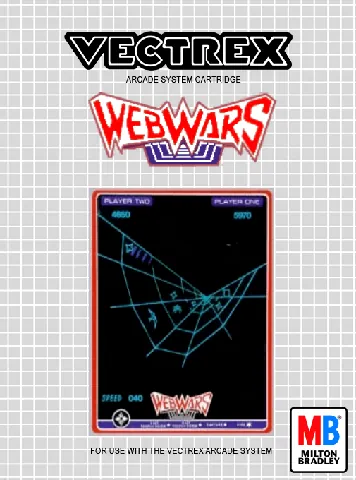
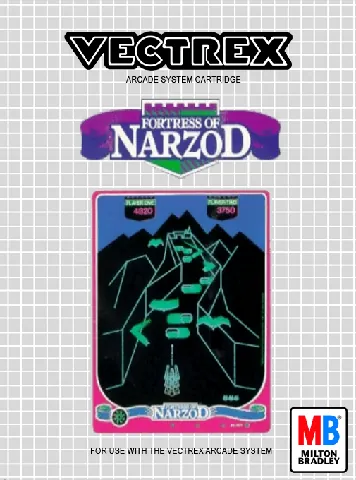
The built-in game Minestorm — a variation on Asteroids stored right in the console's memory — launches whenever there's no cartridge inserted in the machine. Among the released titles, the most cited are the arcade conversion Scramble, the space duel Star Castle, and the maze game Berzerk; most of them came with their own overlay and cardboard frame.
Clones and variants
The Vectrex has practically no classic unofficial clones — the vector screen was too expensive and specific for anyone to copy. There is, however, a lively ecosystem of modern accessories: multicarts with an entire game library in a single module, developer cartridges with flash memory, and add-ons that bring modern programming environments to the console. Collectors have replica overlays printed, since the originals fade and crack after four decades.
The scene today
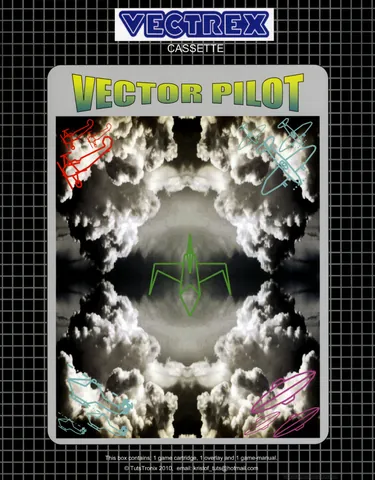
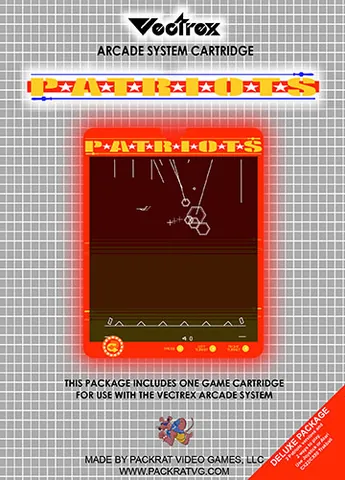
For its size, Vectrex has a remarkably tenacious homebrew scene. New games for it are still released today, often in physical form with cartridge, overlay, and manual — and sometimes they match the quality of period productions, because their authors now have modern tools and don't have to scrimp on every byte.
Anyone wanting just a taste of Vectrex can reach for the Vecx emulator. It's also available as a RetroArch core, so ready-made distributions like Batocera and ordinary gaming handhelds can run it too. A vector image never behaves quite the same on an LCD — it lacks that characteristic phosphor glow — but blur filters and a fading trail effect come close enough to make it work. The most legal route to games remains the titles homebrew authors release for free themselves, and modern re-releases of old games straight from the rights holders.
Vectrex never won any console war — it's remembered as a beautiful dead-end branch that brought the arcade's aesthetic home, screen included.
Games on this platform (13)
No game in this genre.