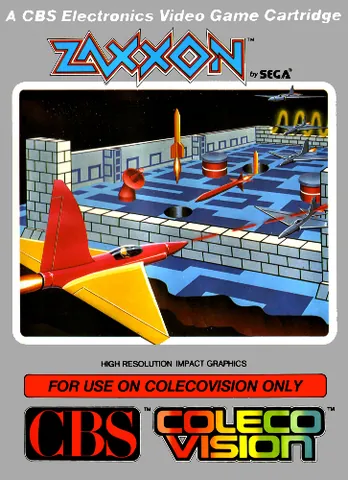
Zaxxon
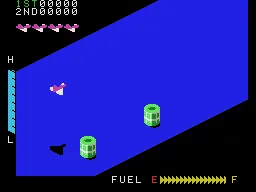
A plane banks over a fortress, dropping toward the ground between towers and walls — and for the first time in your life you can see just how high you're actually flying. Zaxxon from 1982 was a visual revelation in its day, a game that pulled off what seemed almost magical at the time: conjuring a sense of spatial depth and altitude on a screen that could only display flat images.
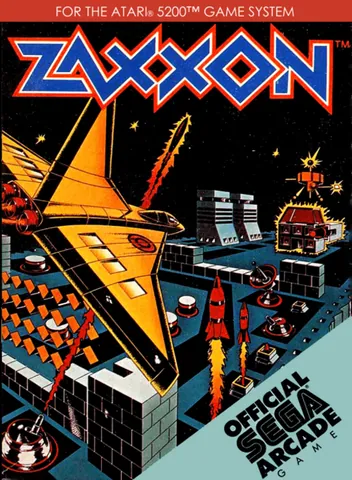
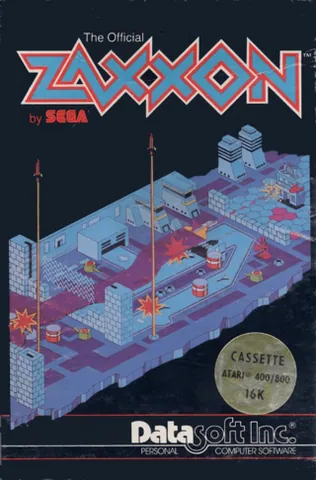
The secret is the isometric view. You watch your plane from a slanted overhead angle and — crucially — you also see its shadow falling on the ground. Thanks to it, you can tell what altitude you're currently flying at and can precisely maneuver over walls, duck under force fields, or line yourself up with the level of enemy towers. This single design trick transformed an ordinary shooter into something that felt genuinely three-dimensional.
The gameplay is a tense dance between attack and survival. You have to watch your fuel, destroy tanks so it doesn't run down, shoot down both ground and aerial targets, and finally face off against the giant robot Zaxxon that gave the game its name. Each flight through the fortress is a test of spatial orientation and reflexes — and that feeling of controlling a machine in real space was completely new at the time.
Behind the game stands Sega, which wrote itself into arcade history with Zaxxon, and the home version for the ColecoVision was prepared by Coleco. And this very port was remarkably impressive for its time — the console was famous for its ability to bring arcade hits home more faithfully than the competition, and Zaxxon confirmed it. For ColecoVision owners it was one of the showcases of what their machine could do.
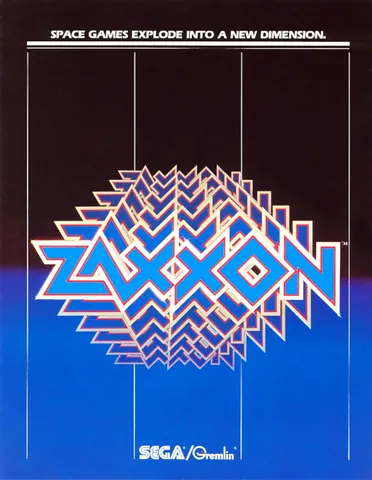
Zaxxon became a cultural phenomenon of the 1980s, an icon of pseudo-3D graphics and a title that generations of players remember fondly. Its visual idea influenced a whole range of later games and remains, to this day, a textbook example of how clever design can circumvent technical limitations.
Why play: For the experience of a game that was one of the first to convincingly evoke the feeling of flight through space — and that stood at the birth of pseudo-3D graphics.
Game 6 of 16 for ColecoVision
The same title elsewhere (4)
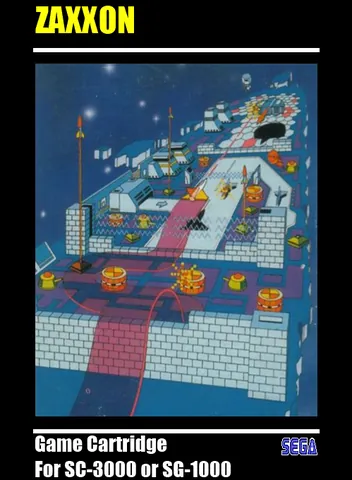
The 1982 ColecoVision version ranks among the best-regarded home conversions of the arcade original — the console managed to carry over the tilted isometric view and colour palette well enough that it felt almost like a little sibling of the arcade machine. The 1985 SEGA SG-1000 port had to cut back on far weaker hardware: fewer colours, coarser graphics and choppier background scrolling, so the sense of height and depth that Zaxxon relies on comes through noticeably weaker. Anyone wanting to feel why Zaxxon was a visual sensation in its day should reach for the ColecoVision version.