Knight Lore
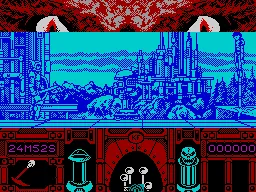
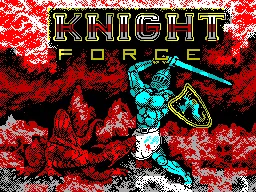
When Knight Lore was released in 1984, players could not believe their eyes: on the screen of the rubber Spectrum a three-dimensional space suddenly unfolded, a space through which a character walked into the depth, climbed on boxes and cast shadows. It was the moment the bar was raised for the entire platform.
Knight Lore is an isometric action-adventure in which, as the knight Sabreman, you explore a sprawling castle full of rooms. At the heart of the game is a curse: in the rhythm of day and night alternating, you transform between man and werewolf, and this transformation affects how the world reacts and how you must proceed. You collect ingredients for a potion that will cure you, and along the way you solve spatial puzzles - stacking objects, leaping across chasms and exploiting the three-dimensional layout of the rooms.
Behind the game stands the legendary studio Ultimate Play the Game, later known as Rare. Knight Lore made famous the so-called Filmation technique - a way of rendering an isometric 3D illusion that became the foundation of a whole sub-genre. Legend has it that the game was so technically ahead of its time that its creators kept it in reserve for a while, so that its sophistication would not overshadow their own older, still-selling titles.
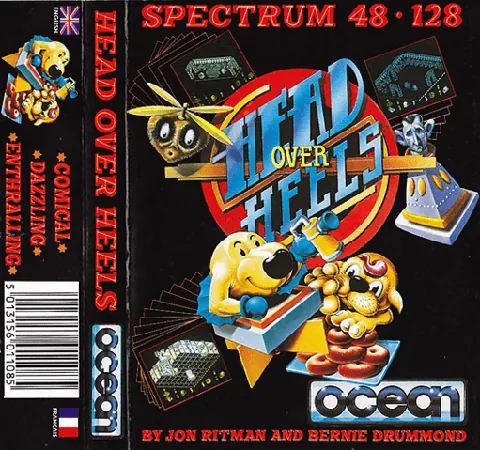
The significance of Knight Lore for gaming history is hard to overstate. It practically kicked off a wave of isometric filmation games that subsequently flooded the Spectrum and other 8-bit platforms - from Alien 8 through Head over Heels to dozens of imitators. Suddenly it was no longer just about flat screens, but about a space you could think through.
The gameplay combines the puzzle with cautious action. You must judge distances in the isometric perspective, plan how to stack objects into steps and time your movement between dangers. It is a slower, more contemplative experience that rewards patience and spatial imagination.
Why play: Because you hold in your hands a game that literally invented the isometric 3D genre on 8-bit machines - a technical miracle of its time whose influence you feel in dozens of later titles.
Game 3 of 100 for ZX Spectrum