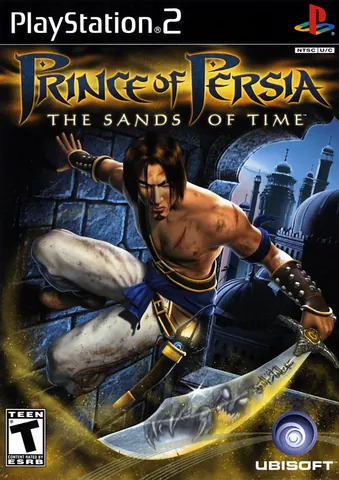
Prince of Persia: The Sands of Time
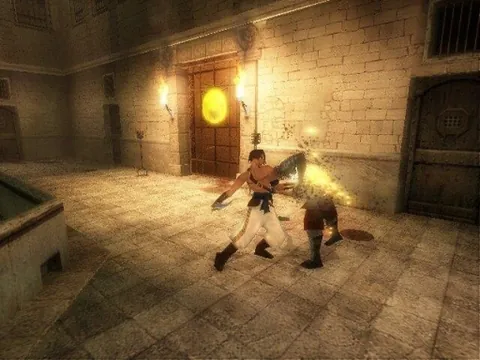
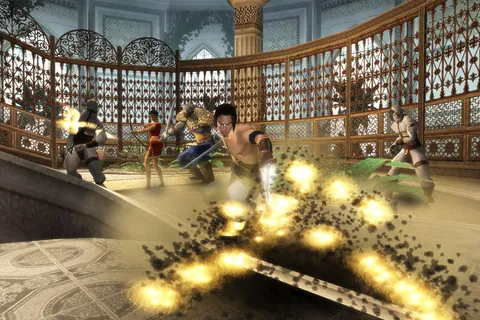
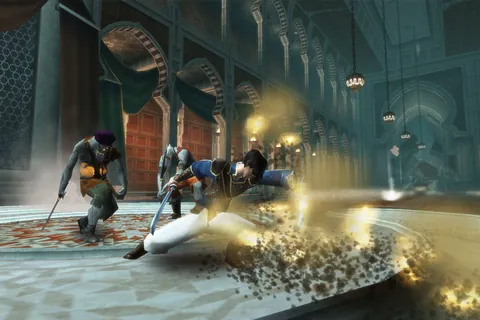
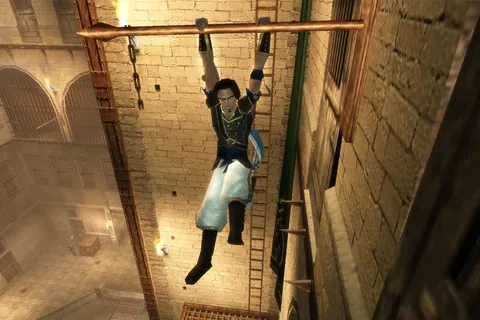
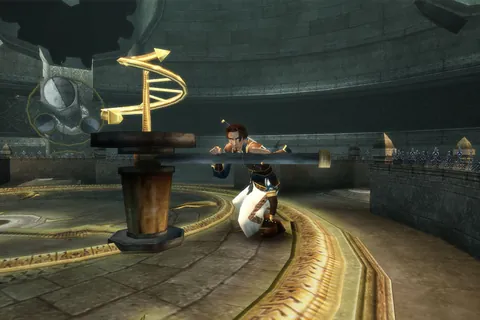
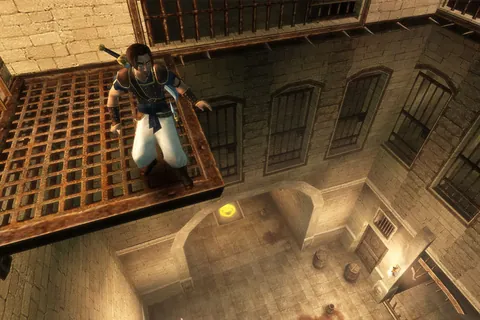
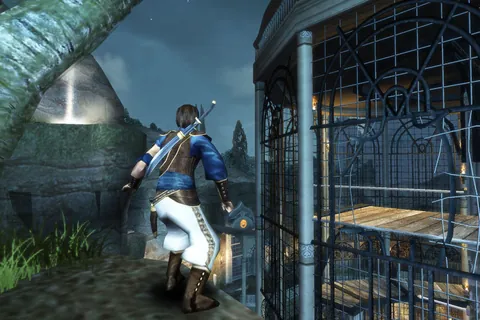
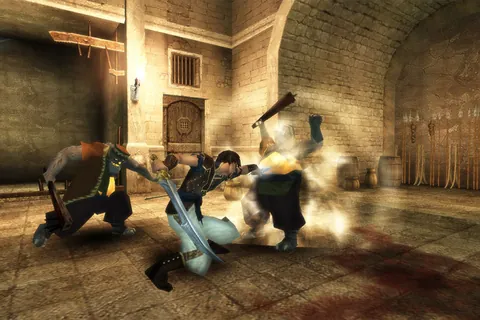
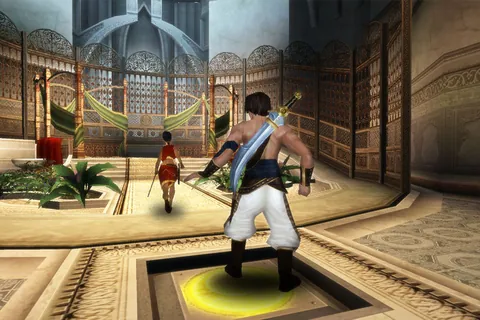
Prince of Persia: The Sands of Time from 2003 by Ubisoft Montreal is an elegant rebirth of Jordan Mechner's classic franchise, which after years of dormancy brought the series back into the spotlight and defined the direction of action-adventure games for the following decade. The unnamed Prince, in a beautiful oriental palace full of traps and puzzles, chases the Dagger of Time after accidentally releasing the Sands of Time, which turn the palace's inhabitants into demonic monsters, and he must reverse the catastrophe he himself caused. The palace itself isn't merely a backdrop but a puzzle in its own right: gardens, baths, towers, and machine rooms connect in ways that gradually let the player grasp their inner logic.
The game's key mechanic is precisely that Dagger of Time, which can rewind the last few seconds in real time, letting the player undo a fatal fall during acrobatics or a failed fight without having to reload a save, fundamentally changing the approach to difficulty design in action platformers. Time rewinds are also a limited resource that must be replenished, so the game stays tense while never punishing players with needless repetition of longer sections. Fluid, physically believable movement inspired by the rotoscoping technique of the original 2D games, wall-running, swinging on poles, and elaborate combat with stunt-like grace create a sense of balletic elegance the genre had never known before.
Poetic storytelling framed as the Prince's own unreliable memory, complemented by sparkling dialogue with his guide Farah, and refined, thoughtful level design made the game a timeless adventure that raised the bar for modern action-adventures and directly inspired later series like Assassin's Creed. Ubisoft Montreal later applied lessons learned from the rewind mechanic and parkour movement to the development of its own future franchises, and Sands of Time is still cited today as one of the reasons action-adventures shifted toward freer, acrobatic movement through environments in the mid-2000s. The game's popularity even reached beyond the medium itself, receiving its own film adaptation in 2010.
Game 40 of 269 for Sony PlayStation 2
The same title elsewhere (3)
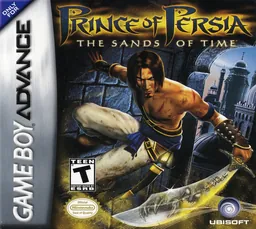
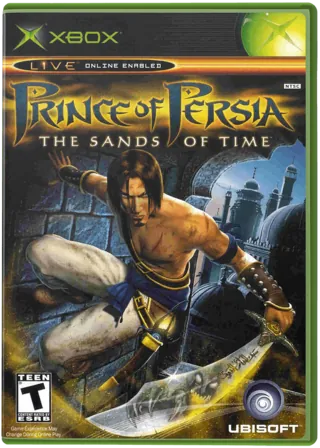
The game launched simultaneously on PlayStation 2, GameCube and Xbox, and the core experience — acrobatic parkour and rewinding time with the dagger — stays essentially the same across all three. The differences are mostly technical: Xbox, thanks to more powerful hardware and extra memory, usually delivers slightly sharper textures and a steadier frame rate than the competition, while the PlayStation 2 and GameCube versions are very close to each other, with any gaps being mostly cosmetic. None of the versions had content or levels noticeably cut, so today's platform choice comes down mainly to which controller and emulation setup you have on hand, not how much of the game you'd be missing.
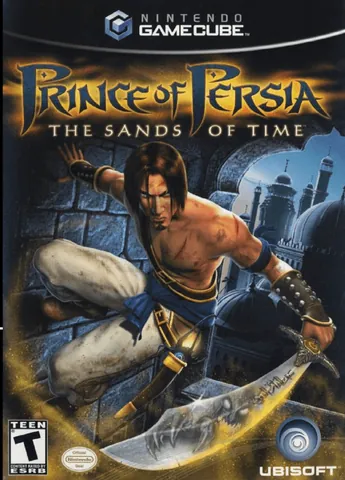
From the same series Prince of Persia →
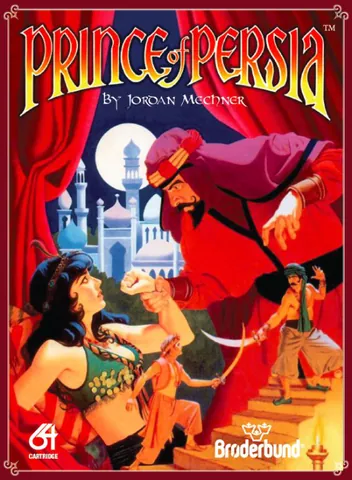 Prince of Persia C64 · CPC · Amiga · ST · SNES · MD · SMS · NES · GB · X360 · PS3 · PC
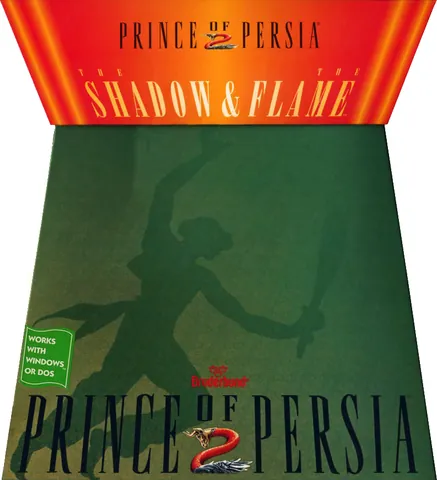 Prince of Persia 2: The Shadow and the Flame DOS · 1993
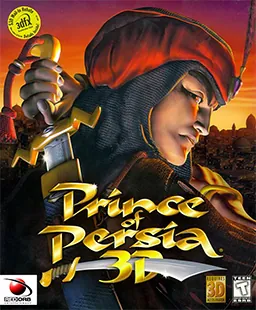 Prince of Persia 3D Win9x · 1999 Java ME Prince of Persia: Harem Adventures Java ME · 2003
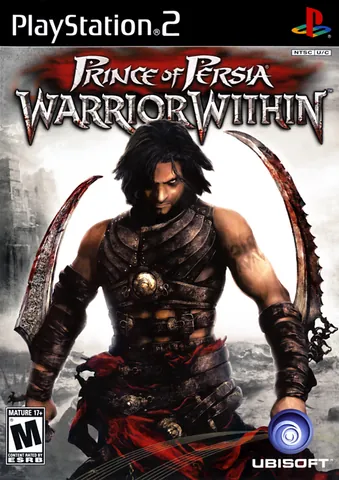 Prince of Persia: Warrior Within PS2 · Xbox · 2004
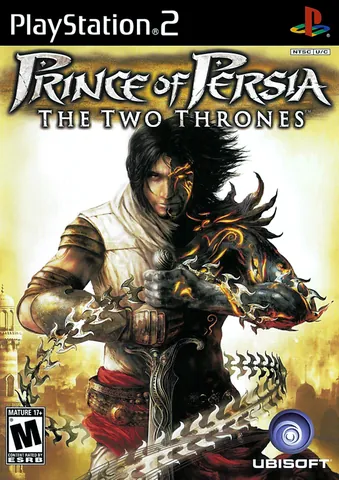 Prince of Persia: The Two Thrones PS2 · GCN · Xbox · PC · 2005
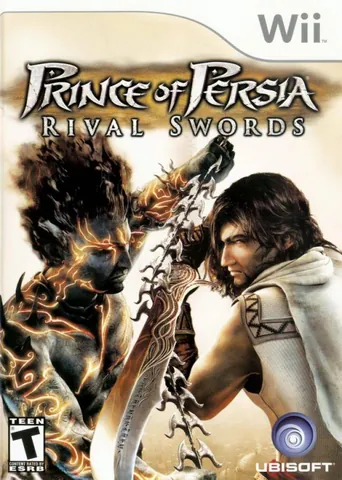 Prince of Persia: Rival Swords Wii · 2008
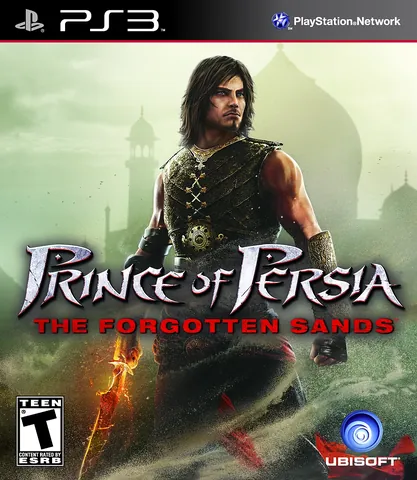 Prince of Persia: The Forgotten Sands PS3 · 2010
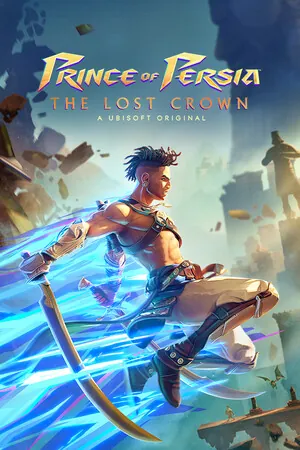 Prince of Persia: The Lost Crown PS5 · Series · 2024