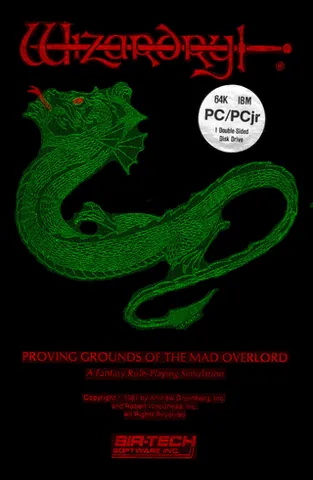
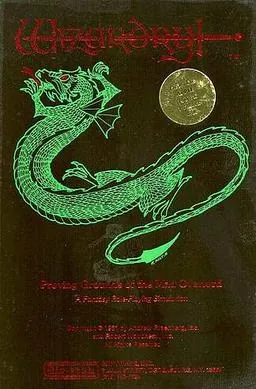
Wizardry: Proving Grounds of the Mad Overlord
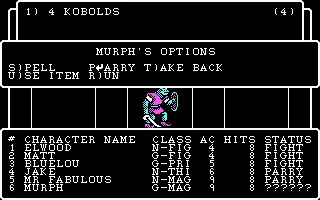
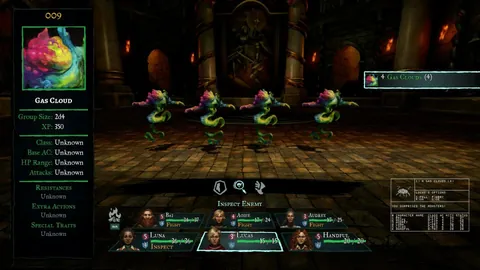
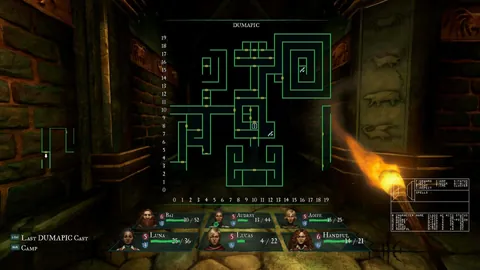
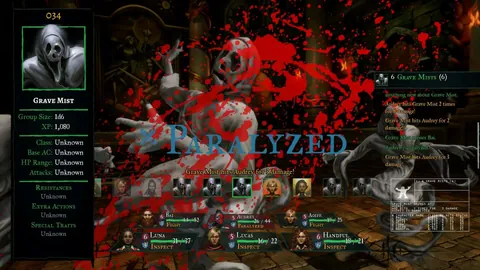
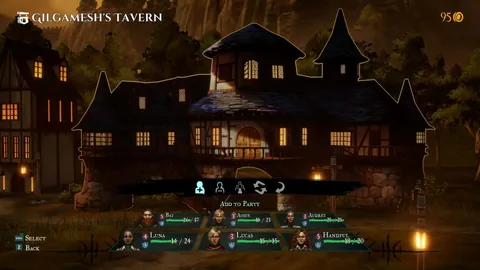
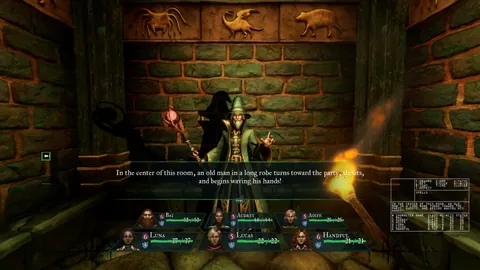
Wizardry: Proving Grounds of the Mad Overlord, together with Ultima, stood at the birth of the entire computer RPG genre and was one of the first to bring the spirit of tabletop games like Dungeons & Dragons into the form we now call a dungeon crawler. The player builds a party of up to six adventurers from several races and classes, descends with them into a ten-level maze beneath the wizard Werna's castle, and fights for survival in turn-based battles depicted only as simple enemy icons on a black background. The goal is to obtain a legendary amulet and confront the mad overlord himself, but the path there leads through brutally unforgiving mapping and the constant risk of permanent character death, after which the player must visit a temple and pay a hefty sum of gold to save the unfortunate victim's soul.
The graphics were limited to wireframe first-person views of corridors and a bare-bones text menu, and music was practically absent, yet the game still managed to evoke intense tension simply through how mercilessly it punished carelessness and poor combat decisions. Its contemporary reception was extraordinary - Wizardry became one of the commercially most successful early titles for personal computers and, in Japan, fundamentally shaped the birth of the entire JRPG genre, from Dragon Quest to Final Fantasy, where its traces remain visible to this day. The DOS version from the mid-1980s brought the game to a wider circle of PC platform players and helped it maintain commercial success even years after its original release on other systems.
Today, Proving Grounds of the Mad Overlord is playable more as an archaeological artifact - its harsh difficulty and the need to manually draw maps on paper are extremely uncompromising for a modern player. Yet the game's historical significance is undeniable, and without it, dungeon crawlers and Japanese RPGs alike would look completely different, as would later generations of games inspired by its turn-based, permadeath-driven combat system.
Why play: Without this title, dungeon crawlers and Japanese RPGs alike would look different, though its harsh difficulty and the need to manually draw maps on paper are extremely uncompromising for a modern player.
Game 168 of 204 for PC / DOS (XT až 486)
The same title elsewhere (3)
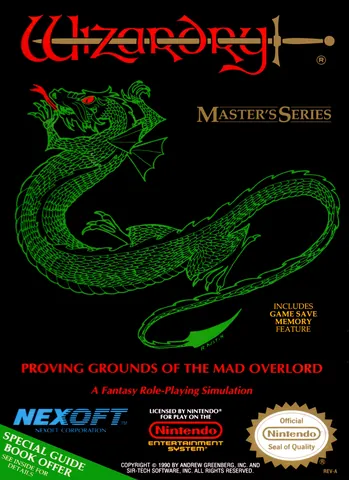
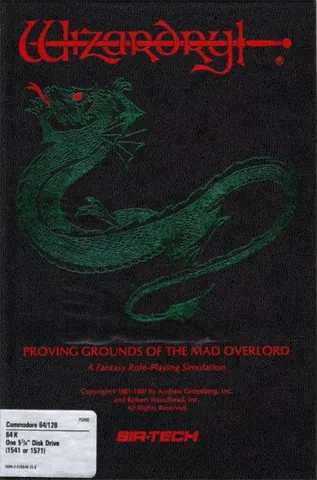
From the same series Wizardry →
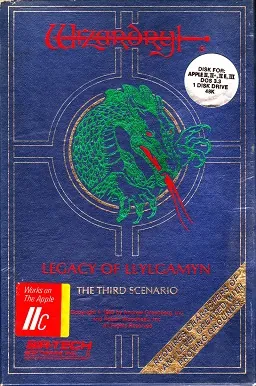 Wizardry III: Legacy of Llylgamyn DOS · 1983
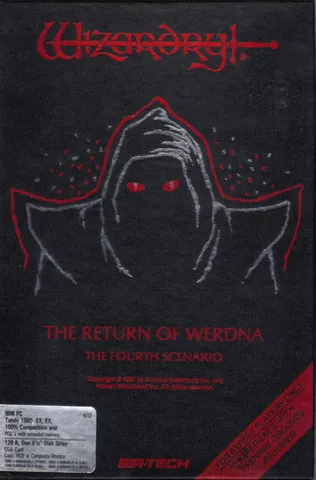 Wizardry IV: The Return of Werdna DOS · 1987
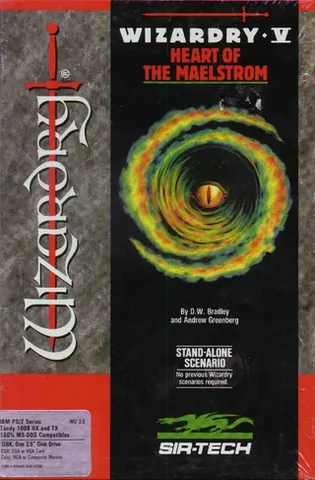 Wizardry V: Heart of the Maelstrom DOS · 1988
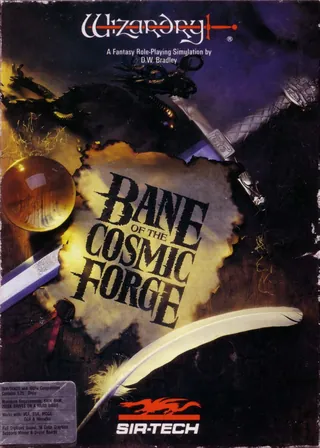 Wizardry VI: Bane of the Cosmic Forge DOS · 1990
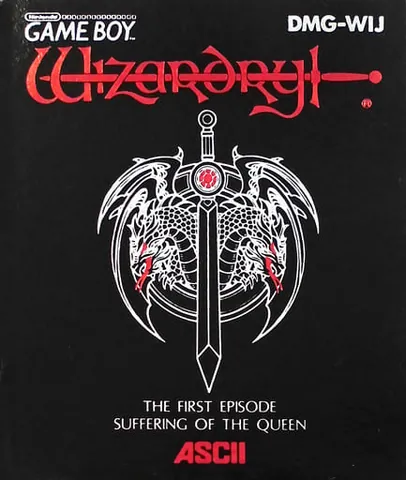 Wizardry Gaiden I: Suffering of the Queen GB · 1991
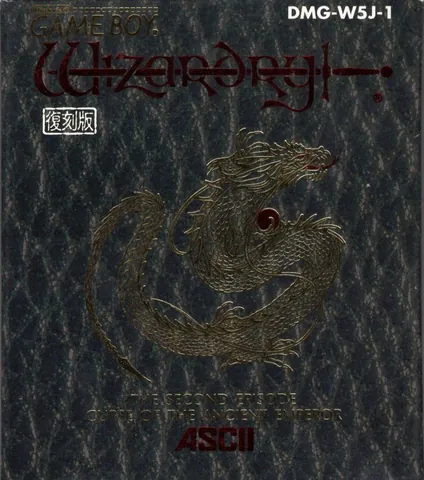 Wizardry Gaiden II: Curse of the Ancient Emperor GB · 1992
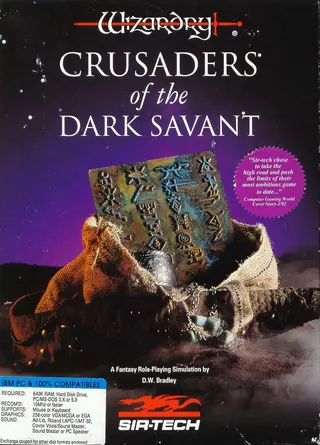 Wizardry VII: Crusaders of the Dark Savant DOS · 1992
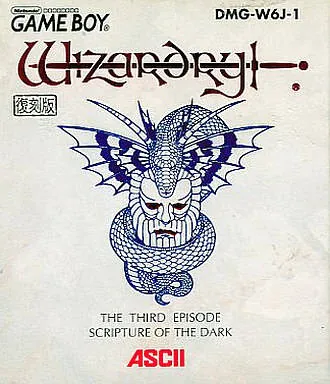 Wizardry Gaiden III: Scripture of the Dark GB · 1993
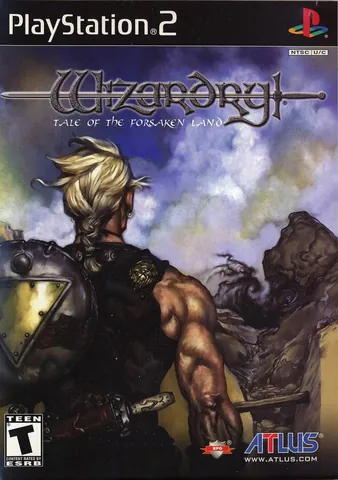 Wizardry: Tale of the Forsaken Land PS2 · 2001
 Wizardry 8 Win9x · 2001
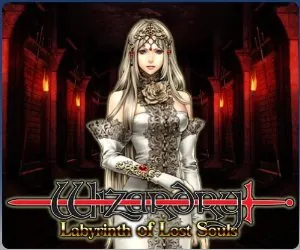 Wizardry: Labyrinth of Lost Souls PS3 · 2011