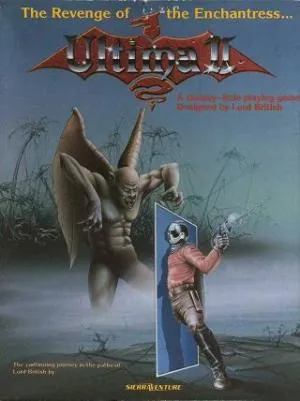
Ultima II: The Revenge of the Enchantress
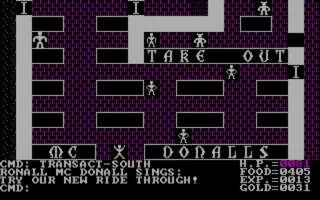
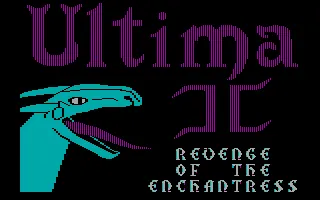
Ultima II: The Revenge of the Enchantress follows up on Richard Garriott's debut and sends the player across time and space — from ancient Egypt through the distant future to the streets of New York. The sorceress Minax is taking revenge for the defeat of her master Mondain from the first installment, and the player must travel through several historical periods and parallel worlds to stop her before she destroys the Earth itself. The game keeps the top-down view, turn-based combat, and open traveling structure of the first installment, but adds a much more varied environment and, for the first time in the series, time travel as a game mechanic. Combat takes place in real time directly on the game map; the player moves between dozens of towns and locations and acquires ships, horses, and even spacecraft to reach places inaccessible on foot, which gave players of the time an unprecedented sense of freedom of movement across interconnected worlds.
On the technical side, it is still a roughly drawn world with simple colored tiles typical of the early eighties, but on the DOS computers of the time the game seemed impressive in its scope and the number of places one could visit. Music was practically absent; the atmosphere was instead built up through text descriptions and the occasional beep of the PC speaker. Contemporary reception was largely positive, the game sold well and cemented the reputation of the Ultima series as an ambitious pioneer of the genre, although reviewers even then pointed out unbalanced difficulty, frequent bugs, and confusing puzzle structures that required out-of-game hints.
From today's perspective, Ultima II is playable mostly as a historical curiosity and evidence of how quickly the series evolved in its early years — the third installment already fixed many of its shortcomings. Still, it is an important milestone: it showed that a computer RPG need not be confined to a single world, and it foreshadowed the later epic journeys across Britannia with which the Ultima series is associated to this day. For collectors and historians of the genre, it remains an interesting testament to how tentatively yet boldly the creators of the time were still searching for the language of the computer RPG.
Why play it: For collectors and historians of the genre, it is an interesting testament to how tentatively the creators of the time were still searching for the language of the computer RPG, even though the third installment quickly fixed many of its shortcomings.
Game 165 of 204 for PC / DOS (XT až 486)
The same title elsewhere (1)
From the same series Ultima →
 Ultima VII: The Black Gate SNES · DOS
 Ultima I: The First Age of Darkness A800 · 1982
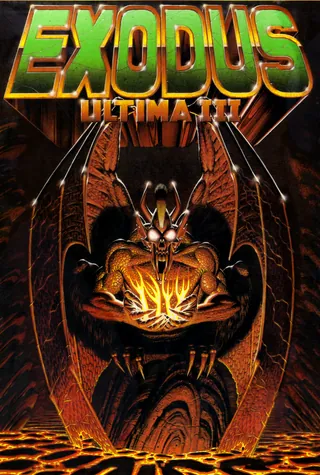
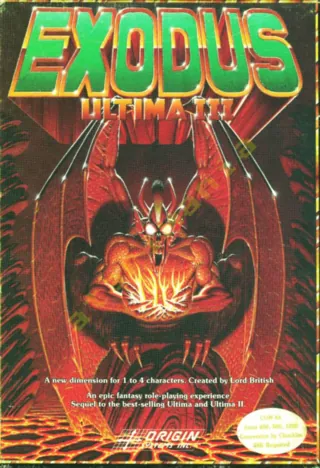 Ultima III: Exodus A800 · DOS · 1983
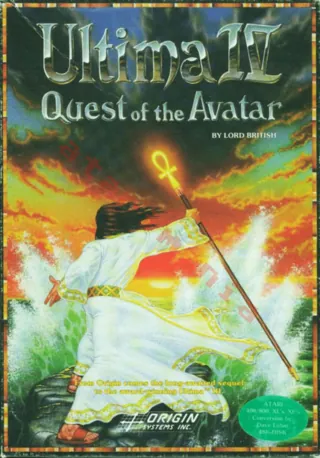 Ultima IV: Quest of the Avatar A800 · C64 · 1985
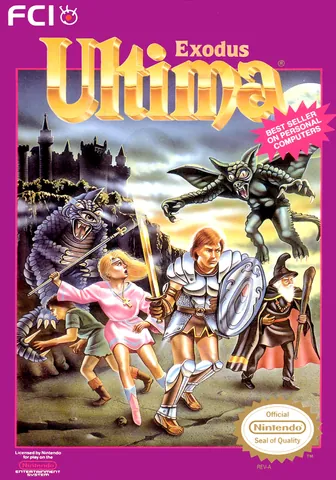 Ultima: Exodus NES · 1987
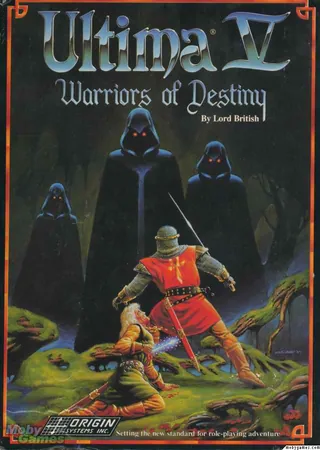
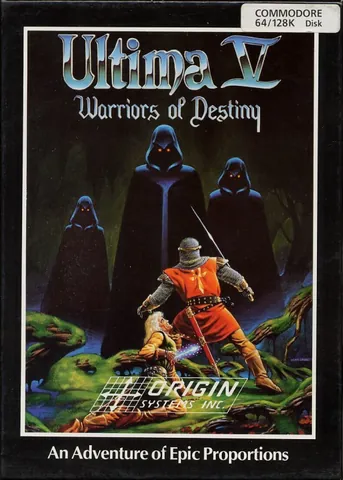 Ultima V: Warriors of Destiny C64 · DOS · Amiga · 1988
 Worlds of Ultima: The Savage Empire DOS · 1990
 Ultima: Runes of Virtue GB · 1991
 Worlds of Ultima: Martian Dreams DOS · 1991
 Ultima Underworld: The Stygian Abyss DOS · 1992
 Ultima: Runes of Virtue II GB · 1993