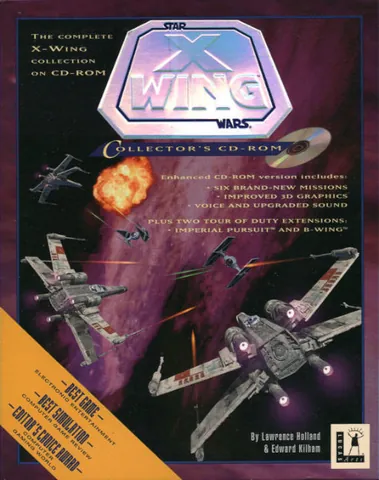
Star Wars: X-Wing
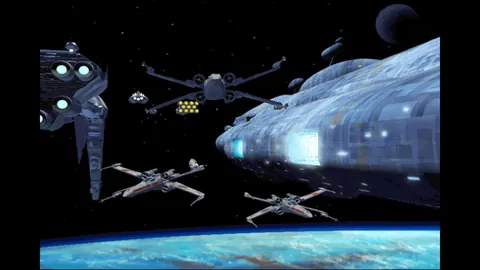
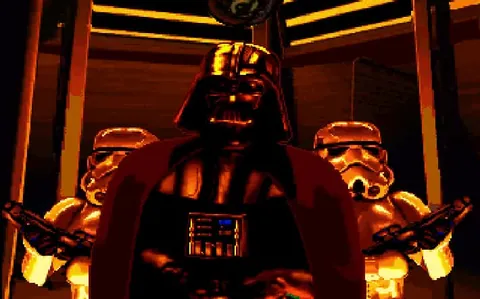
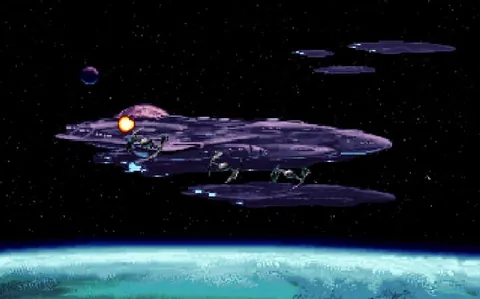
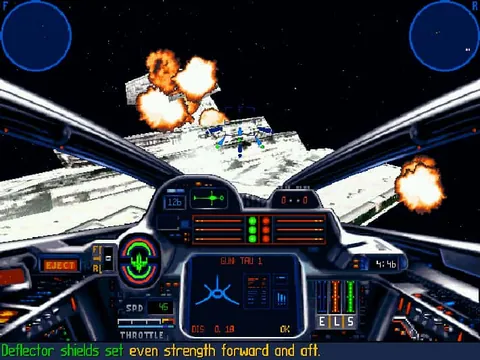
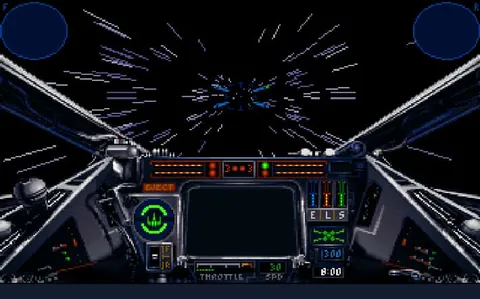
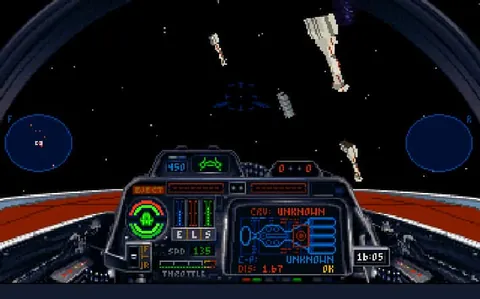
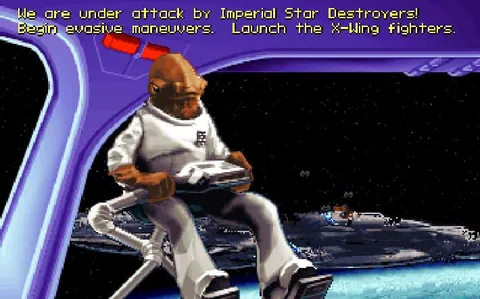
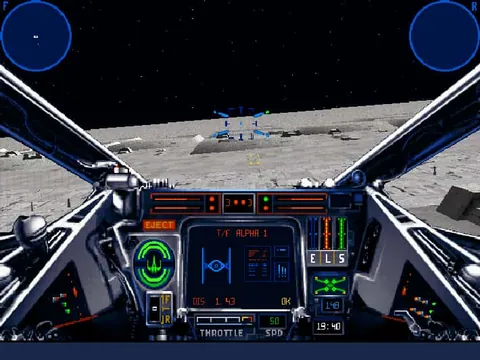
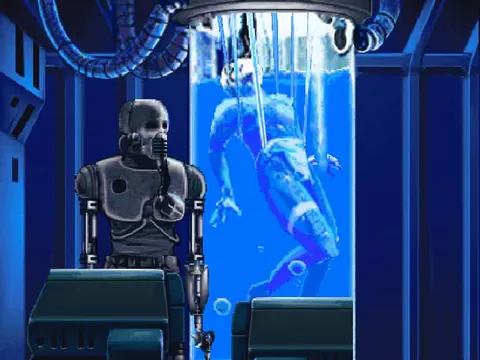
Star Wars: X-Wing was the first major attempt to put the player in the cockpit of a Rebel fighter in a way that wasn't arcade-like but a genuine space simulator. The campaign takes a pilot from training flights in the simulator through escort and reconnaissance missions all the way to the attack on the Death Star, and along the way offers three craft with very different characters: the nimble A-wing, the versatile X-wing, and the slow but sturdy Y-wing. The key to survival is managing power, that is, shifting output between engines, shields, and lasers, as well as redirecting shields forward or backward depending on where the enemy is attacking from.
Missions aren't just shooting galleries. The game works with convoys, checkpoints, transports that must be protected, and hyperspace jump timing, so failure often doesn't come from being shot down but from failing to complete the main objective in time. Technically the game ran on full polygons, which at the time allowed smooth ship rotation and readable dogfights even on ordinary machines with a 386 or 486 processor. The audio side was carried by the iMUSE system, thanks to which the music continuously reacted to what was happening around the player. A strafing run, a hull hit, and a victorious flyaway each had their own musical motif, and the atmosphere of the film source gained enormously from it.
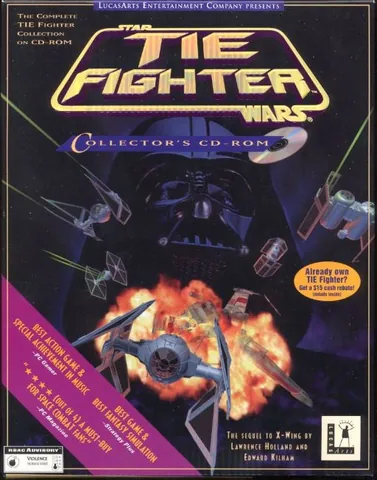
At the time X-Wing became one of the standout titles of its year and set the bar for licensed Star Wars games. It established the idea that a simulator could also be a dramatic story-driven game without sacrificing the depth of its systems. Today the game is tough, missions repeat here and there, in-flight saving options were limited, and the difficulty of some deployments is merciless, but the cockpit, the engine sound, and the tension of escorting a defenseless transport still work. For fans of space simulators it's a mandatory stop and at the same time the best introduction to what came from the same team a year later. It also helps that the game was later released in expanded versions with additional campaigns that added dozens of missions and new situations, so there's plenty of content here for a long time.
Game 76 of 204 for PC / DOS (XT až 486)
The same title elsewhere (1)
Star Wars: X-Wing was designed primarily for PC/DOS, and the later Commodore Amiga port had to work around that: the standard Amiga's weaker 68000 processor struggled to render the dense space battles with dozens of fighters smoothly, so the frame rate visibly drops during the bigger dogfights. The PC version, by contrast, benefited from faster 386 and 486 processors and could offer a smoother simulation along with support for quality sound cards like the Roland MT-32 or Sound Blaster for atmospheric music and voices. Anyone wanting to experience X-Wing as it was designed should reach for the PC version; the Amiga port is more of a curiosity for collectors.
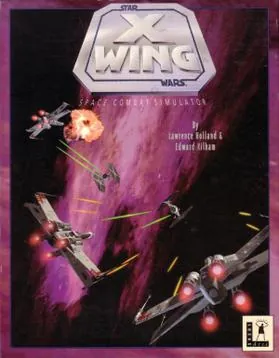
From the same series Star Wars → Star Wars: X-Wing a TIE Fighter →
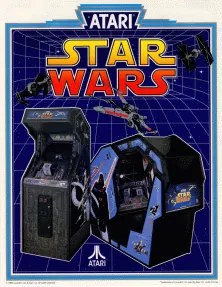 Star Wars Arcade / Rebel Assault II Saturn
 Star Wars: Rogue Squadron / Clone-themed tituly PS1
 Star Wars: The Force Unleashed X360 · PSP · Wii
 LEGO Star Wars: The Skywalker Saga Switch · PS5 · Series
 Star Wars: The Empire Strikes Back A800
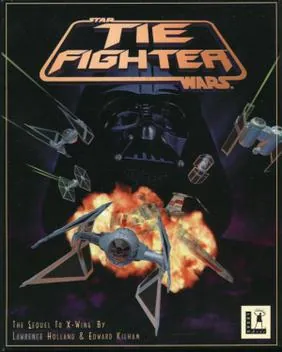 Star Wars: TIE Fighter Amiga · DOS
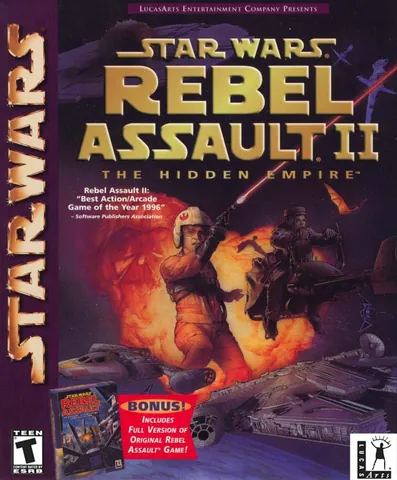 Star Wars: Rebel Assault II - The Hidden Empire DOS
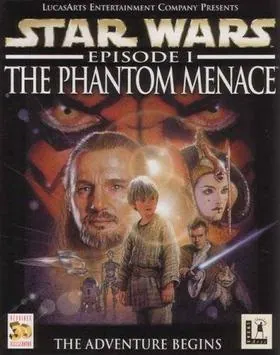 Star Wars Episode I: The Phantom Menace Win9x · PS1
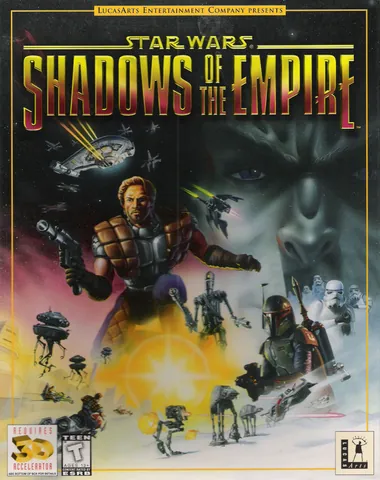 Star Wars: Shadows of the Empire Win9x · N64
 Star Wars: Knights of the Old Republic II - The Sith Lords PC · Xbox
 Star Wars (Mega Drive) MD · MAME · C64 · Amiga · 1983
 Super Star Wars SNES · 1992