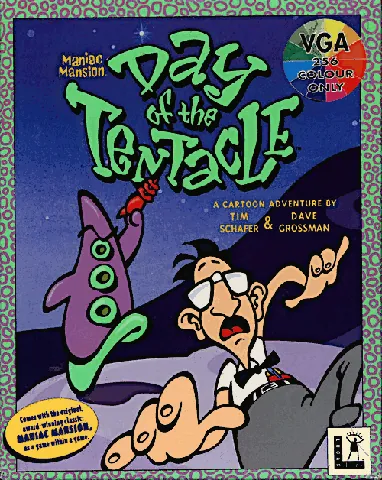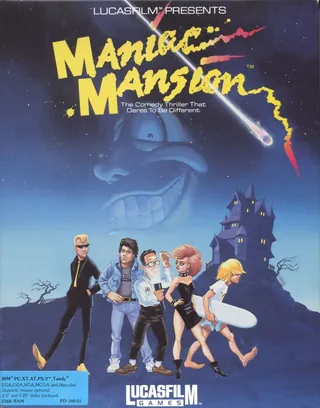
Maniac Mansion
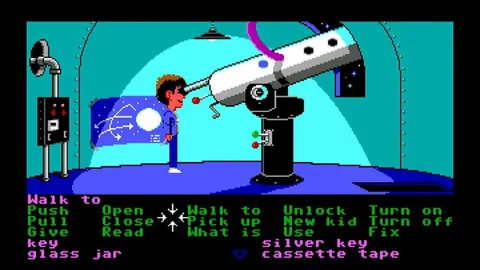
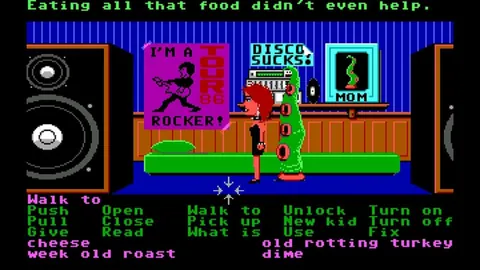
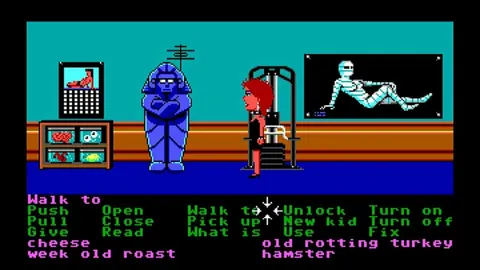
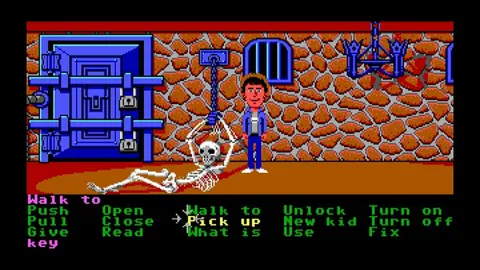
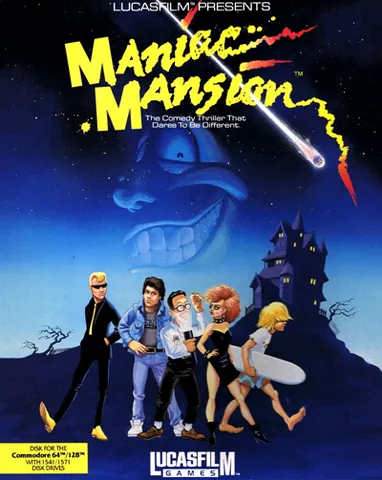
Maniac Mansion stands at the start of the modern history of point-and-click adventures. A group of high schoolers led by Dave head to a decrepit mansion on a hill, where the mad scientist Dr. Fred is holding the kidnapped girl Sandy, and for the first time the player doesn't have to guess which verb a text parser will understand. Everything is controlled with the cursor: the bottom of the screen lists commands like Open, Push, Use, or Walk to, with an inventory beside them, and sentences are built simply by clicking. It was specifically for this game that the SCUMM scripting system was created, which Lucasfilm Games and later LucasArts would then use for the entire following decade.
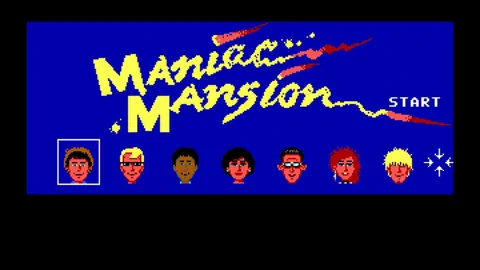
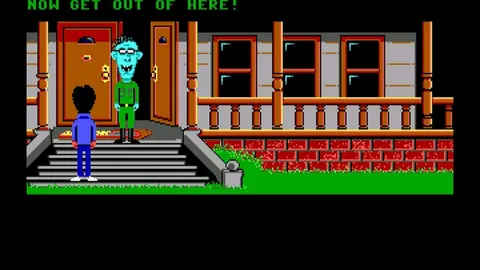
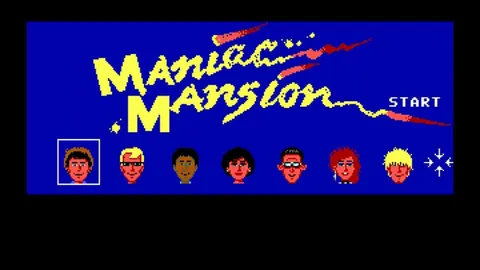
The second major innovation is character selection. Besides Dave, the player picks two of six friends before starting, and each one is good at something different — one is a hacker, another types, another plays keyboards — opening up different paths to a solution and giving the game several different endings. The mansion itself is one big interconnected puzzle full of secret doors, a pool of radioactive water, and family members who wander the halls and can catch the player. Characters are switched on the fly and often need to cooperate remotely, which was an unusually bold design for the time of release.
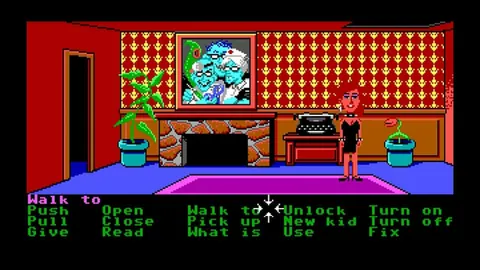
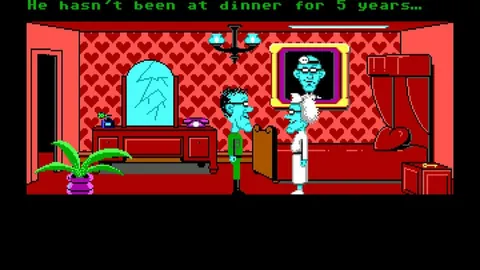
On PC, the game ran in EGA graphics with a striking cartoonish art style and PC speaker sound, later supplemented with sound card support; the atmosphere of 1950s B-movie horror shows through on every screen, from a guardian tentacle to a meteor in the basement. Contemporarily, the game also became known for the fact that you could fail irreversibly or kill a character, which was common at the time but feels harsh today. Even so, it remains readable and funny: the humor is built on absurd situations, and the reward for experimenting arrives instantly. The mansion also remembers what the player did, and the same scene can play out quite differently on a second playthrough — which is exactly what enticed players to replay the game with a different pair of friends. Maniac Mansion's influence is hard to overstate — it defined what a classic adventure game looks like, and its legacy is carried by a whole line of games that came after it.
Game 31 of 204 for PC / DOS (XT až 486)
The same title elsewhere (2)
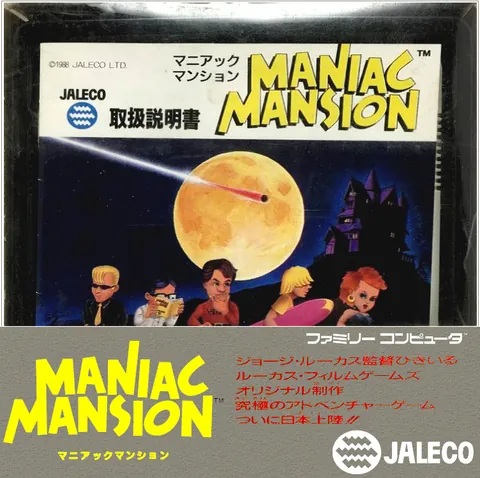
The Commodore 64 is the home platform where Maniac Mansion and the SCUMM engine first came to life — the game benefits from colorful 8-bit visuals and atmospheric SID-chip music that helps build the spooky mood of Doctor Fred's mansion. The PC/DOS port arrived a year later and had to cope with the fact that many contemporary PCs lacked a sound card, so music and effects were often reduced to internal-speaker beeps, while the graphics depended on whether the player had CGA or a better EGA card. Puzzles and gameplay stayed identical, so today's choice mainly comes down to preferring the C64's music or the PC/EGA version's slightly sharper graphics.