Micro Machines
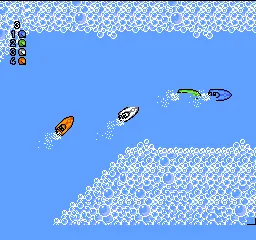
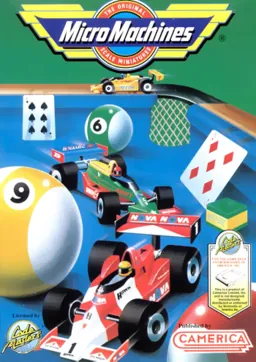
A pencil as a ramp, the breakfast table as a circuit and a bathtub full of water as a water hazard. Micro Machines took racing off the big tracks and transferred it into the realm of tiny cars racing across everyday objects around your home.
The game uses a top-down view and builds on the idea that you race with tiny toys in a giant world of ordinary things. The routes lead across kitchen countertops, billiard tables or garden paths, where every bit of a pencil or spilled liquid changes the course of the race. The elimination principle, where you let a rival fall behind the edge of the screen, turned every lap into a tense fight for position.
Micro Machines was based on the miniature toy brand of the same name and was ported to the NES by the studio Codemasters, a British firm renowned for inventive titles. The game came out in the early 1990s and showed that even on an ageing eight-bit console you could conjure up a fresh and original experience.
Culturally, the series became famous above all for its multiplayer mode, where merciless battles broke out between friends on a single screen. This communal fun made Micro Machines a sought-after title, and the brand gradually grew into a string of sequels on many platforms.
The magic lay in the contrast between the tiny cars and the giant world, which gave ordinary objects a whole new dimension. Suddenly spilled sugar was a dangerous trap and an ironing board a wild ski jump.
Because of this, Micro Machines remains one of the most original racing ideas of its era.
Why play: Racing with tiny cars across the kitchen table, which turned everyday objects into adrenaline-fuelled tracks and excels in the head-to-head with friends.
Game 65 of 120 for Nintendo NES
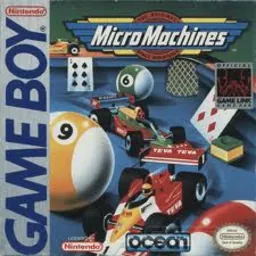
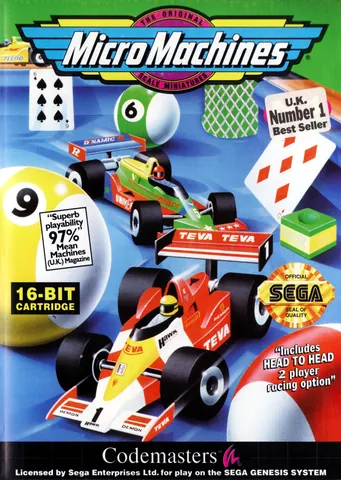
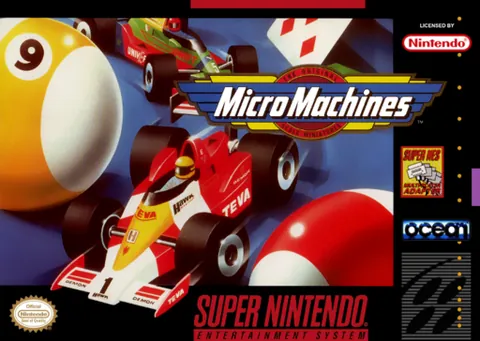
The same title elsewhere (3)
Micro Machines on the Nintendo NES shipped without Nintendo's license — publisher Codemasters worked around the console's lockout chip with their own solution, a rare feat at the time. It still delivered brisk split-screen racing for multiple players and an inventive overhead view of tracks laid out among everyday household objects. The later Super Nintendo version benefits from more powerful hardware: richer colors, smoother scrolling, and fuller sound thanks to a better chip, though the core gameplay stays true to the original. For the best-looking version, go SNES; the NES release is more of a historical curiosity released without Nintendo's blessing.