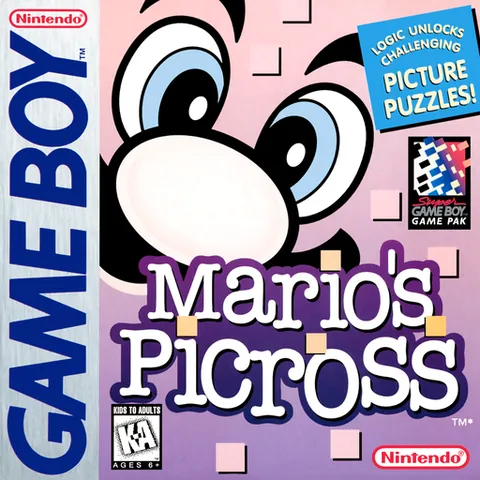
Mario's Picross
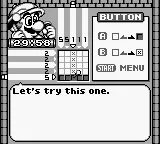
There is a peculiar kind of game that won't let go of you even after you switch off the console — and Mario's Picross is a textbook example. This game introduced Western audiences to nonograms, logic crosswords in which you deduce a hidden pixel image from the numbers along the sides of the grid. No action, no enemies — just you, the numbers, and the quiet satisfaction of everything clicking into place.
The principle is ingeniously simple and inexhaustible at the same time. The numbers beside each row and column tell you how many contiguous cells are filled and in what groups. From that you must logically deduce which cells to blacken and which to cross out. A single wrong judgment is punished — an incorrect fill eats into your countdown, so the game rewards deliberation over haste. And when the grid finally reveals its picture — a little elephant, a mug, a key — you get that small but genuine sense of accomplishment.
The game was watched over by Nintendo's internal Mario team, and the mascot serves here mainly as the friendly face of the instructions and hints; pickaxe in hand, chisel, hammer — Mario mines images here like a miner of logic. That gave an otherwise abstract puzzle charisma and a brand players knew and bought. Visually the game is clean, legible, and perfectly tuned for the Game Boy's small monochrome screen, where the readability of the grid matters most of all.
In Japan the game was successful enough to earn sequels, which never made it off the islands. More important, though, is what Mario's Picross set in motion: the nonogram (picross) genre took root at Nintendo and lives on to this day — whether as the popular Picross e series on the 3DS or as a fixture of the eShop. This unassuming mid-nineties cartridge is thus something like the forefather of an entire branch of handheld puzzling.
The magic of Mario's Picross lies in the „one square a day“ rhythm that imperceptibly turns into hours. It is a game for the tram, the waiting room, the evening when you want to switch off rather than be wrung out. Deductive, addictive, and surprisingly meditative — exactly the type of title the Game Boy was made for.
Why play: If you enjoy logic crosswords and deductive puzzles, this is a clean, polished, and endlessly addictive classic that will make you lose all track of time.
Game 26 of 147 for Nintendo Game Boy
From the same series Mario →
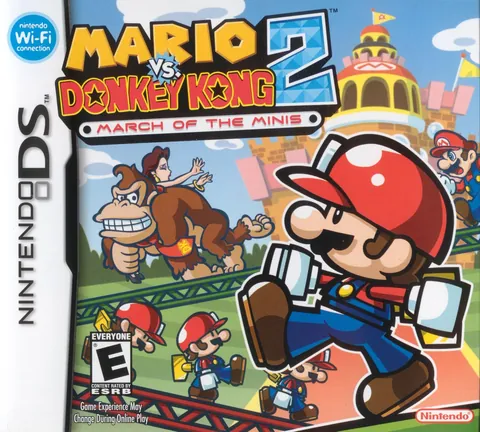 Mario vs. Donkey Kong 2: March of the Minis DS
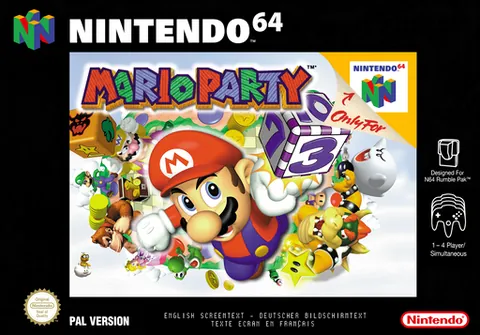 Mario Party 1–3 N64
 Mario & Sonic at the Olympic Winter Games Wii · DS
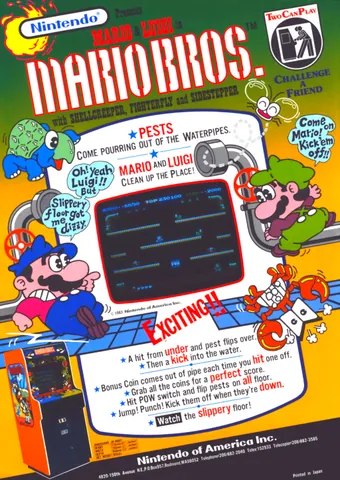 Mario Bros. MAME · 2600 · G&W · 1983
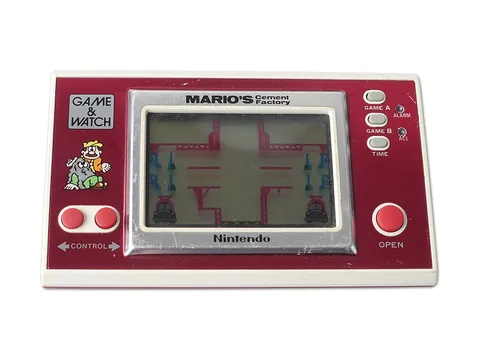 Mario's Cement Factory G&W · 1983
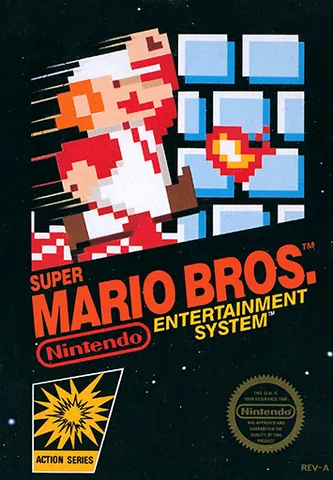 Super Mario Bros. NES · 1985
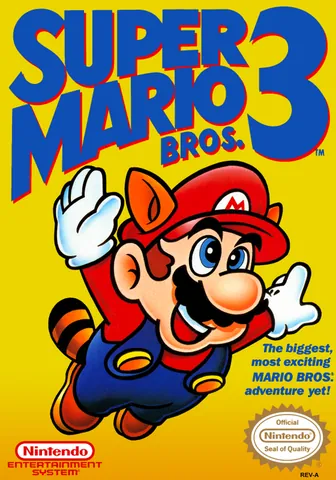 Super Mario Bros. 3 NES · 1988 (JP) / 1990 (US)
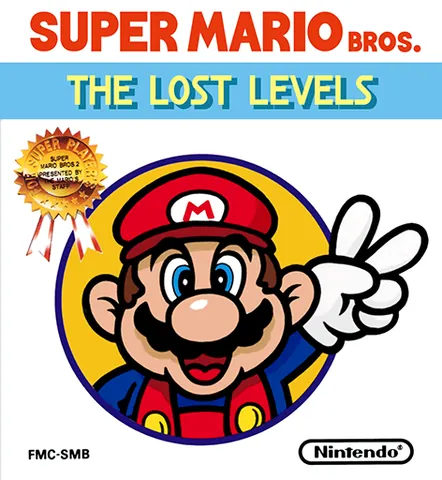 Super Mario Bros. 2 NES · 1988
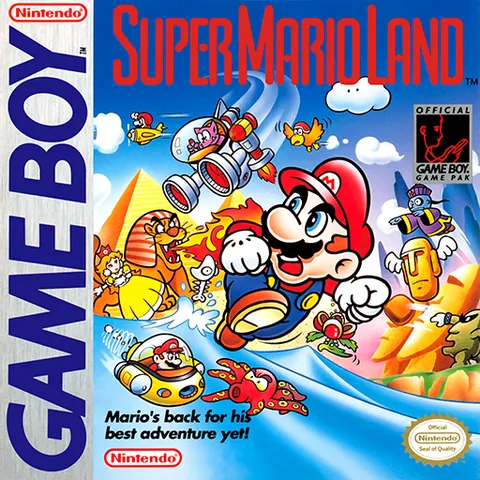 Super Mario Land GB · 1989
 Dr. Mario GB · NES · 1990
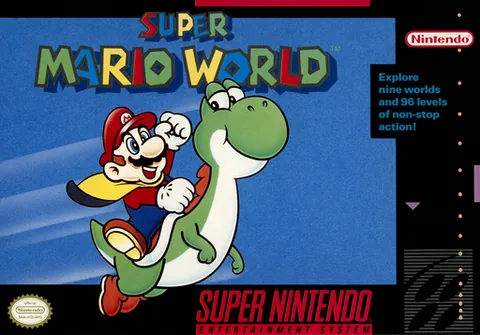 Super Mario World SNES · 1990 (JP) / 1991 (US)
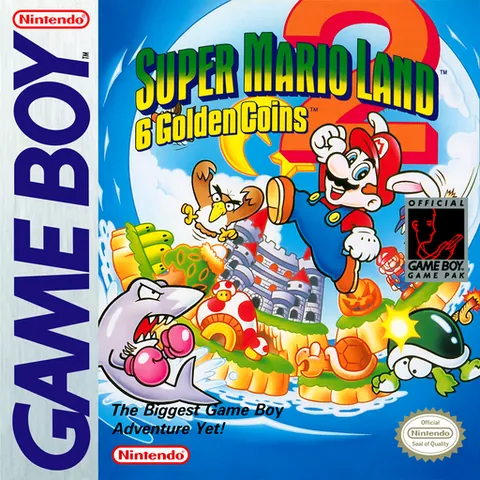 Super Mario Land 2: 6 Golden Coins GB · 1992