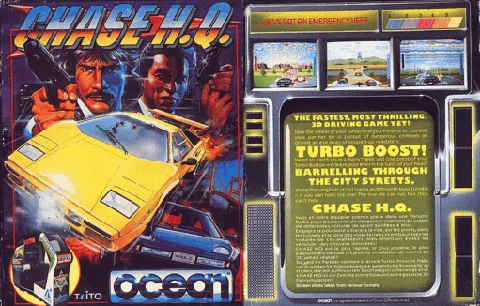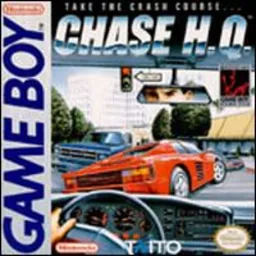
Chase H.Q.
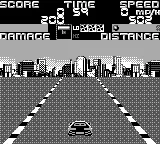
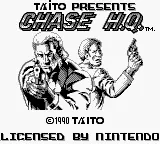
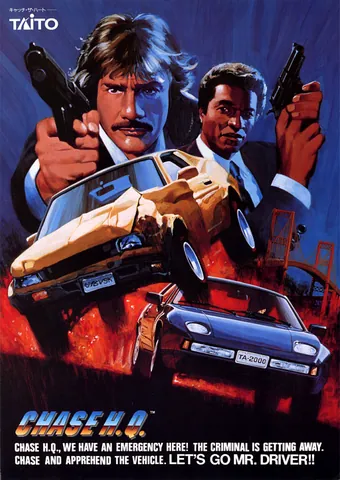
Chase H.Q. brought to the Game Boy the concept of Taito's famous arcade game, in which the player isn't behind the wheel of an ordinary race car but plays a police officer in an unmarked sports car whose job is to catch up with and stop fleeing criminals. After every radio call from headquarters, the player sets off after a specific suspect vehicle and must catch up to it within the time limit, then damage it enough through repeated ramming and collisions to make it stop before time runs out or the fleeing vehicle vanishes into traffic. Each subsequent mission raises the demands on both speed and precision, forcing the player to keep improving their driving style.
The game loop is simple, but thanks to the combination of fast driving and aggressive ramming it has its own rhythm – it's not just about being first, but about strategically choosing the right moments to collide without damaging your own car too much. The Game Boy version had to simplify both the sense of speed and the road's graphics because of the handheld's limited power, yet the developers still managed to keep the traffic legible and the tension of the chase intact. The sound is minimal, but the wailing siren and collision effects give the game an energy the small screen can't provide on its own, and together with the car-damage indicator they keep the player constantly tense over whether they'll catch the fleeing criminal in time.
At release it was one of many arcade ports meant to prove that even simpler action concepts could find their place on the go on the Game Boy. Chase H.Q. was never a title that fundamentally pushed the genre forward, but it offered a different angle on racing – instead of chasing the clock, it's about chasing an opponent, which set it apart from most other racing titles available on the same platform. Today it's interesting mainly as an example of how an arcade classic adapted to the limits of portable hardware, and of how well a simple, understandable game idea can work even without much technical power.
Game 105 of 147 for Nintendo Game Boy