Ikaruga
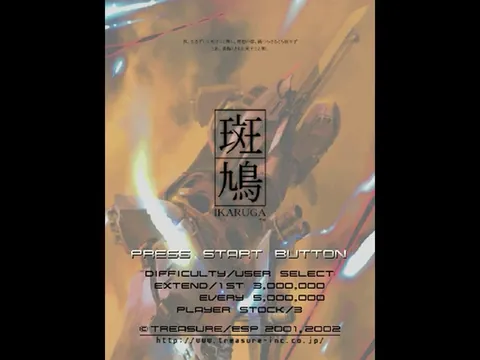
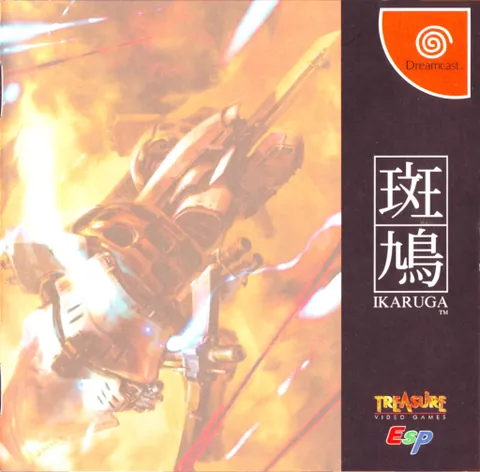
There's a handful of games that fans speak of in a hushed, almost sacred tone – and Ikaruga is one of them. This vertical shooter from the legendary Treasure studio is the spiritual successor to the revered Radiant Silvergun and to this day counts as one of the most respected modern shmups of all. It first appeared as an arcade game in 2001, then came to the Dreamcast in 2002.
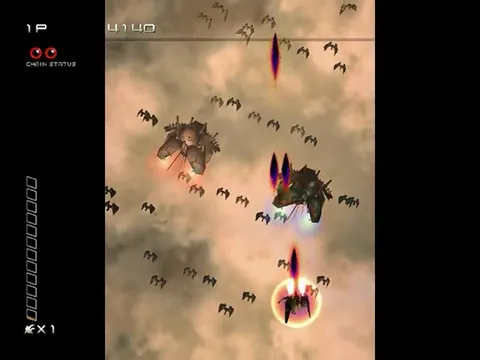
At the core of the whole experience is a brilliant polarity mechanic. Your ship switches between two states – black and white – and this choice changes absolutely everything. Bullets of your own color don't harm you; on the contrary, you absorb them and charge up a powerful attack, while enemies of the opposite color take double damage. What would elsewhere be a chaotic bullet-hell thus becomes a game that resembles a logic puzzle in real time.
Each screen is a carefully designed sequence you learn to read, anticipate and master. The game also rewards chaining enemies in trios of the same color with bonus score, which turns the pursuit of a high score into a discipline of its own that players dig into for years. Ikaruga isn't so much about reflexes as about rhythm, planning and almost meditative focus.
Visually it's a clean, elegant game where the contrast of black and white isn't just aesthetics but the very game principle. Treasure was famous for building action around a single idea taken to perfection, and Ikaruga is perhaps the best proof of that approach – minimalist in its basic idea, infinitely deep in execution.
That's exactly why the game built a cult standing and over the years appeared on other platforms too, where a new generation of players found it. For the shmup community it remains a kind of benchmark against which other games of the genre are measured.
Why play it: A masterful shmup from Treasure, where the polarity mechanic transforms bullet-hell into an elegant puzzle – one of the deepest and most respected representatives of the genre.
Game 12 of 54 for SEGA Dreamcast
The same title elsewhere (1)
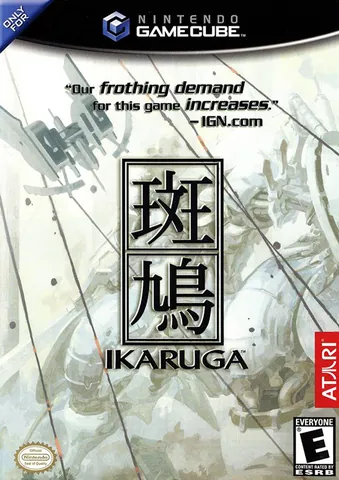
The SEGA Dreamcast version was released only in Japan, and thanks to hardware architecture close to the NAOMI arcade board Ikaruga originally ran on, it offers an experience virtually identical to the coin-op — the same smoothness, colors, and sound. The Nintendo GameCube version arrived a little later and was the first to bring the game outside Japan, becoming the version most Western players actually know; visually and in gameplay it barely differs from its Dreamcast predecessor, since the GameCube handled the game's demands without any trouble. The difference between the two versions, then, is mainly about availability and region rather than quality — both are regarded as nearly identical, excellent renditions of one of the most acclaimed vertical shooters ever made.