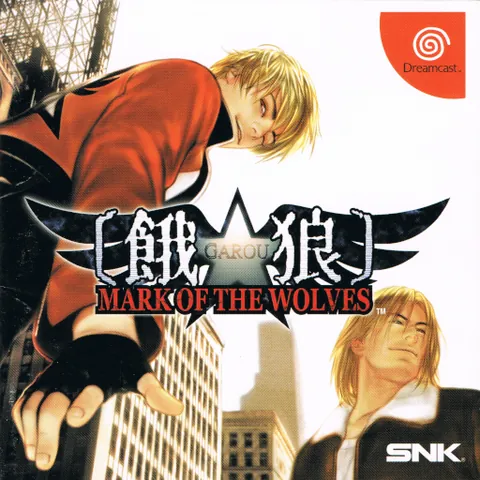
Garou: Mark of the Wolves
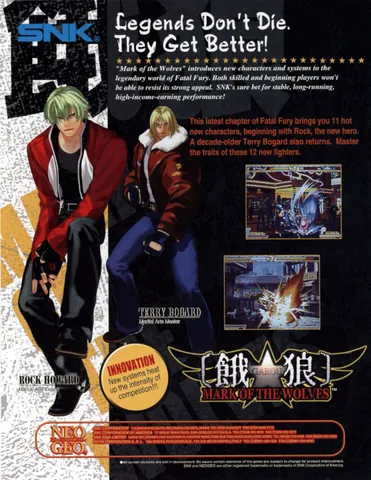
There are games that stand at the end of an era as its perfect crowning achievement — and Garou: Mark of the Wolves is exactly such a case. This fighter from SNK is regarded by connoisseurs as one of the best and most beautiful 2D fighters ever created, and on the Dreamcast it found a home that fully matched its qualities.
Garou introduces a new generation of fighters and, with them, a fresh, carefully balanced combat system. The character animation ranks among the finest the 2D genre has offered — fluid, expressive and full of personality, with backgrounds and an art style that lend the game an unmistakable atmosphere. It's a visual feast that reveals the mastery of SNK's creators.
The gameplay core rests on the Just Defend mechanic. If you block an opponent's strike at the precise moment, you take no damage, restore a bit of energy and gain the upper hand for a counterattack. This mechanic rewards courage and perfect timing and gives the duels exceptional depth — just like related systems in other top-tier fighters, it pushes the skill ceiling very high.
The result is a game that's approachable at first glance yet hides enormous room for mastery. The duels are fast, clean and full of tactical decisions, so Garou is among the titles the competitive community returns to again and again, discovering new layers within it.
On the Dreamcast, which became a refuge for the top 2D fighters of its era, Garou: Mark of the Wolves stands as one of the absolute gems. For fans of the genre it's an essential title — an elegant farewell to SNK's classic era and proof that 2D fighters could age gracefully.
Why play it: One of SNK's most beautiful and finely tuned 2D fighters, with the Just Defend mechanic — an elegant peak of the genre that deservedly holds its cult status.
Game 20 of 54 for SEGA Dreamcast
The same title elsewhere (1)
The 1999 Neo Geo original was SNK's high point in 2D fighting games — an expensive cartridge that, thanks to the arcade and home systems sharing the same MVS/AES hardware, delivered identical graphics and play to what you'd find in an arcade, just at a steep purchase price. A port to the SEGA Dreamcast followed a year later, and because the Dreamcast shared its lineage with the NAOMI arcade board, the game carried over essentially unchanged, now on a far cheaper CD medium than the pricey Neo Geo cartridges. Visually and audibly the two are near-identical experiences, so today's choice comes down mostly to hardware availability — the Dreamcast tends to be the easier, cheaper route into this fighter for modern players, while the Neo Geo version remains the collector's legend.