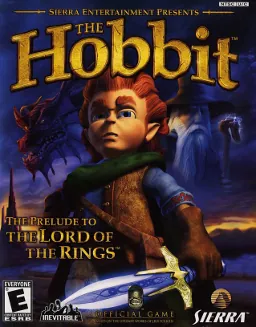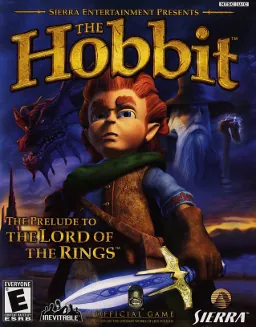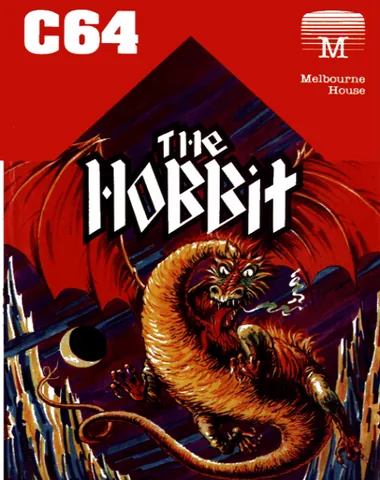
The Hobbit
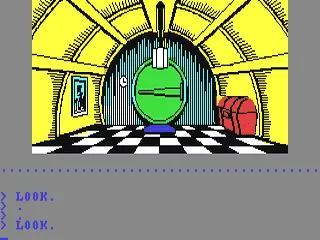
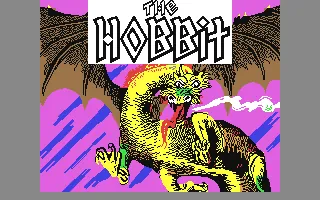
The Hobbit from 1982 by Melbourne House was one of the first text adventures to add static but atmospheric illustrations of individual locations to its spare text parser, and on the Commodore 64 it became one of the most successful and most talked-about titles of its time. The game faithfully follows the story of Bilbo Baggins from J. R. R. Tolkien's book — from meeting Gandalf and the dwarves, through the journey across the Misty Mountains, the encounter with Gollum, all the way to the final confrontation with Smaug — and the player must proceed in broad strokes true to the source material, though with room for their own improvisation and detours.
The key innovation was an advanced text parser and, above all, a system of characters driven by their own simple artificial intelligence — Gandalf, Thorin, and other companions moved and acted independently, sometimes actively helping the player in a fight or with a puzzle, other times complicating the whole situation, for instance by falling asleep in the middle of danger or wandering off elsewhere. This unpredictability made every playthrough a uniquely different experience, but it also led to frustrating, seemingly unsolvable situations caused by bugs and the technical limitations of the era.
The Hobbit became one of the best-selling titles for eight-bit computers in Britain, and its combination of text, static images, and simulated independently acting characters was genuinely groundbreaking for its time. The Tolkien license itself also contributed to its popularity, winning over the game even players who otherwise had little experience with text adventures. Contemporary critics praised its ambition and atmosphere, while also noting its technical flaws, occasional unsolvable situations, and the need to patiently wait for the game to process longer commands. Today the game is an important reminder of an early attempt to simulate a living, reactive world in an adventure game, and it remains an interesting historical artifact for fans of Tolkien and of interactive fiction in general.
Why play it: For anyone who wants to experience an early attempt at simulating a living, reactive game world combined with the Tolkien license, The Hobbit remains a fascinating historical artifact despite its period technical flaws.
Game 80 of 121 for Commodore 64