The Hobbit
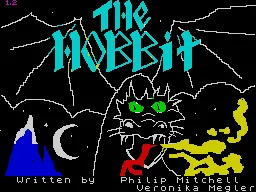
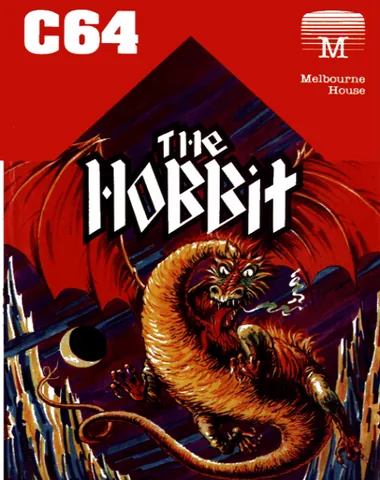
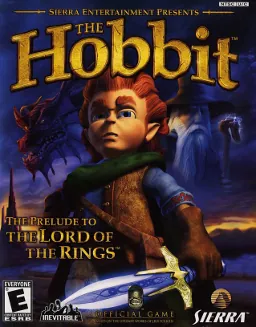
The Hobbit is among the most influential text adventures of the 1980s and was released for the ZX Spectrum as early as 1982, when it defined how the pairing of a classic text adventure with graphic illustrations should look. The player takes on the role of Bilbo Baggins and travels through Tolkien's world from the Shire through Mirkwood to the Lonely Mountain, entering commands in natural English which the game interprets using a fairly sophisticated parser that could understand even longer sentences with conjunctions and prepositions. A crucial innovation was the so-called Inference Engine, a system thanks to which characters like Thorin, Gandalf, and Gollum acted independently of the player, had their own goals and moods, moved around the map according to their own decisions, and could react to one another even outside scripted situations, including improvised fights or random encounters.
This unpredictability was both the main draw and a source of frustration, since the game could theoretically be completed in many different ways, but it was just as easy to get stuck on unexpected character behavior, on Bilbo being wedged in a doorway, or on a missing item that another character had carried out of reach. For 1982 on the Spectrum, the graphics were above average, with static images accompanying the text at key locations and adding atmosphere, although most of the experience rested on the text and the player's imagination. The sound was minimalistic, as was common for early titles on eight-bit machines, with the main emphasis on the text and its interactivity.
Commercially, it was one of the most successful titles of the early home computer era in the United Kingdom, and the game was even sold bundled with the book, which helped it reach an audience beyond experienced players. Its influence on the text adventure genre was enormous; many later games adopted the idea of a living world with its own character dynamics that wasn't just a backdrop for solving puzzles. Today the controls and pacing feel archaic, and the improvised artificial intelligence can still catch even an experienced player off guard, but as a historical milestone and a showcase of early artificial intelligence in game design, The Hobbit still has value.
Why play it: For those interested in the history of text adventures, The Hobbit offers a unique living world with its own character dynamics, even though the controls and improvised artificial intelligence feel archaic today.
Game 62 of 100 for ZX Spectrum