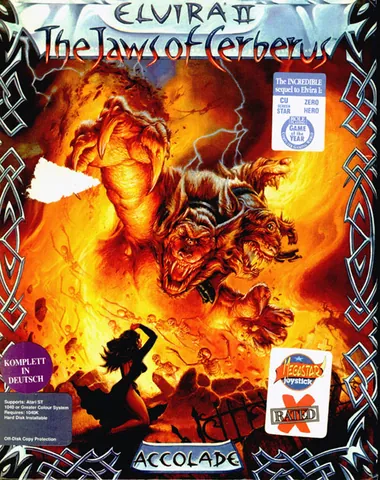
Elvira II: The Jaws of Cerberus
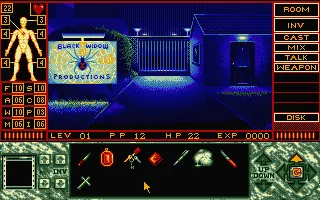
Elvira II: The Jaws of Cerberus is a sequel to the horror adventure from Horrorsoft that on the Atari ST moves the story from a gothic mansion to an abandoned film studio transformed into a hellish labyrinth, with the game thus abandoning the first installment's purely medieval horror aesthetic in favor of a more varied, film-themed setting full of references to classic horror movies. In terms of systems, the game improves the combat model toward a smoother, more action-oriented approach and expands the possibilities for interacting with the environment and inventory, while retaining the characteristic ironic tone of the hostess Elvira, who accompanies the player, comments on their actions, and adds the game's typical dose of black humor.
On the Atari ST, the game benefited from more elaborate locations and more detailed graphics compared to its predecessor, although on the limited hardware this was a demanding task that required certain compromises in the loading speed of individual screens and the overall smoothness of the game. The sound design again built on atmospheric music and sound effects underscoring the horror setting, and the game retained a reputation as a difficult, at times unfair adventure with traps that can kill the character without warning, thus forcing the player to frequent caution and saving. The combat system additionally allowed fighting unarmed, which, together with an expanded repertoire of spells, gave the player more options for facing enemies lurking in the studio's dark corridors.
Elvira II was perceived at the time as a successful expansion of the first installment's concept, which advanced the horror adventure genre with RPG elements both technically and in content, although discussions about excessive difficulty and punishing the player accompanied this installment just as much as its predecessor. In retrospect it is valued as a notable showcase of British horror adventure at the turn of the 80s and 90s, though today it is played mostly by fans willing to accept its harsh, uncompromising pace and the archaic conventions of period design that contemporary adventures abandoned long ago.
Why play it: For players willing to accept the harsh, uncompromising pace of a British horror adventure that advanced the genre both technically and in content.
Game 38 of 72 for Atari ST