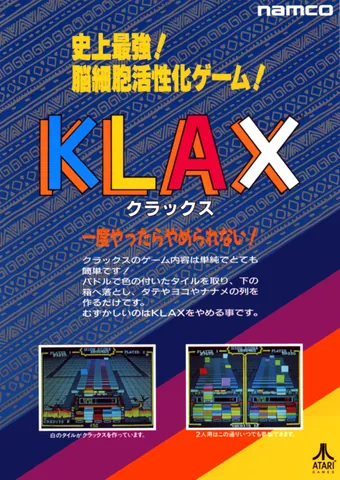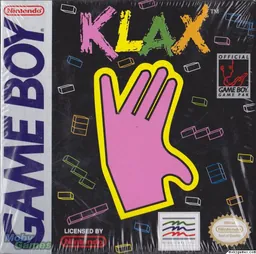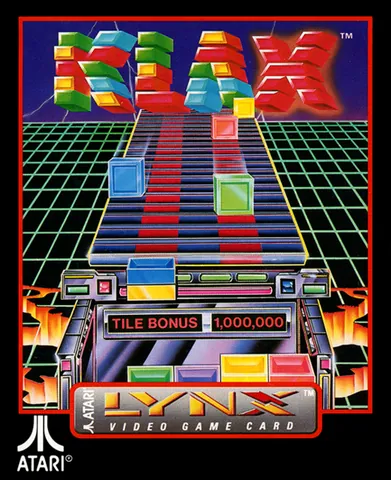
It's falling. It keeps falling. And you only have a few seconds to decide where to put it. Klax was Atari's answer to the Tetris fever of the late 1980s, and it arrived on the Atari Lynx in 1990 as one of the finest puzzle titles in the console's entire library. Its motto sounded half-joking, half-prophetic: "it is the nineties and there is time for Klax."
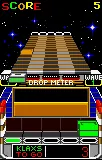
The mechanic is refreshingly different from Tetris. Colored tiles slide toward you along a moving belt and you catch them in a kind of paddle at the bottom of the screen. Then you set them down into a grid so as to form klaxes, meaning rows of three or more of the same color horizontally, vertically or diagonally. At the same time you have to make sure your stack of caught tiles doesn't overflow, and meet each round's goals, whether that's a certain number of klaxes or a points target. The result is a pleasant tension between catching and placing.
On the Lynx's small color display the game truly blossoms. The colors are bright and easily distinguishable, which is absolutely crucial for a puzzle that depends on telling shades apart, and the brisk pace can absorb you for long stretches of time. The gradually increasing belt speed turns what starts as a calm logic game into a test of reflexes and spatial imagination at once.
Klax was created at Atari Games as an arcade cabinet and quickly spread to countless platforms, because its concept was universally appealing. The Lynx version, however, is among the most accomplished precisely thanks to the display's color, which the monochrome competition simply couldn't offer. For console owners it was one of those titles you switched on "just for a moment" and put down an hour later.
Today Klax ranks among the respected classics of the "falling block" puzzle genre, alongside Tetris, Columns or Dr. Mario. It isn't as famous as its role models, but among connoisseurs it holds a firm place thanks to its original catch-and-place mechanic, which sets it apart from mere block dropping.
Why play: For addictive, colorful logic that will easily rob you of an evening and offer a refreshing alternative to eternal Tetris.
Game 12 of 30 for Atari Lynx