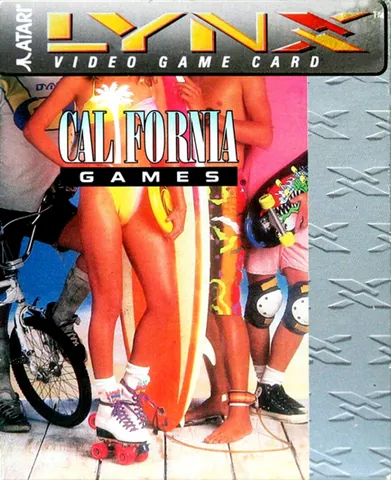


Sunshine, a board under your feet and a wave waiting to be ridden — California Games was a digital postcard from California long before "lifestyle" became a marketing cliché. And on the Atari Lynx, in color no less, it felt like a slice of summer that fits in your palm.
Instead of classic disciplines like running or the long jump, the studio Epyx bet on the then-young "extreme" sports: skateboarding, surfing, BMX and footbag (hacky sack). Each discipline has its own controls and rhythm — the surfer has to read the wave and time tricks, the skateboarder must master the half-pipe, while BMX rides on speed and daring. It's not a simulation, it's an arcade full of style, all about flair, timing and competition.
The game originally shone on home computers, and Epyx ported it to the Lynx as one of the console's launch titles. The handheld's color and backlit display let the Californian beaches and graffiti aesthetic stand out in a way the competing black-and-white handhelds of the era simply couldn't offer.
But California Games hands out the most fun in a group. Taking turns at each discipline, jeers over a botched trick and the drive to beat a friend's record — that's exactly what turned this game into a social event. It's a title that builds not on the depth of any single discipline but on variety and a light, carefree mood.
Today the game is remembered mainly as a symbol of the Lynx's early library and as proof that Epyx knew how to capture the spirit of the age. It's no technical miracle nor a title to keep you busy for weeks, but as a pocket ticket to eighties California it still works.
Why play: A laid-back multi-discipline arcade packed with eighties style, perfect for quick contests with friends and a sip of digital summer.
Game 2 of 30 for Atari Lynx
The same title elsewhere (4)
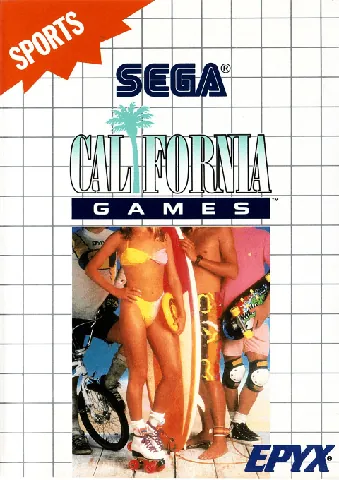
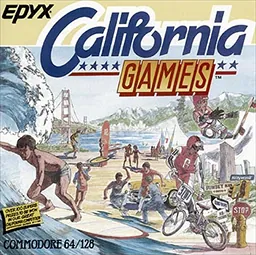
The original was built on the Commodore 64, where it drew on the legendary SID sound chip to deliver the richest, fullest-sounding music of any version. The Atari Lynx portable version, one of its launch titles, ran on a backlit colour screen but had to trim both the number and scope of events compared with the computer original due to limited cartridge memory. The Sega Master System version, meanwhile, had to give up some of the colour depth and animation smoothness offered by the 8-bit home computer, and its sound is noticeably simpler. Anyone wanting the best-sounding version should pick the C64; anyone who prefers gaming on the move will appreciate the Lynx.