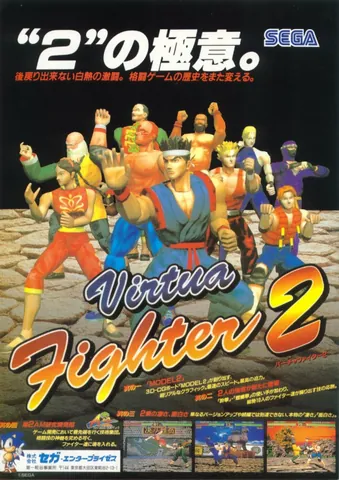
Virtua Fighter 2
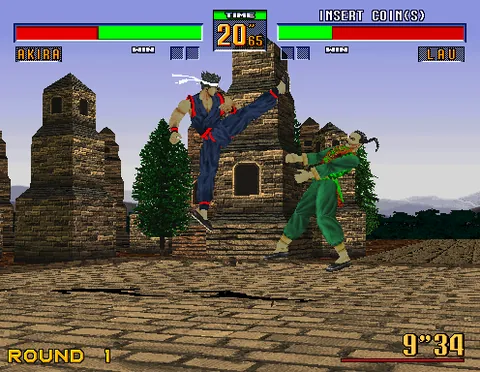
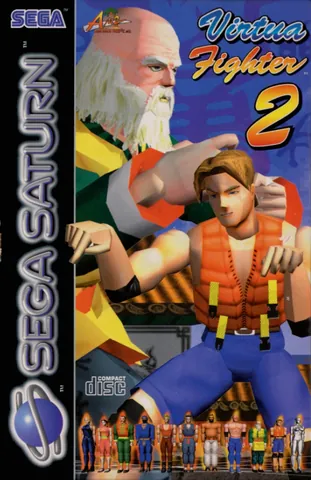
Virtua Fighter 2 from 1994 followed up on the groundbreaking first game, which was the first in the fighting genre to bring fully three-dimensional polygonal characters, and pushed both the technical and gameplay side a crucial step further. On the more powerful Sega Model 2 arcade hardware, the game offered much more detailed and more smoothly animated fighter models and arena backgrounds with textures instead of flat surfaces, which in 1994 represented one of the visually most impressive experiences achievable in arcade halls.
The combat system built on a realistic take on martial arts – each character had its own style drawn from real disciplines such as karate, kung fu, sumo, or professional wrestling, and the game emphasized timing, blocking, evasive maneuvers, and positioning instead of the flashy special moves typical of the competition. This precision and legibility of mechanics made Virtua Fighter a favorite title among players seeking a deeper, more technical, and more thoughtful fight with clear rules.
Virtua Fighter 2 was both critically and commercially very successful; in Japan it was among the highest-grossing arcade titles of the mid-nineties and cemented Sega's position as a leader in 3D fighting games alongside the rising Tekken. Its emphasis on realistic fighting styles and precise, legible controls influenced the direction of the entire 3D fighting subgenre and inspired a number of later technically oriented titles. It is still considered one of the most significant technical milestones in the genre's history and remembered as the game that managed to make 3D combat believable. Its elaborate sidestepping system, fully exploited by only some characters, also became one of the defining traits that set the Virtua Fighter series apart from competing 3D fighting games for many years to come. In Japan, the game also received enthusiastic reception among professional martial artists, who appreciated how faithfully it captured the individual styles.
Why play it: For those interested in technical 3D fighting games, this is one of the genre's most significant milestones – a game that managed to make 3D combat believable through realistic fighting styles and precise controls.
Game 161 of 258 for Arcade