Virtua Cop
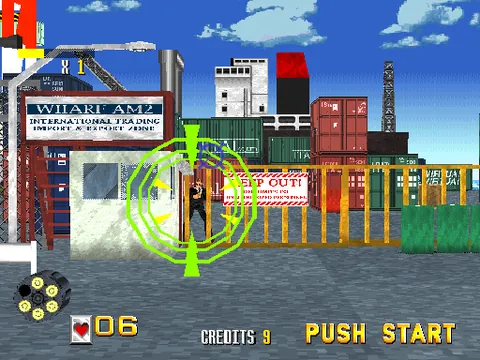
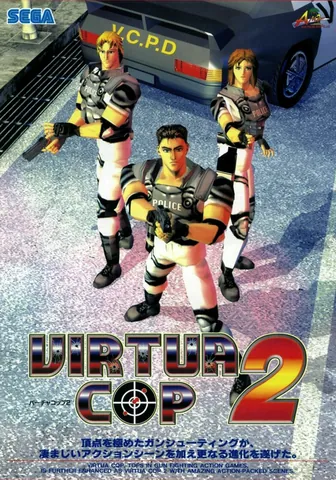
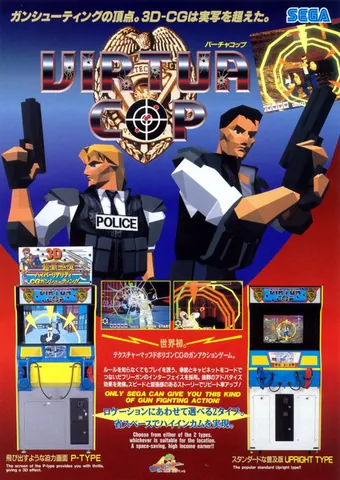
Virtua Cop is one of the first big hits of the light-gun shooter genre with fully 3D polygonal graphics, and it became a technological showcase for Sega in the mid-1990s. The player takes on the role of a police officer moving through a series of short missions — from harbor warehouses to a criminal hideout — and must use a light gun to shoot armed villains while leaving civilians and cooperating characters unharmed. The game works with a simple but effective system: enemies appear from the scenery, flash briefly before firing as a warning, and the player reacts reflexively, which made Virtua Cop a showcase of precise, arcade-style gunplay design. A hit to a specific body part also affected how quickly an opponent fell, or whether they still managed to return fire, forcing players to aim deliberately rather than just pulling the trigger blindly.
Technically, the game ran on the Sega Model 2, which enabled smooth 3D environments with textured character models — a significant leap at the time compared to the sprite-based light-gun titles of the previous generation, such as older cabinets with printed backgrounds. The sound design underscored the tension with short voice lines and forceful music, and the cabinets came equipped with a recoil-feedback gun and often a specially shaped seat, which gave the arcade experience considerable attraction value. Contemporary reception was enthusiastic — Virtua Cop became one of the arcade symbols of its era and set the standard for the next generation of light-gun games, including its own sequel and competing series from other manufacturers. The short, repeatable levels also worked well for arcade operation, where it was important for a player to complete a meaningful round within a few minutes.
Even decades later, Virtua Cop remains playable thanks to its straightforward design and short, intense missions that serve as an example of pure arcade craftsmanship — a game that can still demonstrate how elegantly a risk-and-reward system can be built around a single trigger button. Its influence is also evident in the fact that it became a reference point reviewers and players returned to when evaluating every subsequent light-gun title that followed.
Why play it: For fans of pure arcade craftsmanship, it's a showcase of how elegantly a risk-and-reward system can be built around a single trigger button, even decades later.
Game 163 of 258 for Arcade