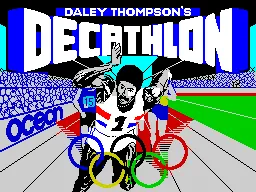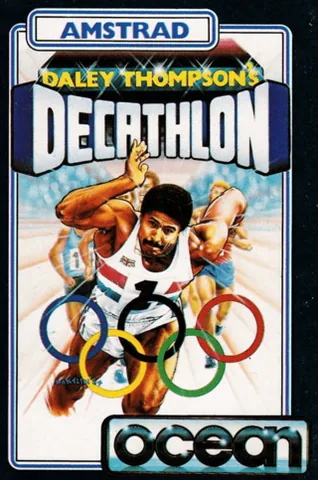
Daley Thompson's Decathlon
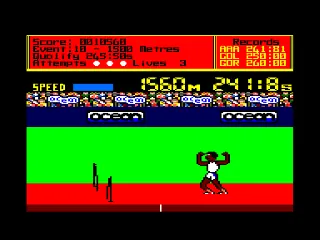
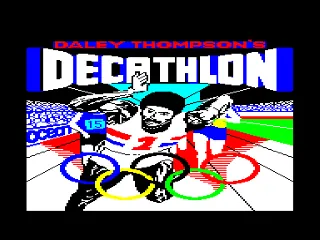
Do you remember that strange feeling when your thumbs and wrists still ached long after you had put the joystick down? Daley Thompson's Decathlon is exactly the game to blame. It was named after the British Olympic legend, a two-time gold medalist in the decathlon, and built one of the most legendary button-mashing orgies of the eight-bit era around his name.
The premise was brutally simple and all the more addictive for it. Across ten athletic disciplines, from the 100 metre sprint through the long jump and the shot put all the way to the javelin, you had to build up speed by frantically waggling the joystick or hammering the keys, and then press the button at just the right moment to launch or throw. The result was a competition that physically drained you just as much as the virtual athlete on screen. It literally made players sweat at the monitor.
The game was developed by the British publisher Ocean Software, one of the most important European publishers of the eighties, famous for its licensed titles. Decathlon originated on the ZX Spectrum and Commodore 64, and the Amstrad CPC version joined the family of ports that brought this athletic merry-go-round to all the key home computers of the day. It was a clear response to Konami's arcade hit Track & Field, which had kick-started the entire genre of button-bashing sports games.
Culturally, Daley Thompson's Decathlon became a symbol of clashes between schoolmates and friends. Kids invented absurd techniques to make the joystick waggle as fast as possible, from rubbing rulers across it to crushing the stick with both hands, and sometimes they literally sacrificed the hardware in the name of a better time. A wrecked joystick was almost a badge of honour for a true player.
It is precisely in this pure, almost primitive physicality that lies the magic which has survived decades. The game needed no complicated story or elaborate graphics; all it needed was rhythm, reflexes and the desire to beat your friend by a hundredth of a second. It is one of those titles that perfectly captures why retro gaming was so primally joyful.
Why play it: If you want to experience the pure, almost physically exhausting arcade fun of the eighties and test just how fast your thumbs can waggle, this is a legendary classic.
Game 25 of 26 for Amstrad CPC
The same title elsewhere (1)
This was a game played mostly with your hands and wrists: frantic key-mashing or joystick-waggling decided the outcome of every event, and both home versions relied on exactly that. The ZX Spectrum version came first and became notorious for wrecking joysticks — and even the computer's own rubber keyboard — within weeks. The Amstrad CPC version arrived two years later and benefited from a more colourful video chip and the AY-3-8912 sound chip, so the game felt livelier and the music had more variety than the Spectrum's simple beeper bleeps. The gameplay and pace stayed the same; the real difference lies in the audiovisual polish, and in which machine you have a spare joystick ready for.