Franchises
F-15 Strike Eagle
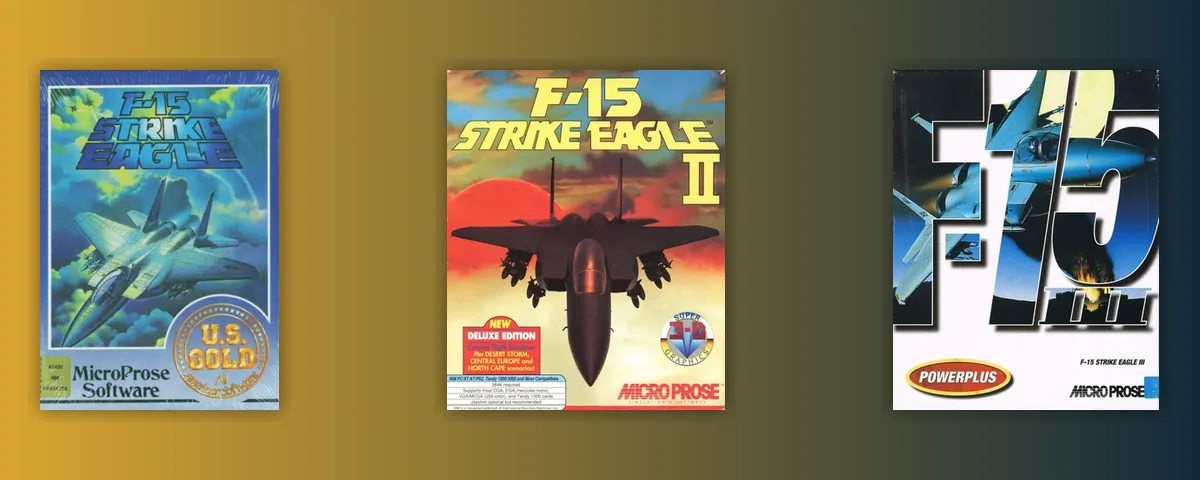
F-15 Strike Eagle from 1985 was among the first flight games to pair accessible arcade action with the feel of piloting a real fighter-bomber. MicroProse first released it for the Atari 8-bit and Commodore 64, sending players on missions over Libya, the Persian Gulf and Vietnam built around simple controls, a clear HUD and rewards for precise bombing — a formula that drew in players who might have been scared off by heavier simulators of the era. Its success kept MicroProse coming back to the license: DOS versions expanded the mission roster, and a few years later came a reworked F-15 Strike Eagle II.
F-15 Strike Eagle II (1989) dropped the original's purely arcade approach for a dynamic campaign, a more detailed flight model and a wider range of weapons and enemies, pushing the series closer to serious simulation. The high point came with F-15 Strike Eagle III in 1992, set during the Gulf War, with full-motion-video briefings, sharper cockpit graphics and the most detailed flight model the series ever had. That third game is often cited as proof of how fast flight sims evolved from arcade action to simulation between the mid-1980s and early 1990s.
MicroProse returned to the same formula — approachable controls, clearly readable squadron objectives, and steadily increasing realism — for several other flight themes, but F-15 Strike Eagle remained the studio's flagship for most of the 1980s and into the early 1990s. For many players it was their very first contact with the combat flight simulator genre.
Entries in the series (3)
-
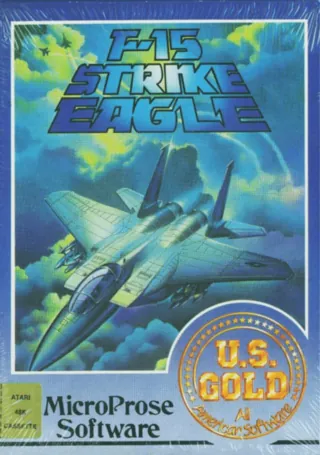
F-15 Strike Eagle · 1985
-
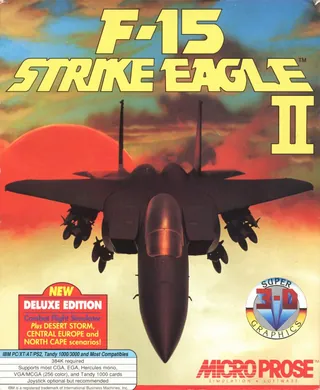
F-15 Strike Eagle II · 1989
-
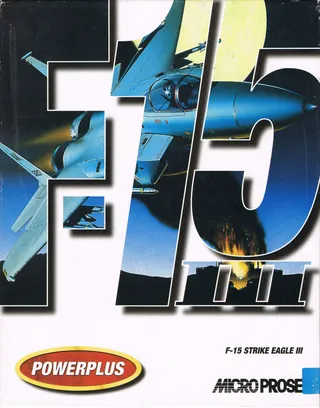
F-15 Strike Eagle III · 1992