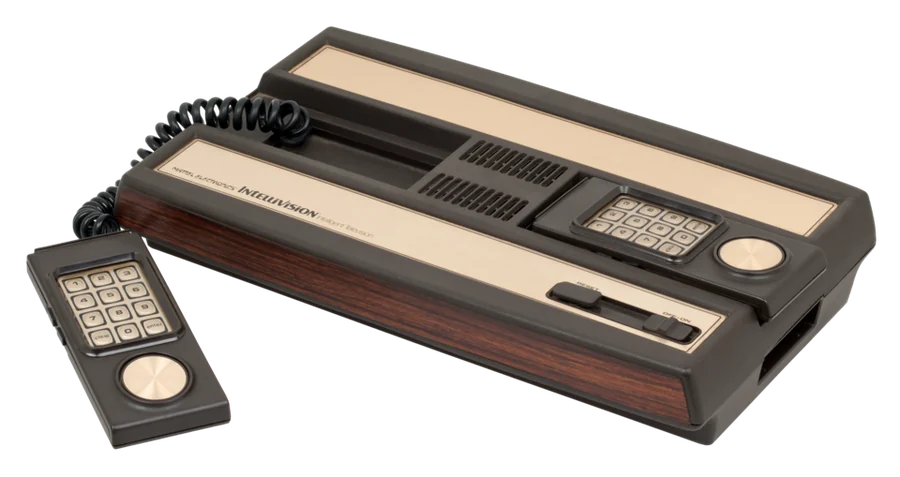
 Mattel · 1979
Game consoles
Intellivision
History & context
When Mattel launched the Intellivision (short for „Intelligent Television") on the market in 1979, it was not just another box for the TV — it was the first serious challenge to the then-dominant Atari 2600. Mattel bet on the strength of both marketing and hardware: in the famous comparative advertising campaign hosted by writer and actor George Plimpton, it placed side by side the crude graphics of the Atari and the noticeably more colorful, finer picture of the Intellivision. The console had the ambition to come across as the „smarter" choice for the whole family and became one of the pillars of the so-called second generation of gaming consoles. By the time production ended in 1990, roughly three million units had been sold, and it left behind a rich library of sports, strategy and action titles.
The unconventional controllers became a characteristic feature: flat gamepads with a numeric keypad, a rotating disc instead of a stick, and a set of side buttons. Many games moreover came with paper „overlay" templates that were placed on the keypad and described what each digit did in the game. It was a solution both ingenious and frustrating at once — the disc was more precise than a joystick for some genres, but stiff and, over time, prone to failure.
Technology: graphics and sound
At the heart of the Intellivision was the 16-bit General Instrument CP1610 processor, clocked at around 0.9 MHz. The sixteen-bit architecture was unusual for its time — the Atari 2600 and the later NES ran on 8-bit chips — even though real-world performance was limited by slow memory and clock speed. It was precisely this detail that Mattel liked to emphasize in its marketing.
Graphics were handled by the specialized STIC (Standard Television Interface Chip), AY-3-8900 video chip. It displayed a resolution of 159 × 96 pixels and a palette of 16 colors. It featured a background assembled from tiles and eight moving objects (sprites, here called MOB — Moving Object Block), which could be enlarged and mirrored. The resulting picture had rounder, less „blocky" shapes than the competition, which gave the console its typical look.
Sound was provided by the General Instrument AY-3-8914 chip, a relative of the famous AY-3-8910 from home computers. It offered three tone channels and a noise generator, so games sounded fuller and more musical than the beeping of simpler rivals. The later Intellivoice expansion module even added human speech synthesis.
Connectivity and peripherals
The console connected to the television via an RF output. In the base version the controllers were permanently attached by cable, which meant they could not be easily swapped — that only changed with later revisions.
The best-known accessory was the Intellivoice Voice Synthesis Module, a voice module inserted into the cartridge slot, into which a special game was then plugged. Titles such as B-17 Bomber or Bomb Squad spoke thanks to it — at a time when speech synthesis in the home felt like science fiction. The planned Keyboard Component (an add-on computer module with a tape drive and its own memory) became a notorious fiasco: it was repeatedly delayed, overpriced, and because of it Mattel even faced regulatory intervention. It was replaced by the simpler Entertainment Computer System (ECS) with a keyboard, which allowed programming in BASIC, and there was also a Music Synthesizer music keyboard as an add-on. There was also the System Changer, an adapter that allowed the Intellivision II to play Atari 2600 cartridges.
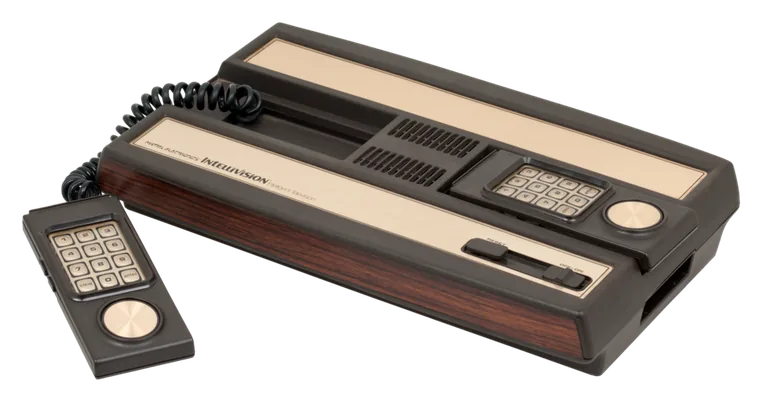
The original 1979 model bore the simple designation Intellivision (Master Component) in a wooden design. In 1982 came the redesigned, cheaper Intellivision II with detachable controllers and a more angular appearance; the System Changer was intended precisely for it.
Other manufacturers also sold the console under their own brands — Sears offered it as the Super Video Arcade, and in Europe it appeared for instance under the Radofin or GTE Sylvania name. After Mattel's collapse in the gaming market, the rights were taken over by the INTV Corporation, which continued production and in 1985 introduced the INTV System III model (also known as the Super Pro System). INTV kept the console alive through mail-order sales until 1990, when the last new games were released.
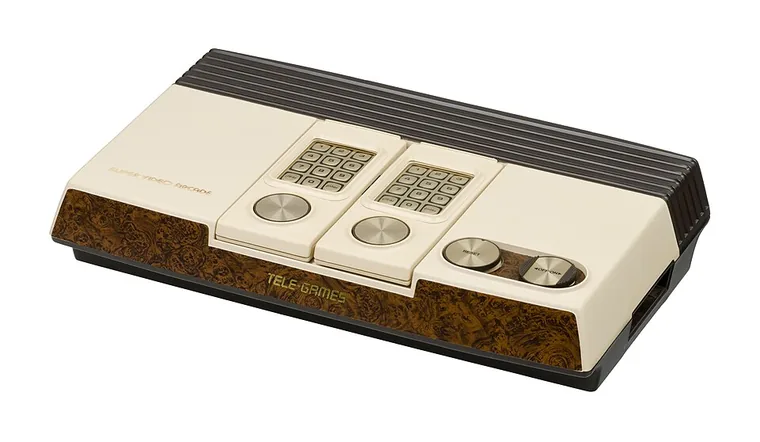
The Intellivision did not have as extensive a clone scene as the NES or the ZX Spectrum — its closed, specific hardware was difficult to imitate. The main „variants" were therefore more likely licensed rebranded versions (Sears, Radofin, GTE Sylvania) than illegal clones. In Czechoslovakia or elsewhere in the Eastern Bloc the Intellivision hardly spread; the local home scene centered around the ZX Spectrum computer and its Didaktik clone, or Pegasus-type famiclones, while American second-generation consoles remained a rarity behind the Iron Curtain. A valuable trace for historians, on the other hand, is the fact that INTV, after years, made part of the original source material available, which helped the later documentation of the platform.
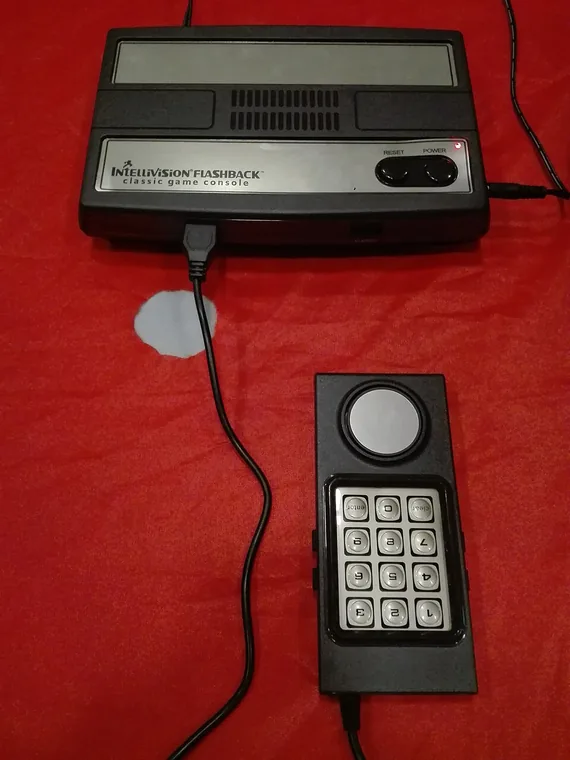
The Intellivision has maintained a surprisingly lively community. Emulation is well solved — there are dedicated emulators (e.g. jzIntv) as well as cores for the multiplatform RetroArch, so you can play the original library on PCs, handhelds and single-board computers. Mattel moreover officially revived the brand: it released collections of classic games and collectible miniatures. The homebrew scene also remains active, still writing new titles for the CP1610 to this day, distributed on physical cartridges as well as in digital form, thereby keeping the legacy of the „intelligent television" alive.
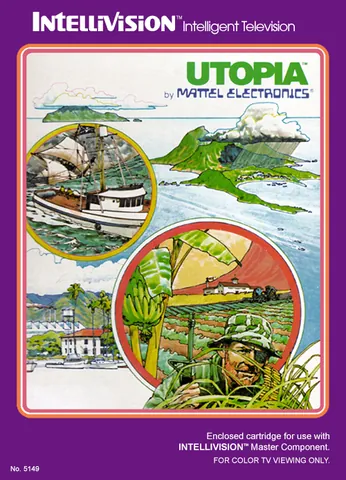
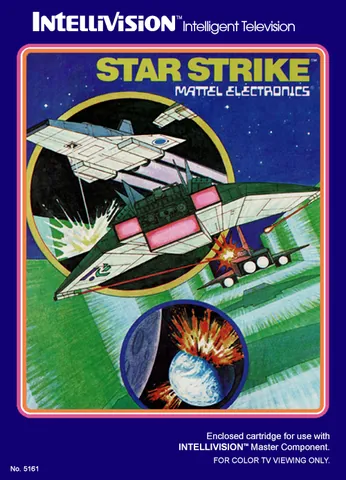
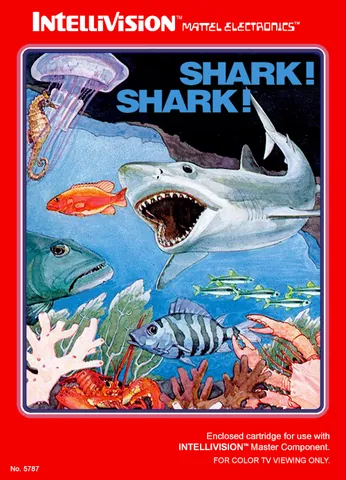
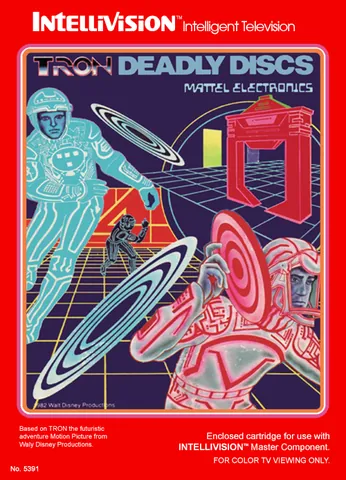
Games on this platform (11)
No game in this genre.