Chaos: The Battle of Wizards
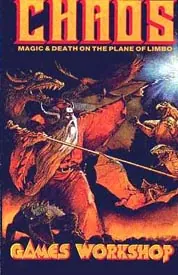
Chaos: The Battle of Wizards is one of the most distinctive turn-based strategy games ZX Spectrum ever offered, not least because it was designed by a young Julian Gollop, who would later create the legendary X-COM. The game for two to eight wizards, who take turns at a single computer, pits characters with their own name, colour, and set of spells against each other in an arena. Each round, a player casts one of the spells — summoning a monster ranging from a toad through a giant to a dragon, building a wall, healing themselves, or attacking an opponent directly — and the game then plays out movement and combat on a square map, where all spells are resolved simultaneously, so the outcome often surprises even the player who issued the command.
Technically it's a modest, purely two-dimensional game with simple graphics, but it was precisely the clarity and speed of individual turns that made it an ideal social title for a group of people crowded around a single Spectrum. The atmosphere was rounded out by a sparse but functional sound backdrop and, above all, by the unpredictability of combat, where even a weaker wizard could defeat a favourite with a lucky combination of spells. Chance plays a substantial role in Chaos, which makes the game accessible to complete newcomers while also forcing more experienced players to weigh the risk of every spell cast, since a failed attempt can endanger one's own wizard more than it helps.
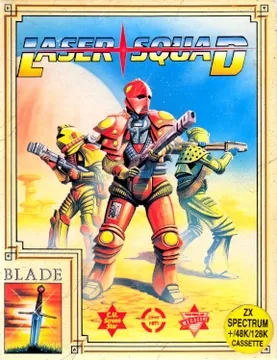
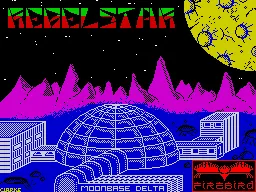
In the mid-1980s the game was well received, especially for the originality of its concept and the ability to play with several people at once, which was uncommon on the Spectrum and turned many home computer gatherings into small tournaments. Today Chaos is valued above all as a historically important step in Gollop's body of work — it contains the seeds of the turn-based tactics he later developed in Rebelstar, Laser Squad, and eventually in X-COM itself, where the theme of uncertain outcomes for every action resurfaces in the form of percentage hit chances. Even decades later, it remains a brisk and humorous party game that can be grasped within a few minutes, though mastery requires understanding all the spells and how they interact.
Why play it: For the seeds of the turn-based tactics that Julian Gollop later developed in Laser Squad and X-COM, and as a brisk, humorous multiplayer party game that's still quick to pick up today.
Game 72 of 100 for ZX Spectrum